First-Time Buyers in Paris: What's Really Driving Prices Up—and How to Navigate It Now
As Grand Paris expansion reshapes the market and grant eligibility tightens, aspiring homeowners must act strategically to secure their foothold.
As Grand Paris expansion reshapes the market and grant eligibility tightens, aspiring homeowners must act strategically to secure their foothold.
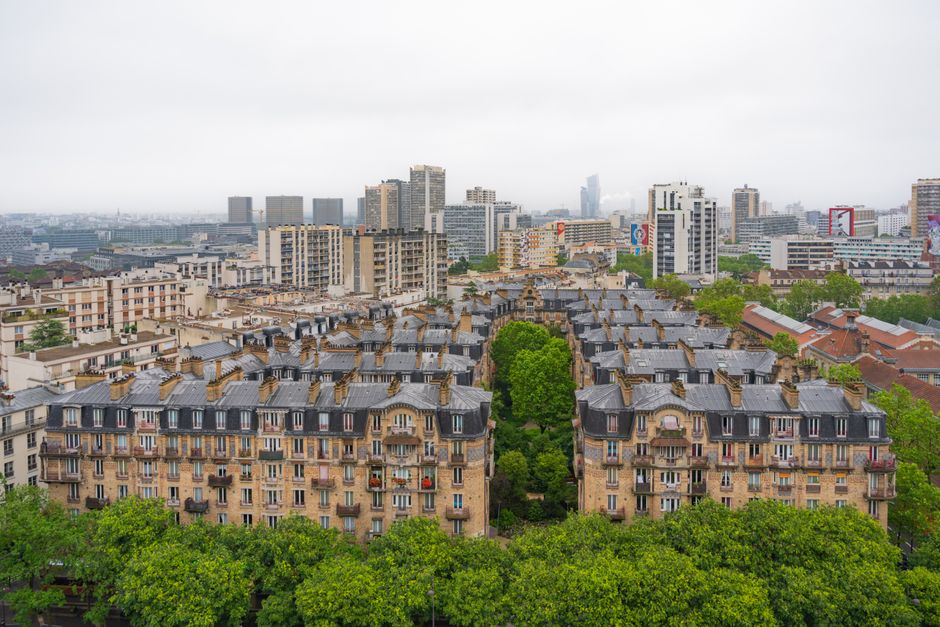
The first-time buyer landscape in Paris has shifted dramatically over the past 18 months. Average prices have climbed to €10,000 per square metre across the city, with premium arrondissements 1-8 commanding €15,000–€18,000. Yet the real story isn't in the centre—it's in the acceleration of outer zones, where Grand Paris infrastructure projects are reshaping entire neighbourhoods and buyer appetite.
Three factors are compressing affordability right now. First, infrastructure investment. The expansion of metro lines serving areas like Noisy-le-Grand, Bry-sur-Marne, and Ivry-sur-Seine has triggered speculative buying and genuine demand from remote workers seeking space without sacrificing connectivity. Second, grant eligibility has become stricter. The PTZ (Prêt à Taux Zéro) loan—historically the backbone of first-time buyer finance—now excludes properties over €300,000 in Paris proper, and income caps have tightened. Third, institutional investors and corporate relocations are competing for stock, particularly in the 9th to 11th arrondissements, where Marais boutiques and République cafés signal gentrification acceleration.
For buyers entering now, the calculus has changed. The 'prime' first-time buyer zone—walkable arrondissements with schools and metro access—increasingly means 11th (Bastille, Oberkampf) or 12th (Bercy, Gare de Lyon), where €450,000–€550,000 buys a modest two-bedroom. The 13th (Bibliothèque Nationale district) remains relatively accessible at €380,000–€480,000, and new construction schemes there often offer better financing terms.
What buyers must know: PTZ eligibility now requires either new-build properties or properties in designated revitalisation zones—check the official list on the Banque de France website before committing. The government's MaPrimeAdapt scheme (€10,000–€50,000 grants for first-time buyers) has become oversubscribed; applications now require professional certification and take 4–6 months. Simultaneously, private lenders have tightened debt-to-income ratios from 35% to 33%, meaning €50,000 gross income now supports roughly €150,000 borrowing instead of €165,000.
The outer envelope—Boulogne-Billancourt, Saint-Denis, Créteil—remains cheaper (€7,000–€9,000/sqm) but affordability is vanishing fast. Properties along new Grand Paris lines sell within weeks; investors are betting heavily on 2027–2028 transport completions.
Smart buyers are focusing on completed new-build projects with developer financing (often 0% interest for 12 months) or older stock in transitional neighbourhoods like the 10th or 20th, where€300,000–€380,000 remains realistic. Act now: hesitation means both prices and grant windows closing.
This article was compiled by AI from the sources linked above and screened before publishing. See our editorial standards.
How does this story make you feel?
Spread the word
About this article
Published by The Daily Paris
Daily brief
Free, in your inbox before 7am. Weekdays.
More in Property


