Paris Leads Europe's Green Revolution, But Berlin and Barcelona Are Catching Up Fast
As the French capital doubles down on its sustainability ambitions, competing European cities are deploying similar strategies with varying degrees of success.
As the French capital doubles down on its sustainability ambitions, competing European cities are deploying similar strategies with varying degrees of success.
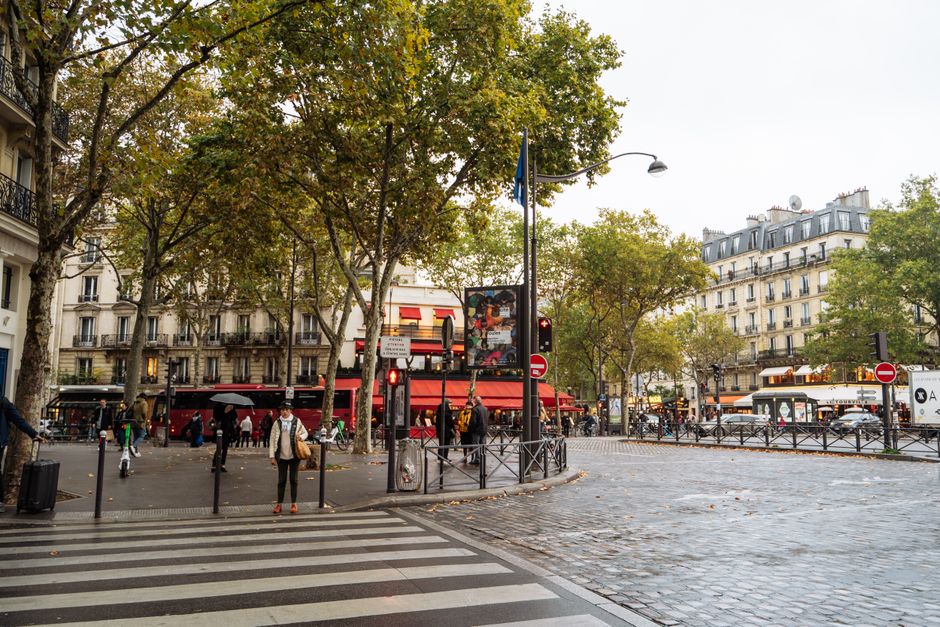
Paris has long positioned itself as Europe's environmental champion, and the numbers reflect an impressive commitment. The city's ban on petrol cars by 2030—stricter than the EU's 2035 deadline—has spurred a cycling boom, with over 1,200 kilometres of bike lanes now crisscrossing neighbourhoods from Belleville to the Left Bank. Yet as other major European cities accelerate their own green initiatives, Paris faces mounting pressure to maintain its leadership in an increasingly crowded field.
The comparison reveals a complex picture. Berlin has invested heavily in renewable energy infrastructure, with over 60% of its electricity now sourced from renewables, slightly ahead of Paris's 52%. Meanwhile, Barcelona's superblocks initiative—restricting vehicle access to certain residential zones—has inspired similar projects on Rue de Rivoli and around the Marais, though critics argue Paris's implementation remains more fragmented. Copenhagen, often cited as Europe's cycling capital, still edges Paris with nearly 45% of commuters using bicycles, compared to Paris's 17%.
On public transport, Paris's RATP network carries 1.5 billion passengers annually, making it Europe's busiest by volume. Yet London's Transport for London has achieved a higher percentage modal shift, with 64% of journeys now on public transport versus Paris's 45%. Amsterdam's integration of cycling infrastructure with tram networks offers a model Paris is now studying for extensions beyond the périphérique.
Where Paris distinguishes itself is in ambitious regeneration projects. The Seine-Saint-Denis district's transformation into a carbon-neutral urban laboratory, alongside plans to cool the city through expanded green spaces and water features following heat-related crises, demonstrates forward-thinking adaptation. The €1.2 billion investment in Seine restoration aims to make the river swimmable by 2026—a target Barcelona achieved with its Mediterranean beaches in 2023.
However, affordability remains contentious. Paris's electric vehicle charging network has expanded to 3,500 stations, yet costs remain prohibitive for working-class residents. Berlin's subsidised public transport scheme contrasts sharply with Paris's rising RATP fares, which increased 8% this year alone.
Industry experts suggest Paris's strength lies not in individual metrics but integrated vision. The city's 2050 carbon neutrality goal, while ambitious, faces execution challenges that Barcelona and Berlin are addressing through more localised, incremental approaches. As Europe's sustainability race intensifies, Paris must prove that ambition translates into accessible, equitable results—not merely headlines.
This article was compiled by AI from the sources linked above and screened before publishing. See our editorial standards.
How does this story make you feel?
Spread the word
About this article
Published by The Daily Paris
Daily brief
Free, in your inbox before 7am. Weekdays.
More in News