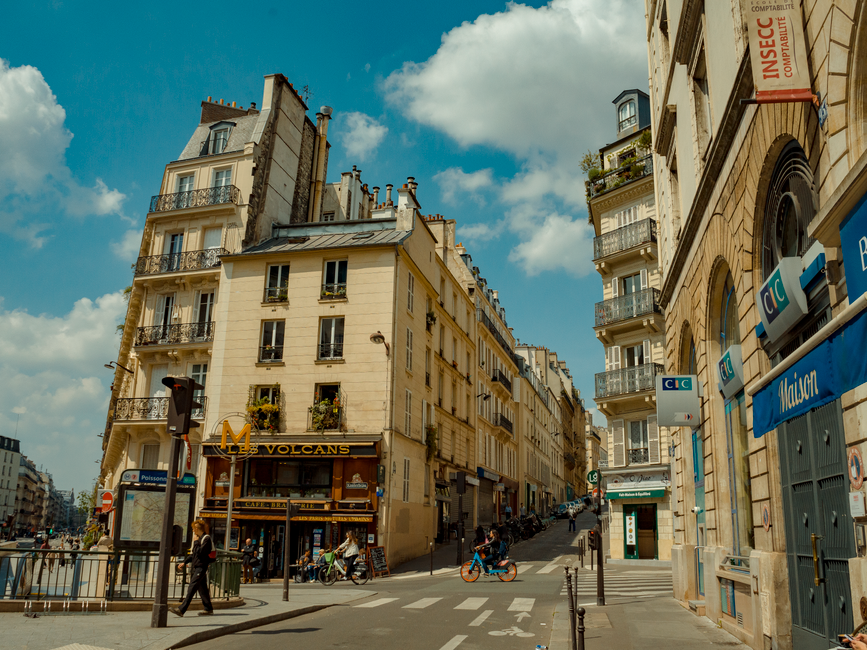
Paris is pulling ahead of comparable European capitals in tackling its housing crunch, with a bold municipal strategy that has already converted over 3,200 vacant apartments into social rental units since 2020—a pace that significantly outstrips Berlin's 1,800 and London's fragmented approach across 32 separate boroughs.
The initiative, anchored by Mayor Anne Hidalgo's administration, has weaponised France's "squatter tax," imposing punitive levies on properties left empty for more than two years. In the 11th arrondissement alone, where rents average €18 per square metre monthly—nearly double the citywide average of a decade ago—the strategy has unlocked dozens of previously dormant units along rue de la Roquette and surrounding neighbourhoods.
"We're not waiting for market forces to solve this," said the city's housing directorate in a recent position statement. By contrast, Berlin's 2020 rent freeze faced constitutional challenges, while London continues fragmenting authority among councils, each pursuing independent strategies with wildly inconsistent results.
The comparison extends beyond mere numbers. Paris has established dedicated conversion teams operating from municipal offices in each arrondissement, with clear timelines and accountability. A building seized on Boulevard Voltaire last year was rehabbed and operational within 14 months—a turnaround that would be remarkable in either Berlin or London's bureaucratic landscape.
Yet critics note the challenge remains vast. Paris's social housing stock currently represents just 19 percent of total housing, lagging Vienna's 60 percent and falling short of the city's stated 25 percent target by 2030. Gentrification continues ravaging outer districts; the 13th arrondissement saw average rents climb 12 percent year-on-year through 2025.
Other European cities are watching closely. Amsterdam has recently adopted Paris's property-seizure model, while Barcelona's city council has requested detailed briefings on implementation mechanics. The approach signals a philosophical departure from relying on private developers and market incentives—a gamble that requires sustained political will and deep municipal coffers.
As housing affordability emerges as perhaps Europe's defining urban challenge, Paris's willingness to deploy state power aggressively offers a stark contrast to the cautious incrementalism prevailing elsewhere. Whether this assertiveness can sustain its momentum, or whether it merely reshuffles inequality across districts, will become clearer by 2028.
This article was compiled by AI from the sources linked above and screened before publishing. See our editorial standards.