Yoga styles explained: which one suits your lifestyle
From power flows in the Marais to restorative sessions beside the Seine, Paris now offers more yoga formats than ever — here's how to find the right one for you.
From power flows in the Marais to restorative sessions beside the Seine, Paris now offers more yoga formats than ever — here's how to find the right one for you.
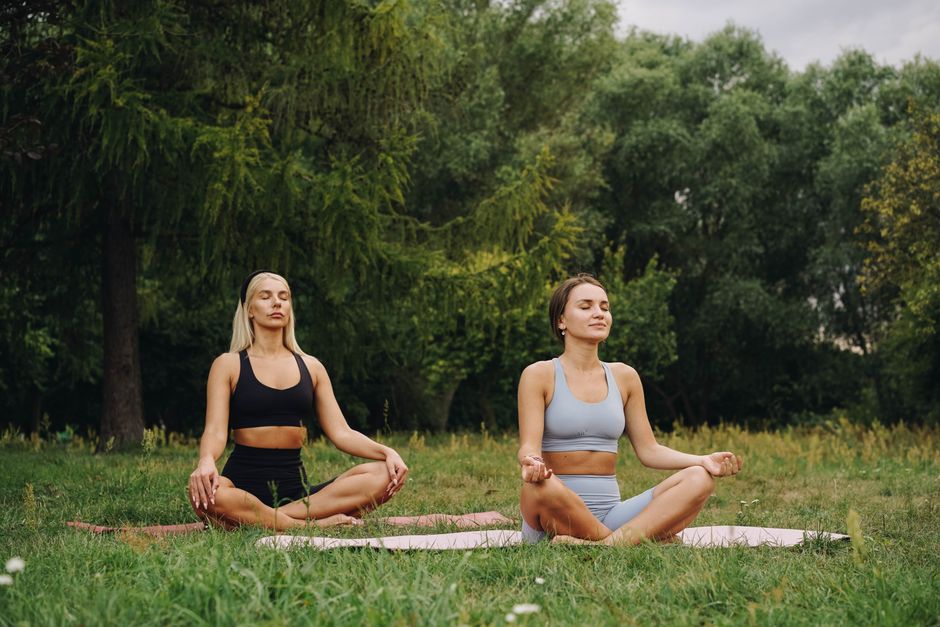
Enrolments at Paris yoga studios rose roughly 22 percent between 2023 and 2025, according to figures compiled by the Fédération Française de Yoga, and the summer of 2026 looks set to push that number higher still. The Tuileries garden free outdoor yoga programme, which relaunched in June with sessions every Tuesday and Thursday morning at 7h30, drew more than 400 participants in its first fortnight alone. The city is doing yoga. The question is which yoga.
It matters because the styles are not interchangeable. Choosing the wrong format — say, a heated Bikram class when you're already running on cortisol and four hours of sleep — can leave you more stressed than when you walked in. France's universal healthcare system, the Sécurité Sociale, has begun incorporating mindfulness-based interventions into general-practice referrals since a ministerial directive in January 2026, which means more Parisians are arriving at studios on semi-medical recommendation, often with no idea what they're signing up for. A little taxonomy helps.
Hatha is the baseline. Slow, held postures, emphasis on alignment, usually no music. It suits beginners, people recovering from injury, or anyone whose nervous system is already running hot. Studios like Yoga Village on Rue du Faubourg Saint-Antoine in the 11th arrondissement built their reputation on rigorous Hatha fundamentals; drop-in classes run at €18 a session, with ten-class cards bringing that down to €14.
Vinyasa links breath to movement in continuous sequences — think of it as Hatha with momentum. Classes range from gentle to genuinely aerobic. For Parisians who already cycle the Boulevard de Sébastopol corridor or run the Seine embankment on weekday mornings and want their yoga to match that cardiovascular commitment, Vinyasa is a natural fit. Yoga République in the 3rd arrondissement runs a popular 06h15 express Vinyasa on weekdays, pitched squarely at people commuting in from the outer arrondissements.
Yin yoga operates on a different logic entirely: postures are held for three to five minutes, targeting connective tissue rather than muscle. The practice is meditative by design, and the evidence base for its stress-reduction effects has strengthened considerably. A 2024 meta-analysis published in the journal Complementary Therapies in Clinical Practice found that eight weeks of regular Yin practice produced statistically significant reductions in self-reported anxiety scores across 1,200 participants. For anyone sitting at a desk in a Haussmann-era office building for nine hours a day, Yin addresses exactly the hip flexor tightness and mental fatigue that accumulate.
Kundalini is the outlier. It involves repetitive movement sets called kriyas, breathwork, chanting, and sometimes extended meditation. The tradition draws from Sikh devotional practice and carries a strong spiritual dimension that some practitioners find transformative and others find bewildering. The Paris Kundalini Association, based near Place de la Bastille, runs introductory workshops on the first Saturday of each month at €25 per person — a practical way to test the format before committing.
Geography shapes the decision as much as personality. The Bois de Boulogne hosts pop-up Ashtanga sessions through August, organised by the association Sport Pour Tous de Paris, free with advance registration through the Mairie de Paris online portal. Ashtanga follows a fixed sequence of postures practised six days a week in its traditional form — disciplined, physically demanding, and well-suited to people who respond well to structure and measurable progression.
For the genuinely time-poor — those splitting work, children, and a commute across the Périphérique — chair yoga and short-form seated meditation deserve more credit than they typically receive. The Centre de Méditation de Paris on Rue de Bretagne in the 3rd offers 30-minute lunchtime sessions at €10, no mat required.
The practical advice is simple: try two or three formats before deciding you dislike yoga, because disliking one style is not the same thing as disliking the practice. Most Paris studios offer a first class at a reduced rate, typically between €10 and €12. If you're managing a specific physical or psychological health concern, consult your médecin généraliste first — increasingly, they'll have a referral pathway ready.
How does this story make you feel?
Spread the word
About this article
Published by The Daily Paris
Daily brief
Free, in your inbox before 7am. Weekdays.
More in Wellness