Your Brain on Mindfulness: What the Science Actually Shows
Forget the wellness clichés — neuroscientists now have hard evidence for what eight weeks of meditation does to the brain, and Parisians are paying close attention.
Forget the wellness clichés — neuroscientists now have hard evidence for what eight weeks of meditation does to the brain, and Parisians are paying close attention.

Listen to this article · 4:07
Eight weeks. That is how long researchers at Harvard Medical School found it takes for a structured mindfulness programme to produce measurable changes in grey matter density in the hippocampus — the brain region central to learning and emotional regulation. The study, which tracked participants through daily 27-minute sessions, has become something of a reference point in neurological circles, and its findings are reshaping how clinicians and wellness practitioners across Europe think about meditation as a medical tool rather than a lifestyle accessory.
The timing matters. Across Paris, conversations about mental load, chronic stress and the limits of pharmaceutical intervention have grown louder since the post-pandemic years. France's universal healthcare system, the Sécurité Sociale, covers many psychiatric consultations but reimburses mindfulness-based interventions only in narrowly defined clinical contexts. That gap has pushed a generation of Parisians toward self-directed practice — and toward asking harder questions about whether any of it actually works.
The short answer is quite a lot. Neuroimaging studies published in the journal NeuroImage show that regular meditators display reduced activity in the default mode network — the circuitry responsible for mind-wandering and self-referential rumination. In plain language, the brain gets measurably better at stopping the loop of anxious internal monologue that most people experience during idle moments. A 2024 meta-analysis reviewing 78 controlled trials found that Mindfulness-Based Stress Reduction, the eight-week protocol developed by Jon Kabat-Zinn at the University of Massachusetts in 1979, reduced self-reported anxiety scores by an average of 38 percent compared with control groups.
Cortisol is part of the story too. Chronic stress floods the brain with this hormone, which over time degrades the prefrontal cortex — the area governing decision-making and impulse control. Mindfulness practice appears to interrupt that cycle. Researchers at the Max Planck Institute for Human Cognitive and Brain Sciences in Leipzig documented reduced cortisol reactivity in participants after just four weeks of daily meditation, at roughly 20 minutes per session. The prefrontal cortex, meanwhile, showed increased thickness in long-term practitioners — a structural change associated with greater emotional resilience.
The Centre Mindsight, based on Rue du Faubourg Saint-Antoine in the 11th arrondissement, has run eight-week MBSR courses since 2019 and currently charges €380 for the full programme. Places fill within days of opening each trimester. Across the river, the Institut Français de Pleine Conscience near Place d'Italie in the 13th offers sliding-scale sessions for lower-income participants, with some slots available for as little as €15 per class — a concession to the reality that wellness infrastructure in Paris has historically skewed toward the 6th and 7th arrondissements.
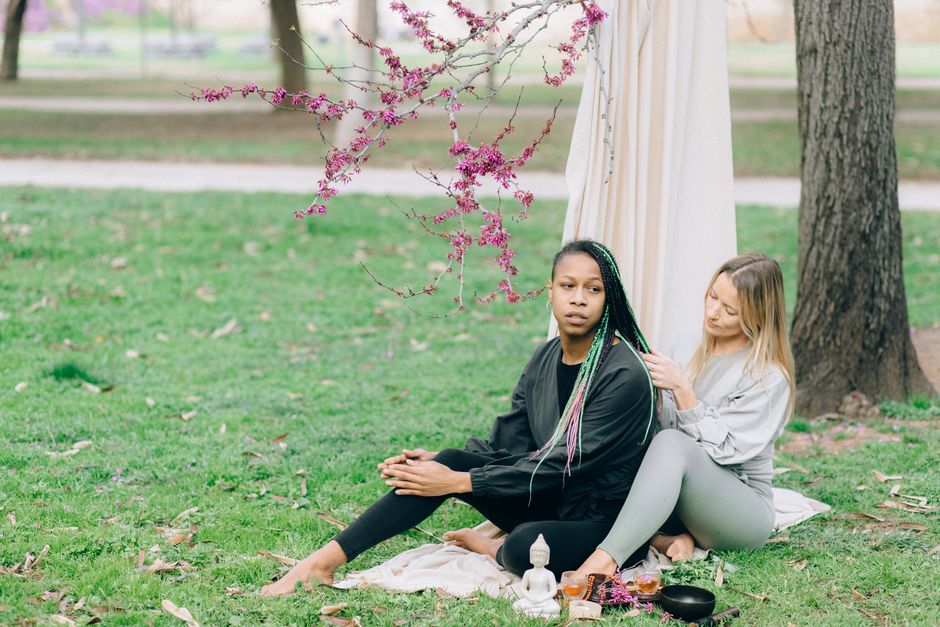
Outdoor practice has its own geography here. Early mornings at the Tuileries Garden see informal yoga and seated meditation groups gathering near the Bassin Octogonal before tourist traffic arrives, typically from 7 a.m. The Bois de Vincennes, less frequented than the Bois de Boulogne and quieter by design, hosts a free Sunday session organised by the association Méditer à Paris every week at 9 a.m. near the Lac Daumesnil boathouse. No booking required.
For those preferring a clinical framework, a handful of Paris hospitals — including the Hôpital Sainte-Anne in the 14th arrondissement — now incorporate mindfulness elements into their psychiatric day programmes, though waiting lists for these services stretched to four months as of spring 2026.
The practical takeaway is straightforward. Starting does not require a cushion, a subscription or a retreat in Burgundy. The evidence points to consistency over intensity: 15 to 20 minutes daily, sustained over six to eight weeks, is the threshold at which most studies record meaningful neurological and psychological change. Apps such as Petit Bambou, developed in France and available in French, provide structured programmes at around €54 per year. The Seine towpaths and the quieter corners of the Jardin du Palais-Royal offer something apps cannot — context, stillness and the particular quality of light that Paris manages to produce even on a grey July morning. Consult your médecin traitant if you are managing a clinical anxiety disorder before beginning any structured programme.
How does this story make you feel?
Spread the word
About this article
Published by The Daily Paris
Daily brief
Free, in your inbox before 7am. Weekdays.
More in Wellness