Paris Tech Scene Hits Inflection Point as AI Labs Compete for Top Talent
With hundreds of millions in fresh funding flowing into the Marais and beyond, Paris startups are racing to build Europe's answer to Silicon Valley.
With hundreds of millions in fresh funding flowing into the Marais and beyond, Paris startups are racing to build Europe's answer to Silicon Valley.
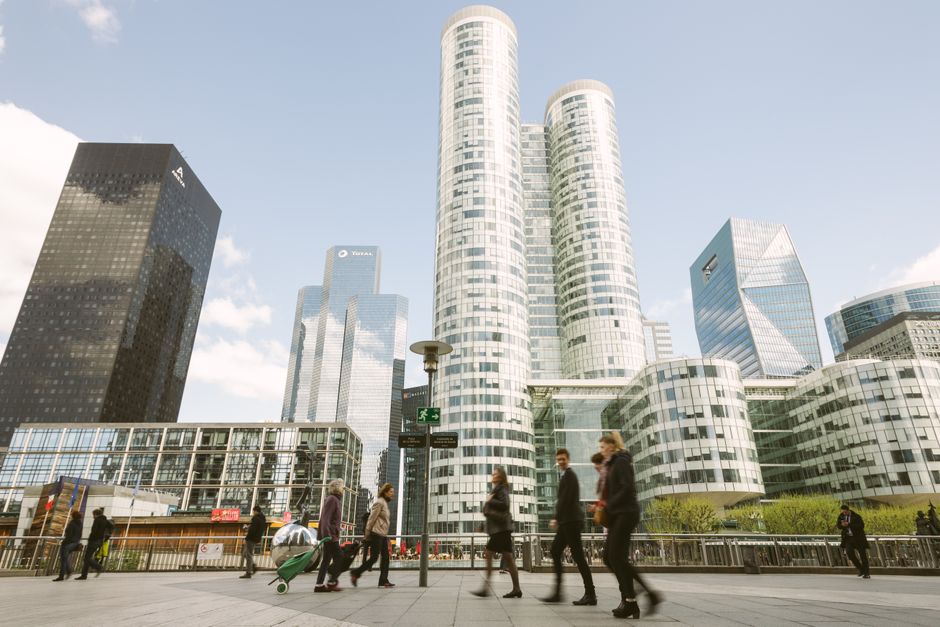
Paris's technology sector is experiencing a decisive moment. Walking through the Marais district—once synonymous with galleries and boutiques—you'll now encounter gleaming office spaces housing AI researchers, deep-tech founders, and venture capitalists who've decamped from Silicon Valley. The transformation is no longer hypothetical; it's visible in real time.
Since the start of 2026, more than €890 million has flowed into French tech startups, with roughly a third landing in the Paris metropolitan area. This capital influx reflects a fundamental shift: European investors are betting that the next generation of artificial intelligence breakthroughs won't exclusively emerge from California.
Station F, the sprawling startup campus along the Seine in the 13th arrondissement, now houses over 1,000 companies—up from 800 two years ago. But the energy extends far beyond its brick walls. The Opéra district has become a secondary hub, with several mid-stage AI and climate-tech firms clustering around Avenue de l'Opéra and Rue Taitbout. Rent per square meter in these neighborhoods has climbed to €45-60, reflecting scarcity rather than excess.
The competitive pressure is palpable. Mistral AI, the homegrown large language model company founded in 2023, continues to attract top researchers from INRIA and École Polytechnique. But newer players are emerging: a biotech startup focusing on protein folding just secured €34 million in Series B funding, while a quantum computing venture raised €28 million last month. The talent pool remains stretched thin. Engineers with three to five years of experience command salaries of €70,000-90,000—considerably less than Bay Area equivalents, but enough to create friction among competing firms.
What's distinctive about this moment is the focus on hard problems. Unlike the fintech boom of the 2010s, today's founders are tackling climate modeling, chip design, and drug discovery. This reflects both a maturation of the French investor base and a genuine belief that Paris's academic strength—particularly in mathematics and physics—offers a comparative advantage.
Not everything is smooth. Regulatory uncertainty around AI governance and data protection remains a headwind. The EU's AI Act, now partially implemented, has forced some companies to relocate certain operations or delay product launches. Equally, Paris still lacks the venture ecosystem density of London or Berlin, meaning Series C and beyond rounds often require trips to the US.
Yet the trajectory is undeniable. In three years, Paris has evolved from a city where tech workers moved to Brussels or Berlin to one where reverse migration is beginning. That shift—subtle but structural—may ultimately prove more significant than any single funding round.
This article was compiled by AI from the sources linked above and screened before publishing. See our editorial standards.
How does this story make you feel?
Spread the word
About this article
Published by The Daily Paris
Daily brief
Free, in your inbox before 7am. Weekdays.
More in tech