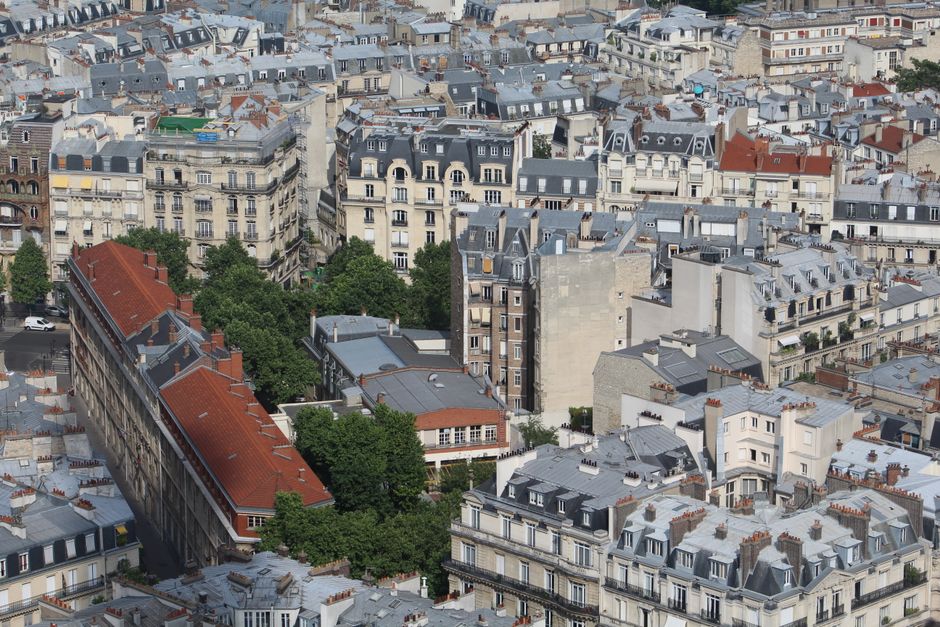
The conventional wisdom holds that social housing is a charitable endeavour, not an investment play. Paris's property market is challenging that assumption. With average residential prices hovering near €10,000 per square metre across the capital, and outer arrondissements creeping toward €7,000–€8,000/sqm, institutional investors are quietly stacking returns through a growing ecosystem of state-backed affordable housing bonds and mixed-tenure development partnerships.
The maths are becoming harder to ignore. A three-year social housing bond issued by the Île-de-France regional development authority (SDRIF) in 2024 returned 2.8 per cent annually—outpacing traditional French government bonds and underpinned by occupancy rates consistently above 98 per cent across schemes in the 12th, 13th and 20th arrondissements. For institutional players accustomed to volatile commercial real estate cycles, the stability is magnetic.
What's driving these returns? Density and scale. The sprawling social housing complex near Porte de Vincennes—completed in 2025 with 340 mixed-tenure units across twelve storeys—operates at full occupancy, with rents pegged to HLM (Habitation à Loyer Modéré) frameworks. Investors holding tranches of the underlying securitisation are receiving 2.2 per cent net annually, with a seven-year repayment cycle. Comparable commercial real estate in the 8th arrondissement demands far higher risk premiums for similar or lower yields.
Paris City Hall and regional authorities are acutely aware of this emerging calculus. The Grand Paris metropolitan expansion strategy explicitly targets 70,000 new social units by 2030, with mounting pressure on private investment to plug a €4 billion funding gap. Social housing bonds, once niche instruments, are being repackaged as environmental, social and governance (ESG) compliant products, attracting pension funds and sovereign wealth vehicles seeking non-cyclical Paris exposure.
The nuance matters. Yields remain modest compared to pre-pandemic commercial office or hotel plays—a reminder that social housing is not, and should not become, a speculative asset class. But the predictable cash flows, government guarantees on rent collection, and zero-eviction protocols are reshaping how institutional capital views Paris's housing crisis. Schemes in arrondissements 9–11, traditionally trendy but increasingly strained by affordability pressures, are emerging as the next frontier for investment-grade social housing projects.
As Paris grapples with deepening inequality and a housing shortage that even strong economic cycles cannot ease, the evidence suggests that steady, modest returns—not speculation—may finally unlock the capital required to rebuild the city's social fabric.
This article was compiled by AI from the sources linked above and screened before publishing. See our editorial standards.