Beyond the Marais: Where Paris Investors Are Actually Seeing Returns
As central arrondissements stall, smart money is chasing yields in the 11th, 12th and beyond—and the numbers are backing the move.
As central arrondissements stall, smart money is chasing yields in the 11th, 12th and beyond—and the numbers are backing the move.
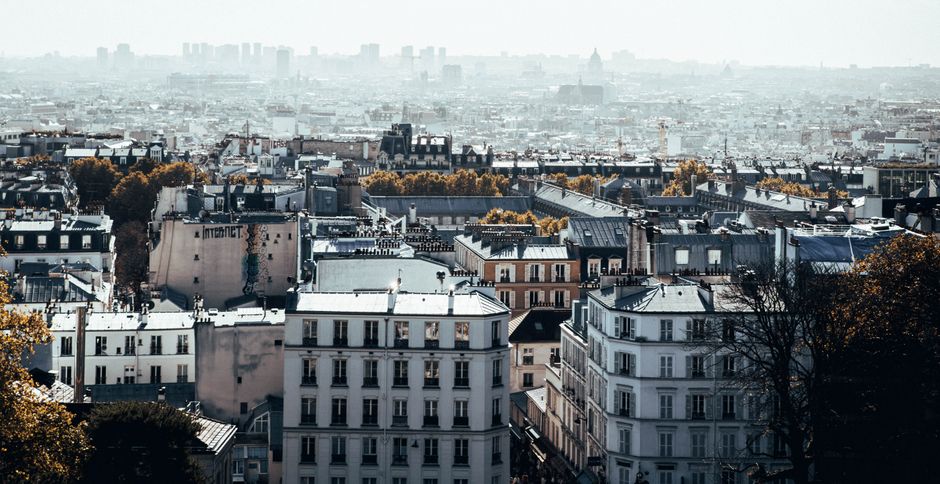
The postcard Paris of the 1st and 8th arrondissements remains a store of wealth, but it is no longer where Paris investors hunt returns. At €10,000 per square metre citywide, the market has matured. Those chasing rental yields and capital growth are looking elsewhere—and the data tells a compelling story about where.
République and the upper 11th arrondissement have emerged as the bellwether. Properties along rue Oberkampf and surrounding streets, once gritty creative quarters, now command €8,500–€9,200 per sqm, up from €7,200 just four years ago. Crucially, rental yields in this zone hover at 3.8–4.2%, versus 2.1–2.5% in the Marais. For an investor purchasing a €450,000 studio on rue de Turenne versus a €380,000 two-bedroom near Parmentier métro, the mathematics shift dramatically. The 11th property generates €1,450–1,600 monthly rent; the 1st yields roughly €750.
The 12th arrondissement—historically overlooked—has accelerated further. Developments along rue de Lyon and the Gare de Lyon quarter have attracted institutional buyers pivoting from stalled city-centre transactions. Prices sit at €7,800–€8,600 per sqm with 4.1–4.5% rental returns. The Promenade Plantée corridor, linking the Bastille to Bois de Vincennes, continues attracting young professionals and families, underpinning demand.
Grand Paris metro extensions remain the quiet wealth-builder. Villejuif, Ivry-sur-Seine and the 13th arrondissement periphery—nodes on the extended Line 14 and automated Line 15—show price appreciation of 6–8% annually, with entry points at €5,200–€6,400 per sqm. A €320,000 purchase yields €1,100–1,280 monthly rent, a 4.6% gross return.
Transaction volumes paint the shift: central Paris notary registrations fell 12% year-on-year through Q2 2026, while the 11th, 12th and outer arrondissements saw volumes rise 8–11%. Institutional investors—private equity funds managing build-to-rent schemes—have redeployed capital accordingly.
The lesson is not that central Paris has collapsed. It remains a hedge and a home. But for yield-hunting investors with €300,000–€600,000 to deploy, the arithmetic increasingly favours the inner ring and metro-connected suburbs. The 1st arrondissement secures capital; the 11th and 12th generate it. The market, as ever, reveals where conviction actually lies.
This article was compiled by AI from the sources linked above and screened before publishing. See our editorial standards.
How does this story make you feel?
Spread the word
About this article
Published by The Daily Paris
Daily brief
Free, in your inbox before 7am. Weekdays.
More in Property