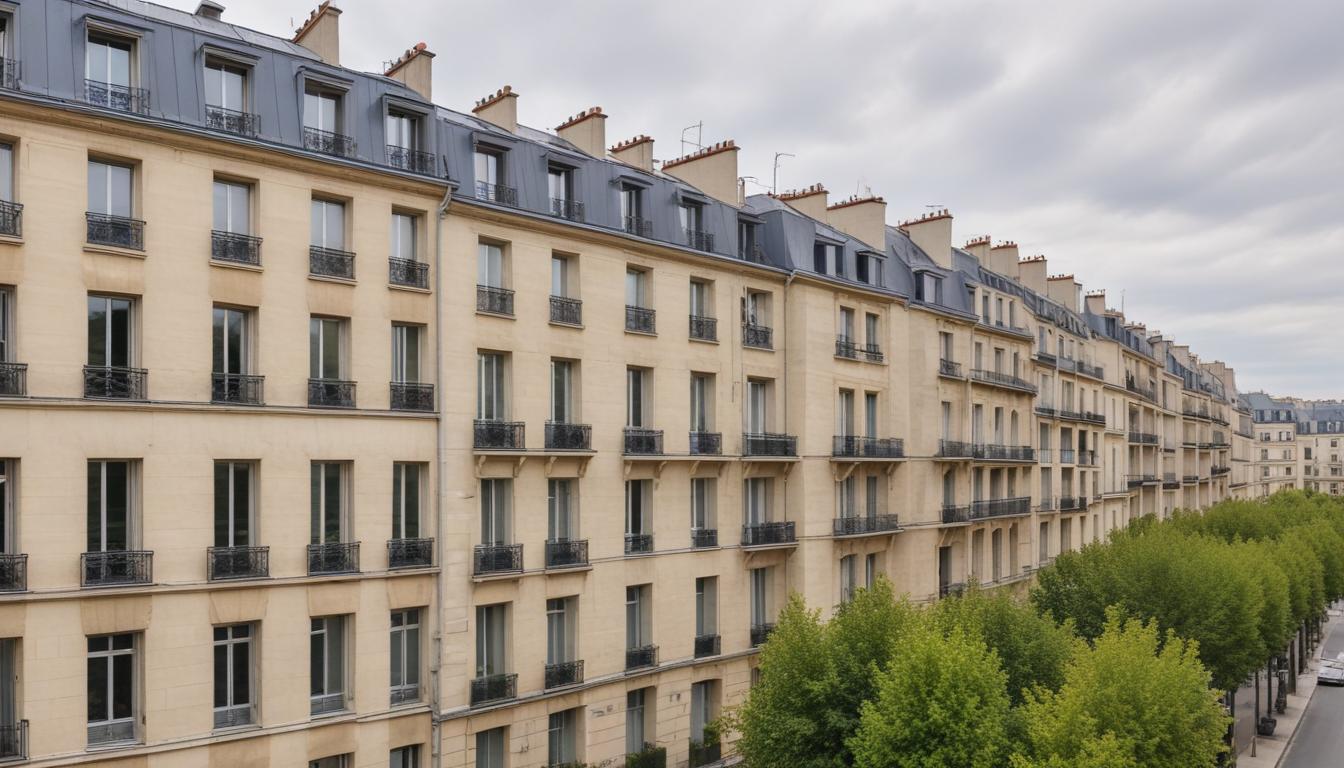
Paris's affordable housing market is staging a quiet revolution, and the numbers tell a striking story. While luxury apartments in the 8th arrondissement command €15,000 per square metre and yield barely 2 per cent, developers investing in social housing across outer zones like Clichy-sous-Bois and Montreuil are reporting consistent 4-5 per cent returns—underpinned by stable, government-backed tenancies and tax incentives that sweeten the deal considerably.
The shift reflects a hard commercial reality: Paris's housing crisis has become too acute to ignore, and the investment thesis has hardened. Recent data from the Agence Départementale d'Information sur le Logement shows that social housing schemes in the 11th and 12th arrondissements, formerly overlooked by serious capital, now attract institutional money on par with prime residential stock. A 2,500-unit mixed-income development near Porte Dorée, completed in 2024, achieved full occupancy within eight months and generated stable yields of 4.2 per cent—a figure that institutional investors are benchmarking seriously.
The mechanics are straightforward. Developers securing Prêts Locatifs Sociaux (PLS) financing enjoy lower borrowing costs and can lock in long-term rent rolls pegged to local income thresholds. In the 10th arrondissement, where average market rent hovers near €800 for a one-bedroom, affordable units lease at €480-€520—a discount that doesn't dent investor returns because occupancy rates consistently exceed 98 per cent and vacancy periods shrink to weeks rather than months.
Tax benefits amplify the calculus. The Pinel scheme, though recently tightened, still offers investors six to nine-year tax credits of up to €6,000 per square metre in designated zones. Combined with stable government rent-subsidy programmes for eligible tenants, the risk profile rivals traditional institutional real estate.
Yet sceptics note the compression: yields in this bracket leave little room for appreciation. A €2 million social housing portfolio generating 4 per cent annual return yields €80,000—respectable, but modest compared to speculative gains available in prime Paris arrondissements. The trade-off is volatility versus stability, growth versus income.
For now, the calculus favours stability. With Paris's rental shortage acute and policy support unlikely to waver, developers and fund managers are quietly reordering their allocation models. The Grand Paris expansion—drawing investment toward Marne-la-Vallée and Seine-Saint-Denis—is accelerating this shift. Affordable housing is no longer a regulatory tax; it's becoming competitive yield.
This article was compiled by AI from the sources linked above and screened before publishing. See our editorial standards.