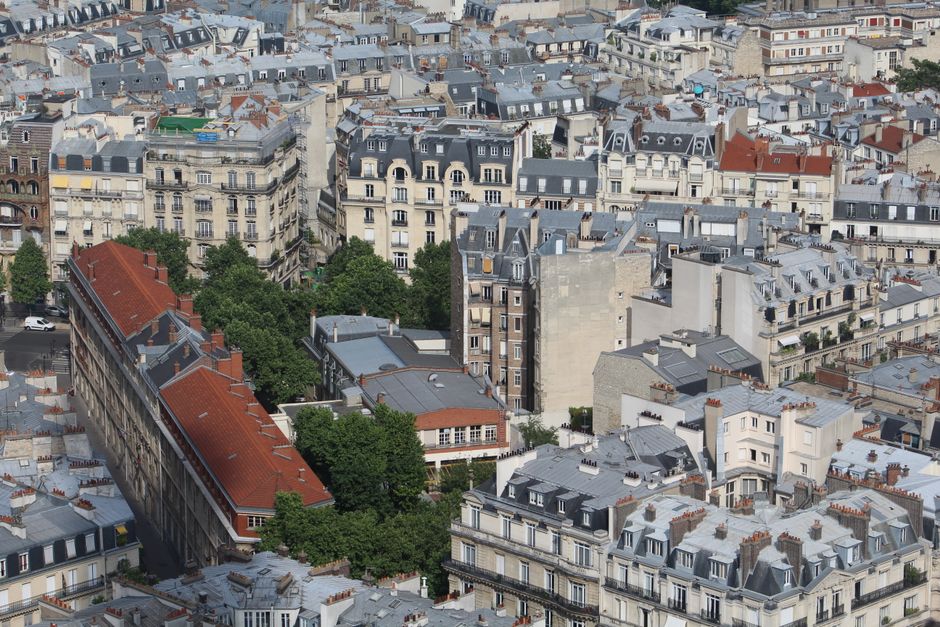
Paris's property investment landscape is shifting. While central arrondissements remain anchored by heritage and prestige—commanding premium prices around €15,000 per square metre—the real yield conversation is now happening on the periphery, where major development projects are fundamentally altering neighbourhood profiles and rental dynamics.
Consider the transformation unfolding in the 13th arrondissement, particularly around the Austerlitz-Paris-Bercy corridor. Large-scale residential and mixed-use projects here are attracting younger professionals and families, pushing gross rental yields to 3.5–4.2 percent—considerably higher than the 2.1–2.8 percent typical in the 1st through 8th arrondissements. For landlords, this means stronger cash-on-cash returns, even as purchase prices remain accessible at €9,500–€11,000 per square metre.
The northern arrondissements tell a similar story. Around Porte de la Chapelle in the 18th, where the Paris Métropole development zone is encouraging new residential builds and cultural venues, landlords are seeing rental demand accelerate. Properties acquired two years ago at €8,200 per square metre are now commanding rents that reflect neighbourhood amenities—gyms, co-working spaces, restaurants—that simply didn't exist before.
For property investors evaluating opportunities, understanding the planning pipeline is essential. The Île-de-France Regional Authority publishes detailed forecasts on new housing stock, and projects with completion dates before 2028 represent the most immediate yield plays. A completed development signals immediate tenant demand; one still under construction carries execution risk.
Landlords should also monitor transport links. The Paris-Saclay tram extension and continuing Grand Paris Express infrastructure improvements are reshaping commute patterns and, with them, neighbourhood desirability. Properties within 800 metres of new or enhanced transit nodes typically see rental premium acceleration within 18–24 months of opening.
Equally important: renovation obligations. Recent regulatory changes mean landlords must meet stricter energy efficiency standards by 2034. Newer developments and recently renovated stock already compliant represent lower future capital expenditure—a factor professional investors increasingly factor into yield calculations.
The headline risk is obvious: new supply dampens rents if demand doesn't follow. But in Paris's case, where annual population growth and tourism continue driving housing pressure, well-located new developments typically absorb quickly. The sweet spot remains areas within the périphérique but outside the 1st–8th belt, especially the 9th through 12th arrondissements and emerging zones in the 13th, 15th, and 19th.
For investors accustomed to thinking of Paris property as a generational hold predicated on capital appreciation, yield plays tied to neighbourhood regeneration represent a different—and increasingly compelling—return profile.
This article was compiled by AI from the sources linked above and screened before publishing. See our editorial standards.