How Paris Built Its Way to a Transport Crossroads: The Decades Behind Today's Infrastructure Decisions
From post-war car culture to climate urgency, the capital's transport networks reveal a city wrestling with competing visions of urban mobility.
From post-war car culture to climate urgency, the capital's transport networks reveal a city wrestling with competing visions of urban mobility.
When construction crews began expanding the RER E line eastward in 2019, few Parisians recognised the project as the culmination of half a century of planning, compromise, and fundamental shifts in how the city thought about moving its people.
The journey began in the 1970s, when planners saw Paris drowning in automobiles. The périphérique ring road, completed in 1973, was meant to manage traffic flowing into the capital. Instead, it accelerated suburban sprawl across the Île-de-France region. By the early 2000s, commuters from Val-d'Oise and Seine-et-Marne were spending an average of 90 minutes daily on roads clogged with private vehicles—a reality that forced transport authorities to reckon with the limitations of car-centric infrastructure.
The RATP's strategic pivot came gradually. During the 2015 Paris climate accords, city officials acknowledged what transit experts had long known: the existing network, built primarily between 1900 and 1975, was reaching saturation. Line 4, which runs from Châtelet to Mairie de Montrouge, carries over 700,000 passengers daily—nearly double its intended capacity.
This historical constraint shaped everything that followed. The RER E expansion, connecting Haussmann-St Lazare to Nanterre-Université and eventually Mantes-la-Jolie, represented a deliberate investment in regional rail over urban motorway development. The €2.1 billion project reflected decades of data showing that every euro spent on suburban rail returned significantly more economic benefit than road infrastructure.
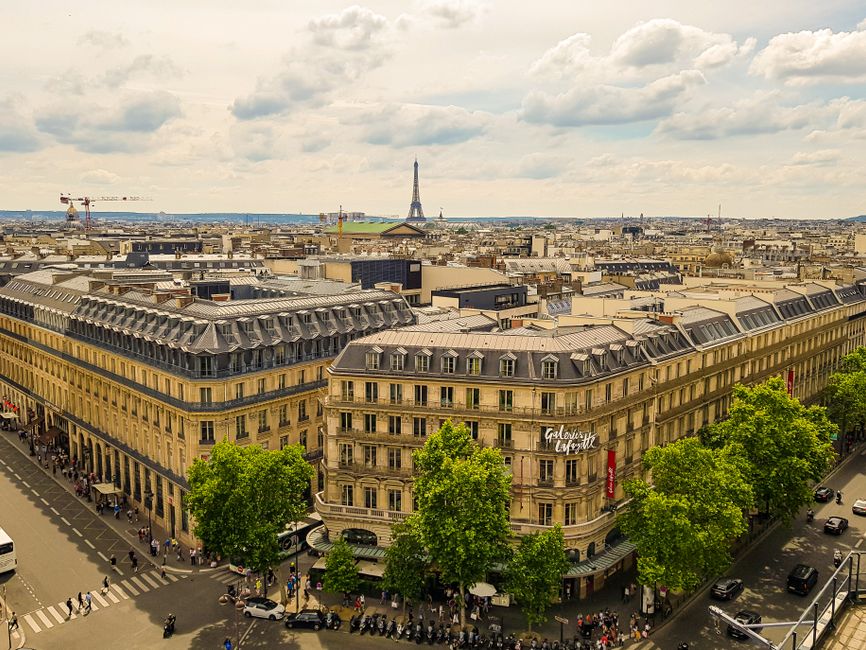
Yet Paris's infrastructure challenges aren't merely technical; they're rooted in the city's physical DNA. The dense 19th-century street grid of the Marais or Saint-Germain-des-Prés cannot accommodate modern traffic volumes. The baroque planning of Haussmann's boulevards—designed for 19th-century carriage speeds—became a bottleneck for 21st-century mobility. This geographic reality forced transport planners toward an inescapable conclusion: the future lay underground and above ground, not on surface streets.
Today's Grand Paris Express project, budgeted at €35 billion and spanning four new suburban RER lines, cannot be understood without this context. It represents not a sudden epiphany but a logical endpoint to decades of debate about whether Paris would remain car-dependent or embrace mass transit at scale.
What makes 2026 a crucial moment is that these long-planned ambitions are now being realised. The first sections of automated driverless trains will begin service in 2028. This infrastructure—rooted in decisions made when today's commuters were children—finally arrives as the capital confronts its transport future.
This article was compiled by AI from the sources linked above and screened before publishing. See our editorial standards.
How does this story make you feel?
Spread the word
About this article
Published by The Daily Paris
Daily brief
Free, in your inbox before 7am. Weekdays.
More in News