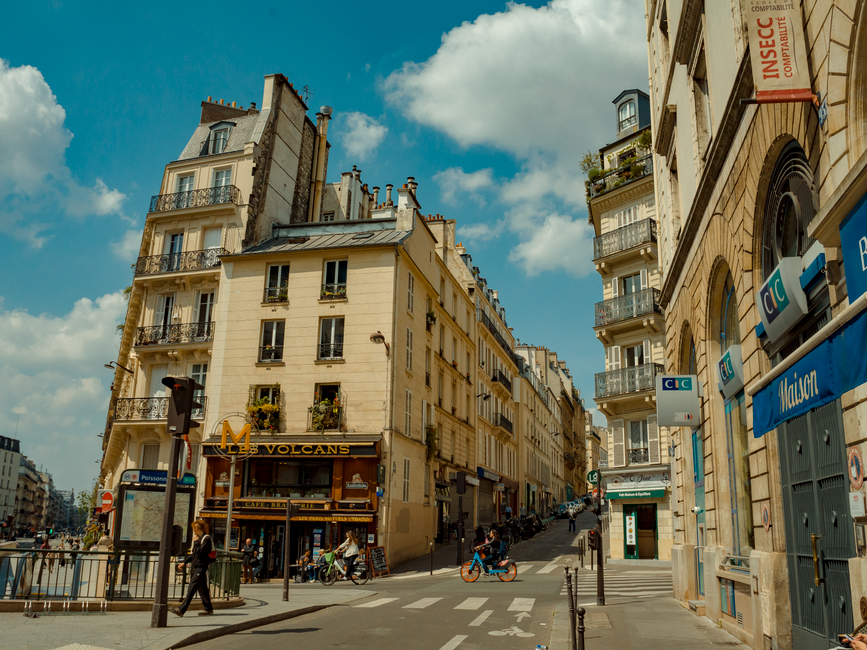
Paris is quietly reshaping itself as one of Europe's most aggressive sustainability laboratories, moving beyond headline-grabbing initiatives to embed green practices into the fabric of daily life across neighbourhoods from the Marais to Belleville.
The city's commitment crystallises in projects like the Seine-side transformation along the Left Bank, where pedestrian zones now dominate stretches formerly reserved for cars. Meanwhile, the Rue de Rivoli remains largely car-free, a model that Copenhagen has championed for years but Paris is now expanding systematically across 15 priority neighbourhoods by 2028.
"We're not just painting bike lanes," explains the logic behind Paris's climate action framework. The city has invested €250 million in its cycling infrastructure since 2020, creating over 200 kilometres of protected routes. By comparison, Amsterdam's famous network took decades to develop; Paris is accelerating that timeline while retrofitting a denser, historically complex urban landscape.
The numbers tell a compelling story. Paris aims for carbon neutrality by 2050, with intermediate targets requiring a 55 per cent emissions reduction by 2030. Berlin and Barcelona have similar ambitions, but Paris's approach distinguishes itself through hyper-local implementation. Each arrondissement now has mandated green space expansion targets, and the city has planted over 170,000 trees since 2015—a rate outpacing London's comparable initiatives.
Energy efficiency drives another frontier. The Plaine Saint-Denis district, once an industrial wasteland, now hosts Europe's largest district heating system powered by renewable sources, serving 80,000 residents. Vienna pioneered district heating decades ago, yet Paris's recent deployments leapfrog older technologies with smart grid integration.
However, challenges persist. The city's ageing building stock—much dating to Haussmann's era—resists retrofit efforts that newer cities like Stockholm navigate more smoothly. Retrofitting a 19th-century apartment building in the 6th arrondissement costs substantially more than upgrading Copenhagen's modernist stock, creating equity issues as gentrification accelerates in newly green zones.
Public transit expansion remains Paris's trump card. The RATP's €2.4 billion metro extension programme contrasts sharply with funding constraints facing London's expansion projects. By 2030, 85 per cent of Parisians will live within 500 metres of rapid transit—a density advantage few cities match.
Yet sustainability isn't merely technical. Paris's emerging circular economy hubs in Belleville and the 13th arrondissement echo initiatives in Barcelona and Berlin, but with distinctly Parisian character: repair cafés operate from converted storefronts, and community gardens sprout from unlikely spaces.
As global cities compete for sustainability credibility, Paris demonstrates that ambition requires neither reinvention nor wholesale transportation overhauls. Instead, systematic neighbourhood-level interventions, layered atop existing infrastructure, may offer the most replicable model for dense historic cities worldwide.
This article was compiled by AI from the sources linked above and screened before publishing. See our editorial standards.