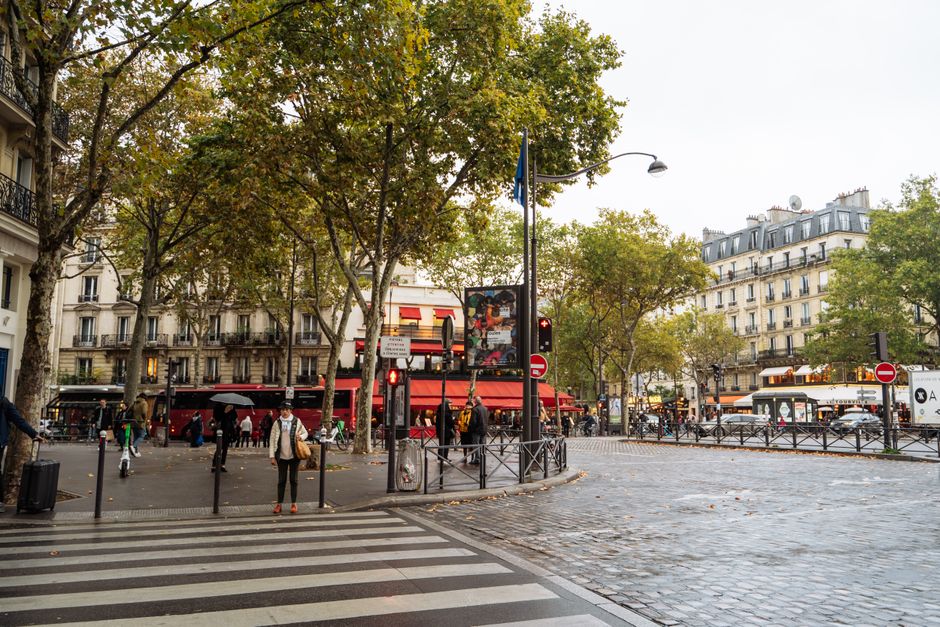
When the City of Paris announced plans to cut carbon emissions by 55% by 2030, the ambitious target earned international praise. Yet on the ground, in the arrondissements where people live and work, the reality feels far more complicated.
On rue Oberkampf in the 11th, merchant Christophe Moreau watches from behind his café counter as new cycle lanes continue to narrow parking spaces. "I support the environment entirely," he says, echoing sentiments heard across the city's small-business community. "But my delivery trucks can't fit where they used to. My suppliers tell me they're routing around Paris because congestion is costing them money." His concerns reflect broader frustrations: the Chamber of Commerce reports that 34% of retailers have experienced increased logistics costs since expanded cycling infrastructure rolled out in 2024.
Yet the picture is far from uniformly negative. In Belleville, where air quality has historically lagged other neighbourhoods, residents describe tangible improvements. "My daughter's asthma episodes are less frequent," says Aminata Diallo, a nurse who lives near parc des Buttes-aux-Cailles. The district's population-weighted pollution index dropped 18% over three years, according to municipal data, partly due to the electric bus network expansion.
The sustainability push is reshaping daily life in ways both visible and subtle. The €2.50 daily congestion charge introduced last year for vehicles entering central Paris has proven divisive. Commuters from outer suburbs say it unfairly punishes those without viable alternatives, while environmentalists argue it hasn't gone far enough to discourage car use. Public transport ridership has grown 12% since implementation, though critics note the métro system remains perpetually strained.
Housing advocates raise another concern: sustainability mandates are pushing renovation costs skyward. In the Latin Quarter, landlords report that compliance with new thermal efficiency standards has inflated renovation expenses by up to 40%, costs often passed to tenants in a city where rent already consumes over 30% of average household income.
Still, younger residents increasingly factor environmental credentials into their neighbourhood choices. Real estate agents in the 13th report strong demand for newly retrofitted buildings, suggesting demographic shifts may eventually align financial incentives with climate goals.
As Paris races toward its 2030 targets, the conversation reveals what officials sometimes overlook: sustainability isn't abstract. It happens on real streets, affects real livelihoods, and demands solutions that work for everyone—not just for those who can absorb transition costs.
This article was compiled by AI from the sources linked above and screened before publishing. See our editorial standards.