By the Numbers: What Paris's Ambitious Green Goals Actually Look Like
From the Seine's water quality to district heating networks, The Daily Paris breaks down the hard data behind the capital's sustainability revolution.
From the Seine's water quality to district heating networks, The Daily Paris breaks down the hard data behind the capital's sustainability revolution.
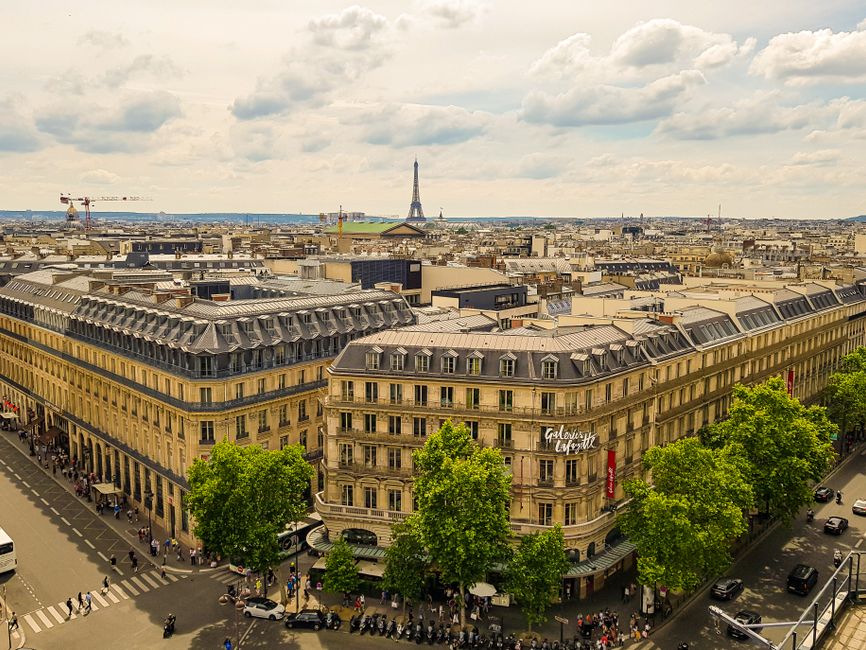
Paris has pledged to become carbon-neutral by 2050, but what does that commitment mean in concrete terms? A closer examination of the city's environmental initiatives reveals a complex picture of progress, targets, and the sheer scale of transformation required across Europe's most densely populated capital.
The numbers tell a compelling story. The City of Paris operates 1,200 kilometres of cycling infrastructure—a 47 per cent increase since 2014—and bicycle journeys have surged to account for 12 per cent of all trips within the périphérique, up from 4 per cent a decade ago. Meanwhile, the district heating network operated by Cofely, which serves 500,000 residents in the 12th, 13th, and 14th arrondissements, has reduced annual CO₂ emissions by approximately 280,000 tonnes compared to individual heating systems.
Water quality metrics paint a more sobering picture. The Seine's bacterial contamination levels exceed safe swimming standards roughly 40 per cent of the year, according to monitoring data from Agence de l'Eau Seine-Normandie. However, the €1.4 billion investment in wastewater infrastructure since 2016 has improved nitrogen and phosphate levels by 18 per cent, with officials targeting full accessibility for swimming by 2027.
Green space expansion shows measurable progress: Paris added 52 hectares of new parks and gardens between 2020 and 2025, bringing total green coverage to 20 per cent of the city's 10,552 hectares. The controversial removal of 12,000 parking spaces since 2020—compensated partly by 8,500 new cycling stands—reflects a deliberate modal shift strategy. Public transport usage has climbed to 51 per cent of all journeys, up from 47 per cent in 2015.
The Marais and Île de la Cité saw a 34 per cent reduction in vehicle emissions between 2019 and 2024, following the implementation of ultra-low emission zones. Energy consumption in municipal buildings has fallen by 22 per cent since 2015, partly through retrofitting programs that cost an average of €850 per square metre.
Perhaps most ambitiously, Paris aims to reduce overall CO₂ emissions by 55 per cent by 2030 against 2004 baselines. Current projections suggest a 38 per cent reduction is on track—meaningful progress, though requiring accelerated action in the building sector, which still accounts for 63 per cent of citywide emissions.
These figures underscore an uncomfortable truth: while Paris's environmental narrative captures global attention, the gap between targets and trajectory remains substantial, even for one of the world's most committed major cities.
This article was compiled by AI from the sources linked above and screened before publishing. See our editorial standards.
How does this story make you feel?
Spread the word
About this article
Published by The Daily Paris
Daily brief
Free, in your inbox before 7am. Weekdays.
More in News