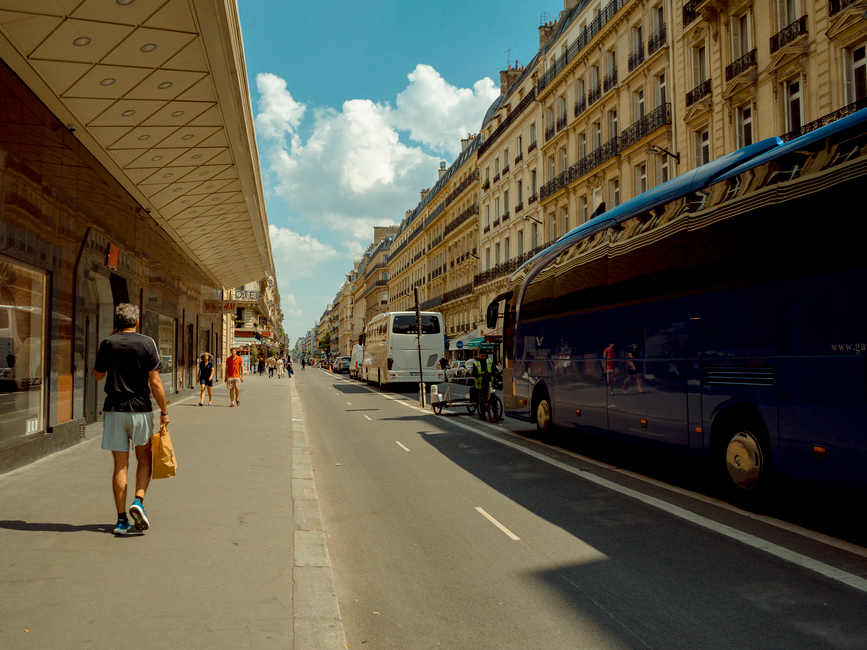
Getting Around Paris: What Locals Actually Do to Beat the Commute
Forget the guidebooks—we asked Parisians how they really navigate the city, and their answers might surprise you.
Forget the guidebooks—we asked Parisians how they really navigate the city, and their answers might surprise you.

The Paris Metro carries 5.2 million passengers daily, and if you've been among them during rush hour, you understand why locals have developed rather specific survival strategies. We spoke with residents across the 20 arrondissements to uncover the transport truths that never make it into tourist guides.
For those commuting from the outer arrondissements toward the business districts of La Défense or near the Champs-Élysées, the consensus is clear: timing is everything. Parisians working near République or Bastille consistently avoid the 7:45–8:30 a.m. window, instead leaving either earlier or catching the second wave. A resident of the 11th explained that the RER A line from Châtelet becomes genuinely unpleasant during peak hours, making a 20-minute delay common.
Bicycle culture has fundamentally shifted commuting patterns. The Vélib' subscription system (€89 annually for unlimited 45-minute rides) has become the preferred option for inter-arrondissement journeys under 2 kilometres. Locals near the Canal Saint-Martin or working in the Marais frequently abandon Metro plans entirely, instead cycling along the Seine's expanding dedicated lanes. Weather, obviously, changes the calculus—but even rainy June mornings see committed cyclists.
Bus routes, often overlooked by visitors, are where savvy locals find peace. Lines 69 and 86 run along the Seine's left bank with windows and relative quiet, making them popular with professionals who work during their commute. The 38 bus from Gare Saint-Lazare to Montmartre avoids the chaotic Metro transfers entirely.
Cost matters. A monthly Metro pass costs €82.80, making the investment significant for those with flexibility. Several residents mentioned that working from home arrangements—now standard across Paris's media, tech, and professional sectors—have reduced their transport dependency to 2–3 days weekly, making hybrid passes more economical than full monthly subscriptions.
Walking deserves mention. Parisians in the 5th and 6th arrondissements frequently walk across the Latin Quarter and towards the Seine rather than descend into the Metro. The distance from Île de la Cité to Odéon is manageable on foot, and you'll avoid the perpetual delays on Line 4.
One genuine frustration emerged consistently: weekend disruptions. The RATP regularly closes Metro sections for maintenance, forcing commuters to navigate bus replacement services. Locals recommend downloading the RATP app for real-time updates rather than relying on posted notices.
The honest truth? There's no perfect system. Parisians layer their options—combining Metro, bus, Vélib', and walking depending on weather, destination, and mood. The real secret isn't finding one answer; it's remaining flexible enough to adapt daily.
This article was compiled by AI from the sources linked above and screened before publishing. See our editorial standards.
How does this story make you feel?
Spread the word
About this article
Published by The Daily Paris
Daily brief
Free, in your inbox before 7am. Weekdays.
More in lifestyle