The Morning Rush: Meet the Faces Who Keep Paris Moving
From bus drivers on the 38 to cycle couriers racing through the Marais, the unsung commuters and transport workers are the real heartbeat of the city.
From bus drivers on the 38 to cycle couriers racing through the Marais, the unsung commuters and transport workers are the real heartbeat of the city.
At 6:47 a.m. on the Pont de l'Alma, the city is still half-asleep. But the RATP buses are already running their morning choreography, and the people who make that happen are already hours into their shift. The transport network that moves nearly 5 million passengers daily across Paris relies not on schedules alone, but on the dedication of thousands of workers whose stories rarely make it into the guidebooks.
The Paris transport authority employs over 13,000 people, yet most commuters zoom past them without a second glance. On Line 6, which curves dramatically over the Seine between Bir-Hakeim and Pont de l'Alma, drivers navigate some of the trickiest tracks in Europe while managing crowded platforms during rush hour. By 8:30 a.m., the métro system is running at near-capacity, with drivers making split-second decisions about timing and safety.
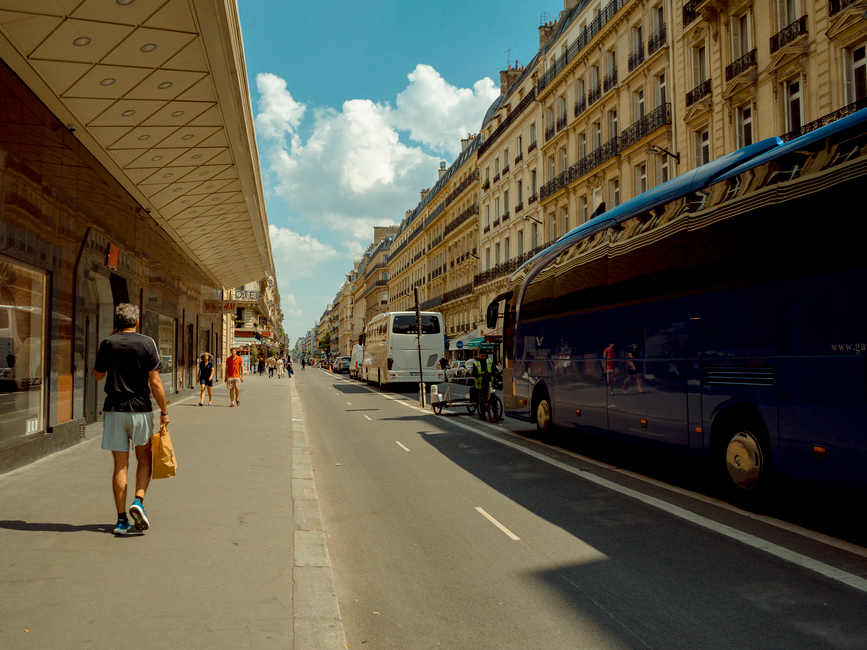
But the morning commute tells a deeper story than efficiency metrics. On the Rue de Rivoli, cycle couriers—many of them young professionals supplementing creative careers—weave through traffic with practiced precision, their messenger bags stuffed with documents bound for offices in the 8th and 16th arrondissements. These are students, artists, and entrepreneurs who've chosen the freedom of two wheels over the métro's predictability.
Meanwhile, the bus drivers on the 38—which rumbles through Montmartre and down towards Gare Saint-Lazare—navigate some of Paris's most Byzantine streets. They're the connective tissue between neighbourhoods, often the only consistent face a regular passenger sees, yet they're frequently invisible to the city's cultural narrative.
The real Paris commute isn't found in statistics about 1.66 billion annual journeys or the €82.50 monthly Navigo pass price. It emerges in the 4 a.m. alarm clocks of maintenance workers who repair tracks in the tunnels beneath Châtelet. It lives in the station assistants at Abbesses who help confused tourists while managing the station's brutal staircase. It breathes in the delivery drivers who've memorized every shortcut between the 11th and the 3rd.
As Paris evolves—with new cycling infrastructure transforming how residents move, and plans to extend RER lines reaching further into the suburbs—these are the people quietly absorbing change, adapting their routes, and ensuring the city's pulse remains steady. They're not celebrities or influencers. They're the true faces of Paris's rhythm.
This article was compiled by AI from the sources linked above and screened before publishing. See our editorial standards.
How does this story make you feel?
Spread the word
About this article
Published by The Daily Paris
Daily brief
Free, in your inbox before 7am. Weekdays.
More in lifestyle