Sydney's Trade Corridor Faces Perfect Storm of Geopolitical and Economic Headwinds in 2026
Escalating global tensions, supply chain volatility and currency fluctuations are testing the resilience of Australia's biggest business hub.
Escalating global tensions, supply chain volatility and currency fluctuations are testing the resilience of Australia's biggest business hub.
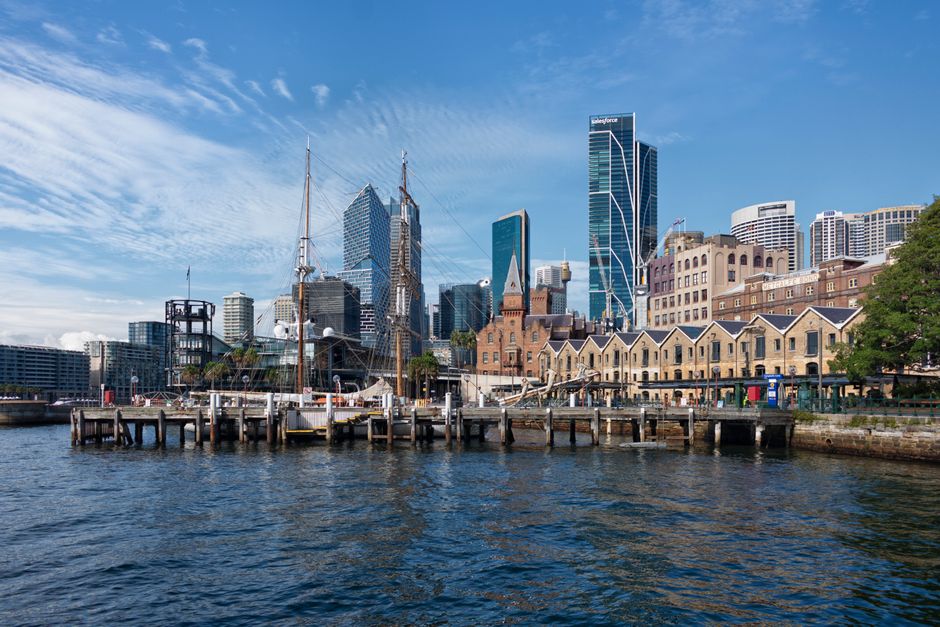
Sydney's international trade sector is grappling with a confluence of challenges that have executives in Barangaroo and the CBD rethinking their global strategies as 2026 unfolds. From Middle Eastern tensions threatening maritime routes to currency volatility and protectionist trade policies, the headwinds buffeting Australia's largest commercial hub are proving more complex than many anticipated.
The impact is already visible across the city's financial precincts. Shipping costs through the Strait of Hormuz—a critical chokepoint for Australian iron ore and energy exports—have surged roughly 18 per cent in recent months amid geopolitical brinkmanship, according to industry data. For companies operating out of Maritime House and the Port Authority's offices at Barangaroo, these increases directly compress margins on exports worth billions annually.
"We're seeing clients reassess their supply chains almost weekly," says the Australian Chamber of Commerce and Industry, which maintains offices near Circular Quay. Many firms previously reliant on single-source suppliers are now exploring alternatives or stockpiling goods, adding working capital pressure.
Currency volatility presents another layer of complexity. The Australian dollar has fluctuated between 0.64 and 0.69 USD throughout 2026, making forward contracts expensive and creating budgeting uncertainty for exporters. A mid-sized manufacturing firm exporting components through Port Botany could see profit margins swing by 5-7 per cent based purely on exchange rate movements.
Trade policy uncertainty looms larger still. Protectionist rhetoric from major trading partners has triggered fears of tariff escalation, while regional tensions have raised questions about supply chain security. Companies with operations spanning Asia-Pacific are now conducting risk audits and exploring nearshoring options—moves that consume management time and capital.
Data from the Australian Bureau of Statistics shows merchandise exports grew just 1.2 per cent in the first quarter of 2026, a sharp slowdown from 2025's 4.8 per cent expansion. Key sectors including agricultural exports and manufacturing have lost momentum, with many firms citing demand weakness in Asian markets alongside elevated logistics costs.
Yet Sydney remains strategically positioned as a global business hub. The city's deep institutional expertise, established financial infrastructure around the CBD and North Sydney, and Australia's resource wealth provide long-term ballast. However, companies will need to navigate 2026 with heightened vigilance—diversifying supply chains, hedging currency exposure, and building resilience into operations that once assumed relative stability.
The question facing Sydney's trade sector isn't whether challenges exist, but how quickly businesses can adapt to a more fragmented and volatile global environment.
This article was compiled by AI from the sources linked above and screened before publishing. See our editorial standards.
How does this story make you feel?
Spread the word
About this article
Published by The Daily Sydney
Daily brief
Free, in your inbox before 7am. Weekdays.
More in Business