Station F Is Minting Winners — and the Queue to Get In Has Never Been Longer
Paris's giant startup campus on the Left Bank is drawing record applications and serious capital as founders worldwide reconsider their options.
Paris's giant startup campus on the Left Bank is drawing record applications and serious capital as founders worldwide reconsider their options.
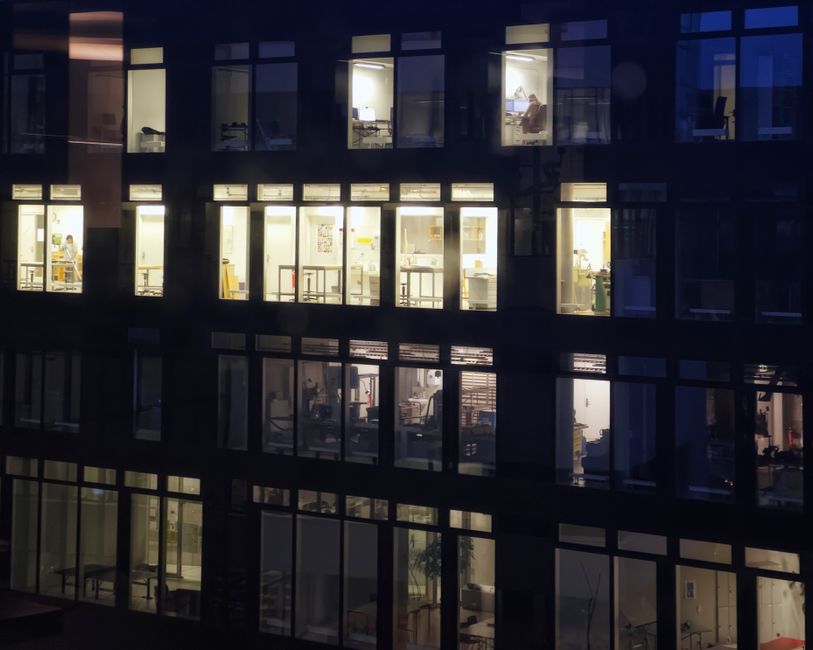
The numbers coming out of Station F this summer tell a story that Xavier Niel's team has been waiting years to tell. The campus at 55 Boulevard Vincent Auriol — a restored 1929 freight depot in the 13th arrondissement — now hosts more than 1,000 startups at any given time, and its 2026 application cycle drew roughly 6,000 submissions for the Founders Program alone, up from around 4,500 two years ago. Demand has not been this sharp since the campus opened in 2017.
The timing is not accidental. Uncertainty in the American visa system and tighter restrictions on international founders looking to build in the United States have pushed a meaningful share of talent toward European alternatives. Paris, with its improving English-language infrastructure, relatively low office costs compared to London, and a government still actively courting foreign tech investment through the French Tech Visa, has emerged as the clearest beneficiary on the continent. Station F sits at the center of that shift.
The clearest winners right now are the programs operating inside the campus rather than the campus itself. BlaBlaCar, which graduated from the early French startup scene and now mentors younger companies, has deepened its presence on the Boulevard Vincent Auriol site. Microsoft and Facebook parent Meta both maintain active program offices within Station F, offering selected cohorts access to cloud credits, go-to-market support, and direct introductions to their respective partner networks. Meta's Startup Program at Station F, relaunched in early 2025, currently supports around 20 companies at a time and prioritises AI-adjacent tools — exactly the category attracting the most capital in Paris right now.
Across the Seine, the contrast with the Right Bank is instructive. Established firms in the 8th arrondissement — the traditional home of French finance and consulting — are increasingly sending junior talent to Station F events and demo days to scout acquisitions before they become expensive. That pipeline, informal but growing, is generating earlier-stage deal flow than Paris has historically seen.
The French government's La French Tech initiative, based nearby and closely aligned with Station F's programming, reported that French startups raised €8.3 billion in 2024. The 2025 figure, due for full publication later this year, is expected to exceed that. Seed-stage valuations in Paris have crept up accordingly: a well-structured pre-seed round in AI or climate tech now typically prices at €1.5 million to €3 million for 10 to 15 percent equity, figures that would have looked optimistic in 2021.
Getting into Station F is competitive but not opaque. The Fighters Program, aimed at early-stage companies, costs €195 per month per desk — a price that has held steady since 2023, which is itself a mild subsidy given inflation in Paris commercial real estate. Successful applicants typically show a working prototype, at least one paying customer, and a team of two or more. The campus runs rolling admissions for some programs; others have fixed cohort dates, with the next major Founders Program intake scheduled for September 2026.
Founders who make it through gain access to more than 30 partner programs, a network of 700-plus mentors, and the social density that comes from working in Europe's largest startup building — roughly 34,000 square metres under one roof. The Halle Freyssinet, the main hall, functions as an informal deal room on any given Tuesday afternoon. That proximity matters more than any single program feature.
For companies weighing Paris against Berlin or Amsterdam, the calculus has shifted. Berlin's rental market has tightened sharply, and Amsterdam's startup support infrastructure remains fragmented. Paris still has bureaucratic friction — company registration can take two to three weeks even with digital filings — but the Station F ecosystem effectively outsources much of that pain through its legal and accounting partner network on-site.
The queue is long. Founders with a serious concept and a concrete team should apply now for the September cycle, use the intervening weeks to establish French legal residency if needed, and arrive with a clear answer to one question the selection committees ask every time: why Paris, and why now?
How does this story make you feel?
Spread the word
About this article
Published by The Daily Paris
Daily brief
Free, in your inbox before 7am. Weekdays.
More in Business