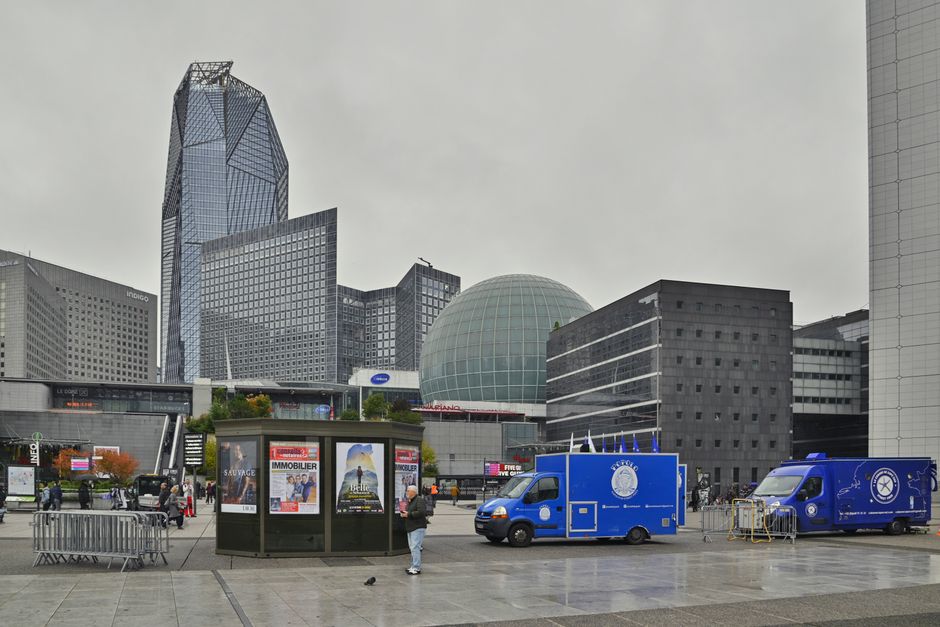
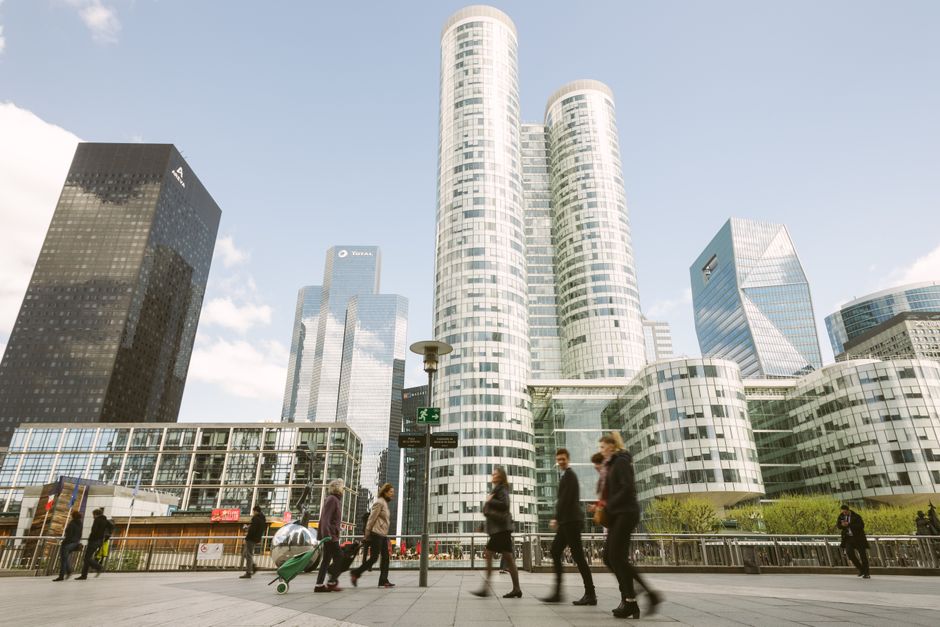
The Paris office market is undergoing a profound structural shift, and the consequences for local employment are becoming impossible to ignore. Over the past eighteen months, prime commercial real estate in La Défense has seen asking rents stabilise around €650 per square metre annually—a significant correction from the €720 peak of early 2024—as multinational corporations increasingly embrace hybrid work models that require less traditional desk space.
This cooling in demand for centrally-located offices is already reshaping where Paris attracts and retains talent. Companies downsizing their footprint in the 8th arrondissement and around the Champs-Élysées are relocating administrative functions to secondary hubs in the banlieues, particularly around Boulogne-Billancourt and La Garenne-Colombes, where rents average €450 per square metre. The shift is subtle but consequential: young professionals increasingly find entry-level positions distributed across the metropolitan region rather than clustered in the historic business core.
Recruitment agencies operating across Paris report a measurable change in candidate behaviour. Where five years ago junior talent gravitated toward prestigious central addresses for networking and mentorship, today's job-seekers prioritise flexibility, proximity to transport hubs like Saint-Denis Pleyel station, and access to local amenities. Companies that previously competed fiercely for office prestige on the Place Vendôme or near the Marais now compete on remote-work benefits and suburban accessibility.
The implications extend beyond real estate metrics. Neighbourhood vitality patterns are shifting visibly. The 15th and 16th arrondissements, traditionally residential, have attracted growing clusters of service-sector jobs as office-dependent sectors contract. Meanwhile, districts historically defined by commercial density face unexpected challenges in anchoring local employment ecosystems.
Not all trends favour decentralisation uniformly. Tech firms and creative industries continue clustering in the Marais and République quarters, where cultural density and talent networks retain magnetic pull regardless of remote-work adoption. But for financial services, consulting, and administrative operations—sectors that employed tens of thousands across central Paris—the momentum is decidedly outward.
The Paris Chamber of Commerce reports that commercial property investment inquiry has shifted noticeably toward mixed-use developments offering flexibility rather than single-purpose office blocks. This architectural reorientation reflects economic reality: the Paris job market of 2026 rewards adaptability over concentration. Companies that once viewed a Défense address as essential to their brand identity now view their real estate footprint primarily through a productivity and cost lens. For Paris's workforce, that recalibration is reshaping opportunity geography in ways that will take years to fully manifest.
This article was compiled by AI from the sources linked above and screened before publishing. See our editorial standards.