Paris Office Vacancy Rates Hit 5-Year High in 2024
La Défense vacancy climbs to 15% as hybrid work reshapes Paris commercial real estate. Investment flows to premium districts amid regional uncertainty.
La Défense vacancy climbs to 15% as hybrid work reshapes Paris commercial real estate. Investment flows to premium districts amid regional uncertainty.
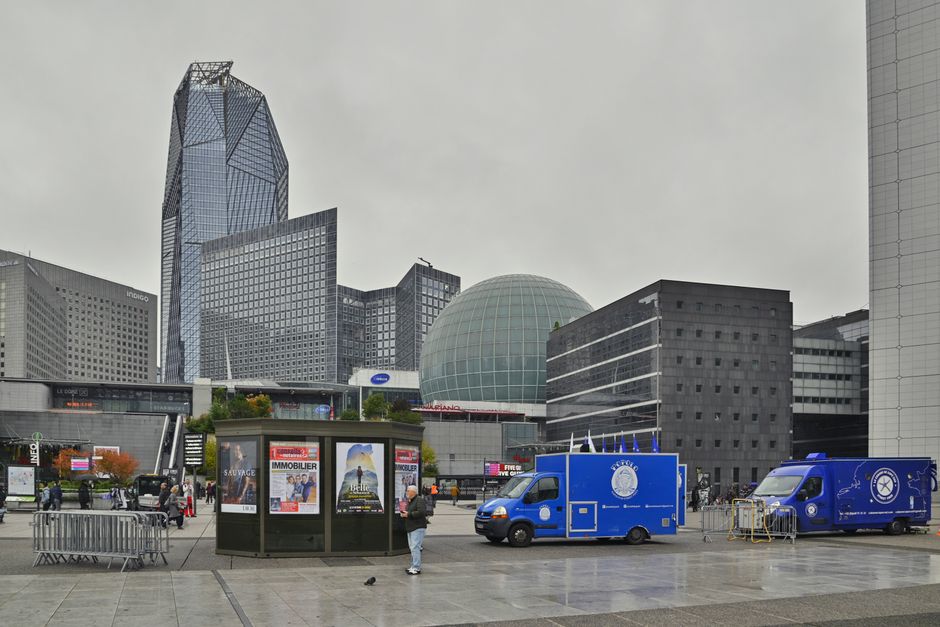
Paris's commercial real estate market is flashing contradictory signals this summer, and seasoned investors are struggling to read the map. While headline figures show office vacancy climbing to 12.8 percent across the Île-de-France region—the highest in five years—billions of euros continue flowing into carefully selected neighbourhoods and buildings, suggesting a market in flux rather than free fall.
The clearest indicator of economic anxiety appears in La Défense, where empty office space has swelled to nearly 15 percent. The sprawling business district, once synonymous with French corporate ambition, is grappling with a structural shift: companies are downsizing footprints as hybrid work persists, yet many are unwilling to abandon physical presence entirely. Transaction volumes in the tower-heavy district have fallen 23 percent year-on-year, according to property advisors tracking the market.
But venture deeper into the 8th and 9th arrondissements—traditional strongholds of finance and professional services—and a different picture emerges. Premium office space near Place Vendôme and along Boulevard Haussmann commands €900 to €1,200 per square metre annually, with occupancy rates remaining robust at 88 percent. Investment firms and luxury brands are competing fiercely for these addresses, treating them as operational headquarters and brand ambassadors combined.
What explains this bifurcation? Economic indicators provide clarity. The European Central Bank's recent hawkish stance on interest rates has made capital expensive, squeezing mid-market companies that once anchored secondary office corridors. Simultaneously, multinational corporations and tech-backed enterprises have capital reserves enabling them to pay premium prices for prestige addresses that signal stability to investors and clients alike.
Cross-border investment flows reveal similar stratification. German institutional investors have reduced exposure to La Défense by 31 percent since January, redirecting funds toward Marais and République—neighbourhoods attracting creative industries and startups where younger demographics and design-conscious fit-outs justify higher per-metre valuations. British pension funds, traditionally heavy players in French commercial property, have largely held positions rather than expanded them, a cautious posture reflecting broader uncertainty around European growth trajectories.
For Paris-based business leaders, the message is unambiguous: location premium has widened dramatically. The cost gap between a modern office tower in Boulogne-Billancourt and equivalent space on Rue Saint-Honoré has expanded to 40 percent, the largest spread in a decade. Economic fundamentals—access to talent, brand positioning, and tenant stability—now weigh more heavily than square footage in investment decisions. The Paris office market isn't contracting uniformly; it's consolidating around winners.
This article was compiled by AI from the sources linked above and screened before publishing. See our editorial standards.
How does this story make you feel?
Spread the word
About this article
Published by The Daily Paris
Daily brief
Free, in your inbox before 7am. Weekdays.
More in Business