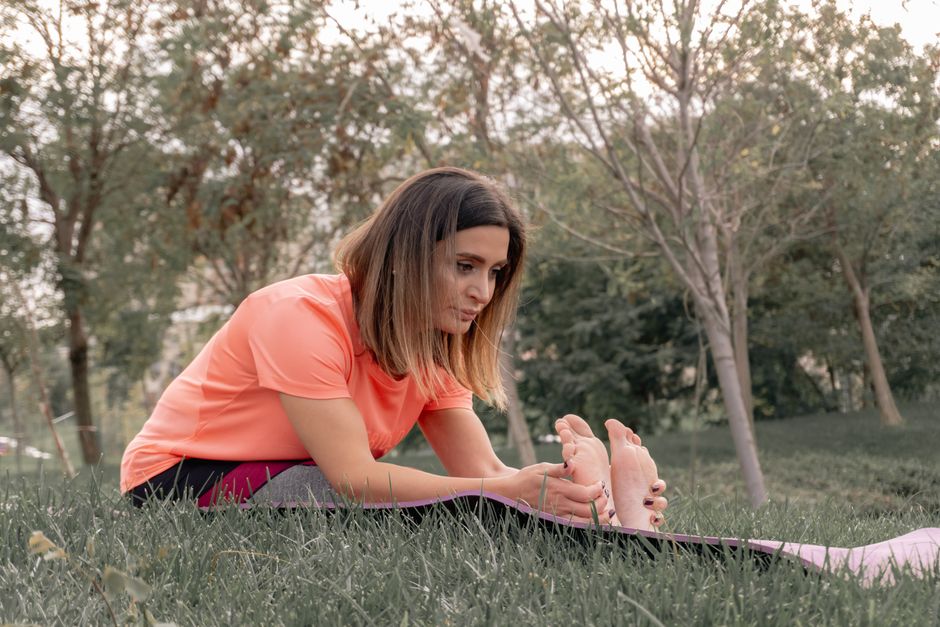
Yoga mats are showing up on the gravel of the Tuileries Garden before 7 a.m. Cyclists crossing the Pont de l'Alma are wearing earbuds tuned to guided breathwork, not podcasts. This is not a trend piece about luxury retreats. These are working Parisians—teachers, nurses, software developers—who have built small, sustainable rituals into city life and, according to practitioners and instructors across the capital, are reporting genuine results.
The timing matters. Global heat records are falling, economic uncertainty is grinding into its fourth consecutive year, and a growing body of research links chronic urban stress directly to cardiovascular and immune dysfunction. France's public health agency, Santé publique France, reported in its 2025 mental health barometer that 23 percent of adults aged 18 to 44 described themselves as experiencing "psychological distress" on a near-daily basis—up six points from 2019. General practitioners at Paris's Centres de Santé municipal clinics say mindfulness-related referrals have roughly doubled since 2023. Demand is outpacing what the healthcare system can absorb, which is precisely why self-directed daily habits have become so central to the conversation.
Where Parisians Are Actually Doing This
The Tuileries Garden remains the city's most democratic wellness space. The association Paris Yoga Collectif has held free outdoor sessions there every Saturday morning at 8 a.m. since April 2024, drawing between 40 and 120 participants depending on weather. No booking required, no equipment sold. Participants bring their own mats or borrow one from the communal pile near the Orangerie end of the garden. The sessions run 55 minutes and combine hatha sequencing with a ten-minute silent sit at the close.
In the 10th arrondissement, the studio Respire Paris on Rue du Faubourg-Saint-Martin has built a reputation for its Monday-evening "Yin and Nidra" class—90 minutes of passive holds followed by yoga nidra, the deep-relaxation practice sometimes called "yogic sleep." Monthly membership costs €65, roughly half the price of comparable studios in the Marais. The waiting list for Thursday-evening classes ran to six weeks as of late June 2026, according to the studio's online booking platform.
Along the Seine's Left Bank towpath between the Pont d'Iéna and the Pont de Grenelle, a loose community of runners has formed a habit borrowed from East Asian wellness traditions: stopping mid-run for two minutes of standing qigong at one of the riverside benches, then continuing. It looks eccentric until you notice how many people are doing it. The Bois de Boulogne cycling loop—13.5 kilometres around the lake circuit—has similarly become a venue for what regulars call "moving meditation," cycling at a pace slow enough to sustain nasal breathing for the full circuit, typically around 40 minutes at 20 km/h.
What the Research Actually Supports
A 2024 meta-analysis published in JAMA Internal Medicine reviewed 37 randomised controlled trials and found that mindfulness-based stress reduction programs produced clinically significant reductions in anxiety scores after eight weeks of consistent practice—the key word being consistent. Not intensive. Not expensive. Eight weeks of 20-minute daily sessions outperformed weekend retreats on every long-term outcome measure the researchers tracked.
That finding maps neatly onto what Paris's municipal wellness program, Bien-être en Ville, has been quietly promoting since its 2023 launch under the Direction de la Santé de la Ville de Paris. The program subsidises six-week introductory meditation courses at 14 maisons des associations across Paris, charging participants no more than €12 total. Over 3,400 residents completed a course in 2025. Retention into ongoing practice at six months was 61 percent—higher than the national average for gym memberships, which hovers around 30 percent after the first quarter.
The practical lesson from all of this is straightforward. Short, regular and local beats long, occasional and expensive. A 15-minute breathing practice in your own kitchen before the métro, a Saturday morning in the Tuileries, a slow loop around the Bois de Boulogne—none of it requires a retreat in Provence or a premium app subscription. For anyone looking to start, the Bien-être en Ville program opens its autumn registration on September 1st via the city's Paris.fr portal. For more personalised guidance on stress, sleep or hormonal factors affecting wellbeing, consulting a médecin généraliste or a specialist at one of Paris's Centres de Santé remains the most grounded first step.