The Science Behind Mindfulness: What It Actually Does to the Brain
Neuroscientists are mapping the measurable changes that meditation produces inside the skull — and the findings are reshaping how Paris approaches public health.
Neuroscientists are mapping the measurable changes that meditation produces inside the skull — and the findings are reshaping how Paris approaches public health.
Eight weeks. That is how long it takes for a consistent mindfulness practice to visibly shrink the amygdala — the brain's fear-processing hub — according to research published in Psychiatry Research: Neuroimaging. The same eight-week window, established in studies using the Mindfulness-Based Stress Reduction protocol developed at the University of Massachusetts in 1979, also thickens grey matter in the prefrontal cortex, the region responsible for decision-making and emotional regulation. For Parisians grinding through summer heat and a cost-of-living squeeze that has pushed average rents in the 11th arrondissement past €1,400 a month for a one-bedroom flat, that timeline is not abstract. It is a prescription.
The timing matters. France's national health authority, the Haute Autorité de Santé, formally recognised mindfulness-based cognitive therapy as a recommended intervention for recurrent depression in 2023, a shift that has quietly accelerated uptake inside Paris's busy urban wellness networks. General practitioners operating under the universal Assurance Maladie system are increasingly pointing patients toward structured eight-week MBSR courses rather than — or alongside — pharmaceutical treatment. The cultural moment is real.
The brain changes are not subtle. A landmark Harvard-affiliated study tracked participants through an eight-week MBSR course and found measurable increases in cortical thickness in the hippocampus, governing learning and memory, and reductions in cell density in the amygdala. Crucially, those structural changes correlated with participants' self-reported drops in stress — the biology and the subjective experience tracked together. A 2021 meta-analysis in Neuroscience and Biobehavioral Reviews, covering 78 separate neuroimaging studies, confirmed that meditation consistently activates the default mode network differently in experienced practitioners, reducing the mind-wandering that underpins anxiety and rumination.
Dopamine also enters the picture. A University of Montreal study measuring neurotransmitter levels during focused-attention meditation found a 65 percent increase in endogenous dopamine release compared to a resting baseline. That single figure explains why experienced meditators describe sessions as intrinsically rewarding rather than effortful — the brain is chemically reinforcing the behaviour.
Paris has become an unlikely testing ground for whether these laboratory findings translate into everyday urban life. The Centre Minkowski, a mental health clinic operating in the 14th arrondissement near the Place de Catalogne, runs structured MBSR courses for approximately 200 participants per year, with fees partially reimbursable under complementary health insurance plans. Sessions cost between €300 and €450 for the full eight-week programme. Meanwhile, the Association pour le Développement de la Pleine Conscience, based in the Marais, trains MBSR instructors to European standards and has certified over 400 teachers operating across the Île-de-France region since 2015.
The city itself has become an unlikely ally. Since the Mairie de Paris expanded its Paris en Commun outdoor wellness calendar in 2024, free guided meditation sessions have run weekly on the Tuileries Garden lawns every Saturday morning at 9h00, drawing between 60 and 120 participants depending on the weather. The Bois de Boulogne hosts a separate silent walking meditation circuit near the Lac Inférieur, organised by the Buddhist association Karma Ling's Paris satellite group, every Sunday. Neither requires registration. Neither costs anything.
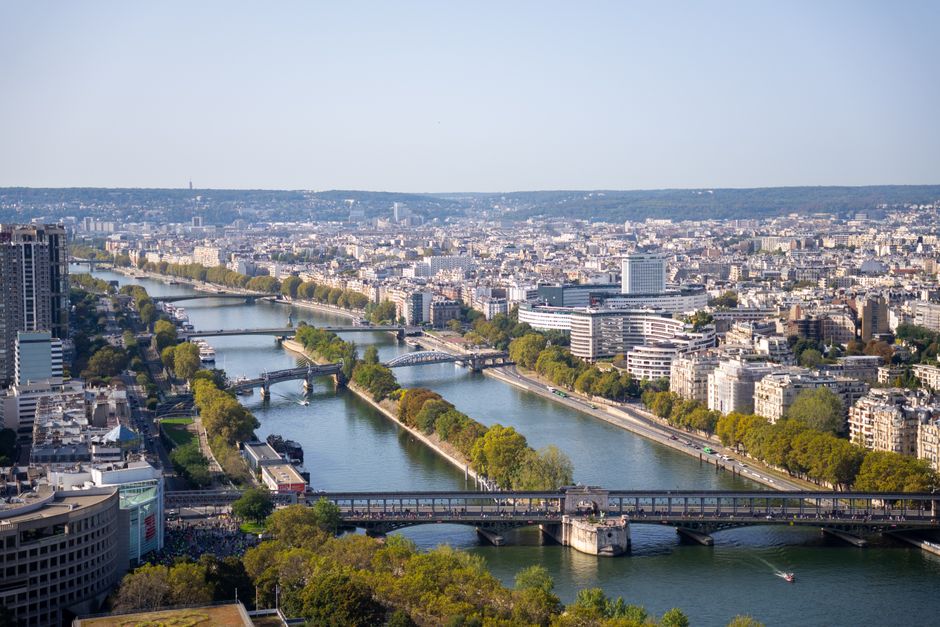
The Seine riverbanks offer their own version. The Paris Plages programme, running from mid-July through mid-August along the Berges de Seine between the Pont de l'Alma and the Pont d'Iéna, will this year include dedicated 30-minute morning mindfulness slots at 8h30, timed before the heat builds. City planners explicitly cited stress-reduction research in the programme's 2026 brief, a sign of how firmly the neuroscience has entered municipal thinking.
For anyone ready to move beyond the riverbank, the practical entry point is straightforward. The Centre Minkowski accepts referrals from any Parisian GP, and the Association pour le Développement de la Pleine Conscience publishes a searchable directory of certified instructors at adhoc prices across all 20 arrondissements. The science says eight weeks is enough to change the brain's architecture. Paris, this summer, is offering several ways to spend them. As always, consult your médecin traitant before beginning any structured programme, particularly if managing an existing mental health condition.
How does this story make you feel?
Spread the word
About this article
Published by The Daily Paris
Daily brief
Free, in your inbox before 7am. Weekdays.
More in Wellness