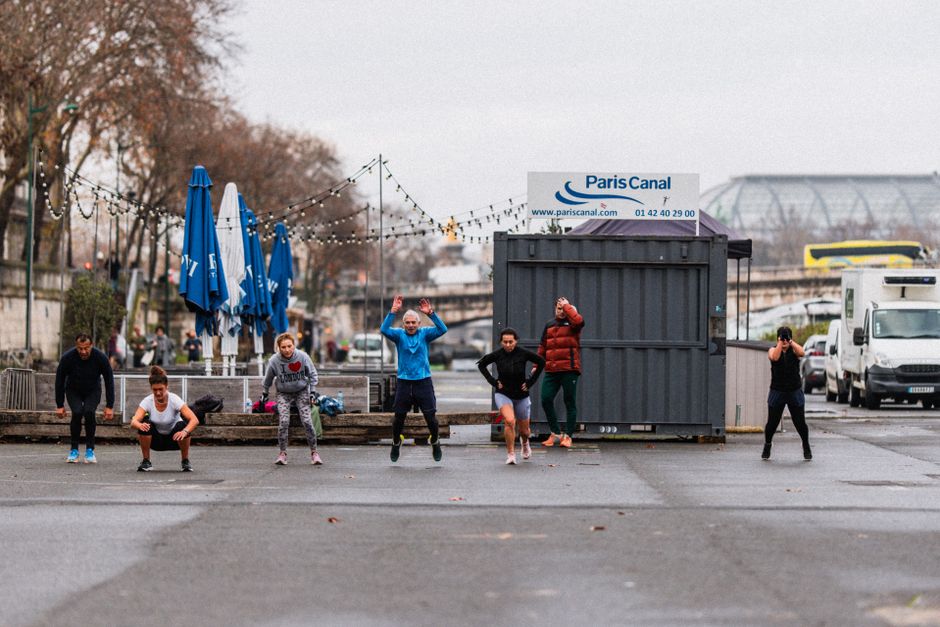
Every Saturday morning, runners gather at Pont de l'Alma, lacing their trainers for the weekly Seine-side challenge that has become as much a fixture of Paris's left bank as the bookstalls themselves. What began three years ago as a loose gathering of a dozen joggers has evolved into a structured community event drawing 200+ participants each week, all chasing personal bests while building friendships along the riverside promenades from Pont des Invalides eastward.
This phenomenon isn't isolated. Across Paris's arrondissements, fitness challenges have emerged as powerful social connectors in a city where isolation remains a persistent wellness concern. The Bois de Boulogne cycling circuit hosts monthly timed trials, while the Tuileries hosts free outdoor yoga collectives every Thursday evening at sunset, drawing yogis of all levels into shared practice.
Dr. Sophie Martin, a sports medicine specialist at Hôpital Cochin, notes that group fitness environments trigger neurochemical responses distinct from solo exercise. "Community accountability keeps people engaged," she observes, though she emphasises that newcomers should consult local practitioners before beginning intensive programmes.
The accessibility factor cannot be overstated. Most Seine-side running groups charge nothing, whilst the Paris cycling clubs average €35 monthly. The municipal Tuileries yoga sessions remain free—part of Paris's broader investment in public wellness infrastructure. This democratised approach has helped cement participation across demographic lines; recent data suggests these community challenges attract participants aged 18 to 75.
The organisational backbone deserves recognition too. Groups like Paris Runners Collective and the Marais Cycling Club manage logistics, offer beginner-friendly formats, and foster mentorship between experienced athletes and newcomers. This scaffolding prevents fitness challenges from becoming exclusive or intimidating.
What makes these events distinctly Parisian is their integration into the city's existing geography. Routes meander through familiar quartiers—past the Musée d'Orsay on running loops, through Île Saint-Louis on cycling circuits. Exercise becomes inseparable from place, turning the city itself into a wellness ally.
For residents considering joining, starting small makes sense: attend an event, observe the community culture, and gradually increase intensity. Local leisure centres in the 6th, 8th, and 16th arrondissements offer similar structured group programmes if outdoor venues feel daunting. The essential ingredient isn't elite athleticism—it's showing up.
Paris's fitness challenge renaissance suggests something profound: that wellness isn't merely personal optimisation, but collective flourishing.
This article was compiled by AI from the sources linked above and screened before publishing. See our editorial standards.