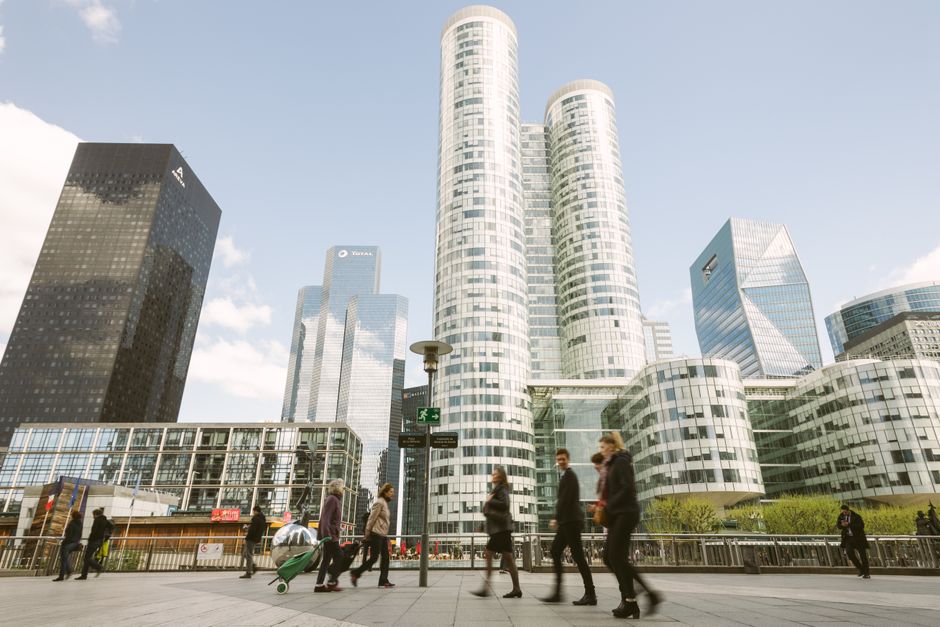
Why Paris Built a Tech Ecosystem That Rivals Silicon Valley—Without Copying It
Unlike other European capitals chasing American models, Paris created something distinctly French: state-backed ambition married to old-world elegance.
Unlike other European capitals chasing American models, Paris created something distinctly French: state-backed ambition married to old-world elegance.
Walk along the Canal Saint-Martin on any weekday afternoon and you'll spot the markers of Paris's peculiar tech dominance: a founder hunched over espresso at a converted warehouse, a venture capitalist emerging from a Belle Époque building now housing a deep-tech accelerator, clusters of startups occupying the renovated industrial spaces that line the waterfront. This isn't accidental geography. It's the visible architecture of an ecosystem that has quietly become Europe's most formidable—not by imitating California, but by rejecting its playbook entirely.
The numbers tell the story. Paris attracted €8.2 billion in venture capital funding in 2025, more than any European city and a threefold increase over a decade. Unicorns have sprouted across the Marais, the Latin Quarter, and Station F—Europe's largest startup campus, sprawling across 34,000 square metres in the 13th arrondissement. Yet what distinguishes Paris isn't scale alone. It's the architecture of state involvement without the suffocation it might suggest elsewhere.
The French government's willingness to deploy capital through vehicles like BPI France and Bpifrance Investissement fundamentally altered the game. Unlike the UK or Germany, where venture funding fragments across regional hubs, Paris consolidated resources with surgical precision. This created a gravitational pull: €5.3 billion in public and semi-public funding deployed between 2015 and 2024 didn't just prime the pump—it signalled to private investors that the French state was serious about competing globally.
But infrastructure alone doesn't explain Paris's distinctiveness. The city attracted the world's deepest-tech founders because it solved a problem venture ecosystems elsewhere couldn't: how to build physics-based, hardware-adjacent startups when capital typically gravitates toward software and services. Companies like Exoplanet Resources, working on asteroid mining, and multiple quantum-computing efforts found in Paris an unexpected credibility born from the country's aerospace and defence traditions. CNES, the national space agency headquartered just outside the city, became an unlikely catalyst—not through formal programs, but through cultural adjacency.
Real estate pragmatism completed the picture. While London's Shoreditch and Berlin's Kreuzberg gentrified beyond reason, Paris's historic quartiers—particularly around République and Nation—remained accessible. A desk at Station F costs less than equivalent space in London. This kept the ecosystem porous. Established tech companies (Google, Facebook, Microsoft) maintained sprawling R&D operations here, but didn't colonise the talent pool the way Silicon Valley giants do in the Bay Area.
By 2026, Paris has cracked a code others pursued but never mastered: how to weaponise government capital without crushing entrepreneurial culture, and how to remain globally competitive while remaining aesthetically, stubbornly Parisian.
This article was compiled by AI from the sources linked above and screened before publishing. See our editorial standards.
How does this story make you feel?
Spread the word
About this article
Published by The Daily Paris
Daily brief
Free, in your inbox before 7am. Weekdays.
More in tech