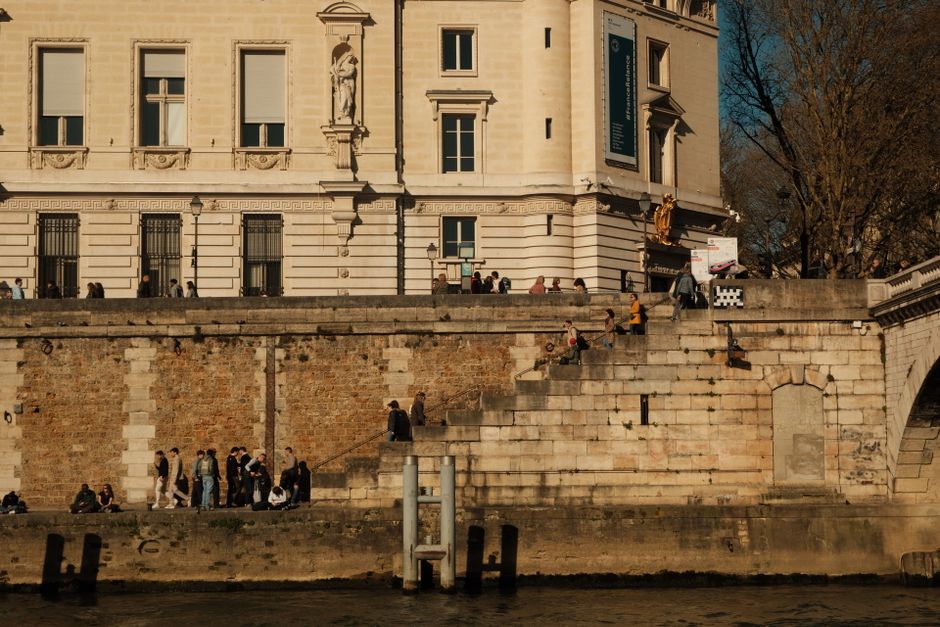
Walk through the Marais on a Tuesday evening, and you'll find the courtyard of the Centre Sportif Turenne alive with volleyball nets strung between plane trees. This isn't a professional venue—it's a community space where locals of all ages gather, transforming a modest facility in the 4th arrondissement into something far more valuable than any Olympic-standard infrastructure: a genuine social anchor.
This pattern is repeating across Paris as local sports clubs increasingly position themselves not as feeder systems for elite athletes, but as essential neighbourhood institutions. The shift is reshaping how Parisians think about sport beyond the megastadiums that dominate international headlines.
In the 13th arrondissement, AS Vitré—a modest football club operating from facilities near Place d'Italie—has grown its membership by 40 per cent since 2022, now serving over 800 players across age groups. Club director Vincent Leclerc attributes this to deliberately affordable membership fees (€180 annually for youth, €120 for adults) and a deliberate focus on inclusion rather than competition rankings. "We're not trying to compete with PSG or Lyon," he explains. "We're trying to be the place where your neighbour's kid learns respect and teamwork."
Similar momentum exists in the 20th arrondissement, where the Belleville Basket collective operates from a converted warehouse on Rue des Pyrénées. Founded in 2019, the organisation now runs three basketball courts and hosts weekly sessions for over 300 participants, with youth programmes designed specifically for economically disadvantaged families. Monthly subscription fees remain deliberately modest at €35.
What's driving this renaissance? Partly, it's pragmatism. Real estate in central Paris makes large-scale stadium development prohibitively expensive. But it's also ideological. Post-pandemic, communities have reasserted the value of local gathering spaces. Sports clubs, operating with modest budgets and genuine neighbourhood presence, have filled that gap remarkably effectively.
The Paris municipal government has begun recognising this trend, allocating €2.3 million in 2025 to grassroots sports infrastructure improvements across arrondissements. Projects include renovated courts in the 11th and expanded facilities in Belleville.
These aren't glamorous ventures. They operate without broadcast rights or sponsorship deals. But across Paris's neighbourhoods—from Montmartre to Montparnasse—they're quietly proving that sport's greatest value might not be measured in stadium capacity or television audiences, but in the strength of communities that gather regularly, week after week, simply to play.
This article was compiled by AI from the sources linked above and screened before publishing. See our editorial standards.