Paris Planning Overhaul Reshapes Property Prices From the Périphérique Inward
New zoning rules and Grand Paris metro expansion are redrawing the affordability map—and buyers who wait may find the window closing.
New zoning rules and Grand Paris metro expansion are redrawing the affordability map—and buyers who wait may find the window closing.

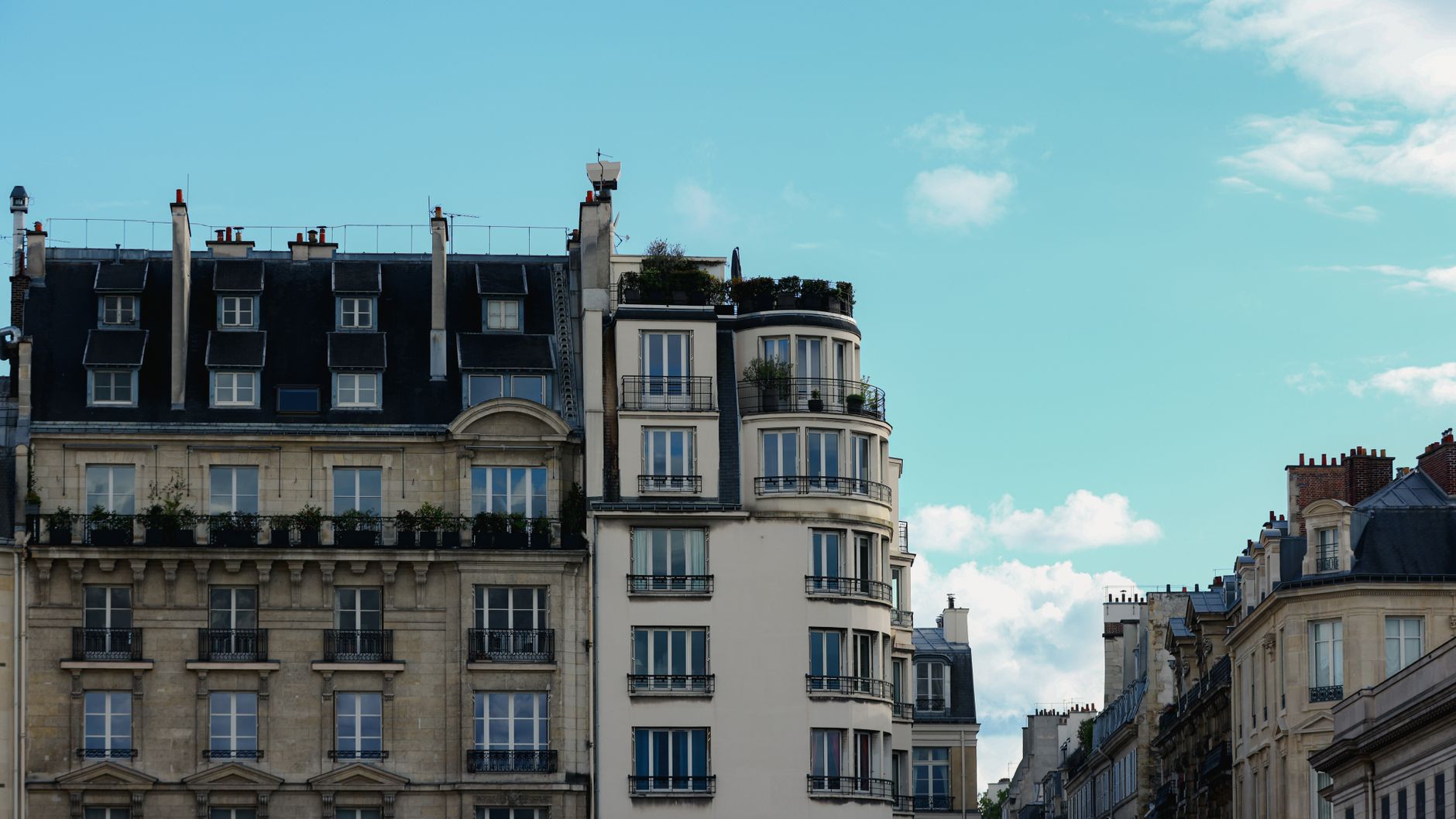
Paris City Hall confirmed last month that revised density rules under the updated Plan Local d'Urbanisme Bioclimatique—the PLUb, adopted in full in late 2025—have already triggered a measurable shift in planning applications across the city's outer arrondissements. The number of permits for mid-rise residential construction filed in the 18th, 19th and 20th arrondissements rose 23 percent in the first half of 2026 compared with the same period a year earlier, according to figures from the Direction de l'Urbanisme de Paris. The policy was designed to add housing. It is also adding price pressure in places that once offered relative shelter from the capital's brutal averages.
The timing matters. Paris-wide, the average transaction price has held at approximately €10,200 per square metre through the first two quarters of 2026, a figure that masks a widening gap between the trophy arrondissements and the city's traditionally cheaper eastern and northern districts. The PLUb explicitly permits taller buildings near transport corridors and incentivises developers who include affordable units—but the affordable-unit thresholds, set at 30 percent of new floor area in certain zones, have not stopped market-rate valuations from climbing. Developers are absorbing the social-housing obligation and pricing the remaining units accordingly.
Rue de Crimée in the 19th arrondissement tells the story plainly. Two years ago, studio flats on that street were changing hands at around €7,800 per square metre. Agents active in the neighbourhood report asking prices now routinely opening above €9,000, a surge driven partly by the Ligne 15 Est construction corridor nearby and partly by buyers priced out of the 11th, where median prices crossed €11,500 per square metre in the spring. The same dynamic is visible around the Porte de la Chapelle arena district in the 18th, where post-Olympic regeneration has turned former light-industrial plots into residential pipelines.
Société du Grand Paris, the public body overseeing the €35 billion metro extension programme, has long argued that new stations would distribute demand more evenly across Greater Paris. The evidence so far is mixed. Municipalities such as Saint-Denis and Aubervilliers—both served by Ligne 15 and scheduled for further connections under Ligne 16 by 2027—have seen apartment prices rise 18 percent over 24 months. That is good news for existing owners and difficult news for the first-time buyers the Grand Paris project was partly meant to serve.
The PLUb contains a mechanism called the Secteur de Mixité Sociale, which obliges developers in designated zones to sell a proportion of units to Paris Habitat, the city's main social-housing operator, at capped prices. Paris Habitat manages roughly 125,000 units across the city, and the programme is expected to add several thousand more over the next decade. But housing economists and notaires have noted a structural problem: the construction pipeline takes three to five years to translate into completed units, while market prices respond to planning permissions within months of announcement.
That lag is the central affordability trap. Buyers acting on the assumption that new supply will moderate prices are likely to be disappointed in the near term. The Chambre des Notaires de Paris recorded median transaction volumes in the first quarter of 2026 running about 8 percent below the five-year average, a sign that affordability constraints are suppressing sales rather than prices. Sellers are not capitulating; buyers are stepping back.
For households currently weighing a purchase, the practical calculus has shifted. The zones most likely to see genuine price relief—where the PLUb permits are translating fastest into spades in the ground—are concentrated along the Petite Ceinture corridor and in parts of the 13th arrondissement near the Paris Rive Gauche urban renewal zone. Both areas have active development pipelines and better near-term supply prospects than the northern hot spots. Buyers with flexibility on location and a three-to-five-year horizon have more options than the headline €10,200 average suggests. Those who need to move now, in a market shaped by policy decisions that will take years to bear fruit, face a considerably harder calculation.
How does this story make you feel?
Spread the word
About this article
Published by The Daily Paris
Daily brief
Free, in your inbox before 7am. Weekdays.
More in Property