New Builds, New Rules: A First-Time Buyer's Guide to Paris's Construction Boom
Hundreds of approved developments are reshaping the city's outer arrondissements — here's how to get in before the prices catch up.
Hundreds of approved developments are reshaping the city's outer arrondissements — here's how to get in before the prices catch up.
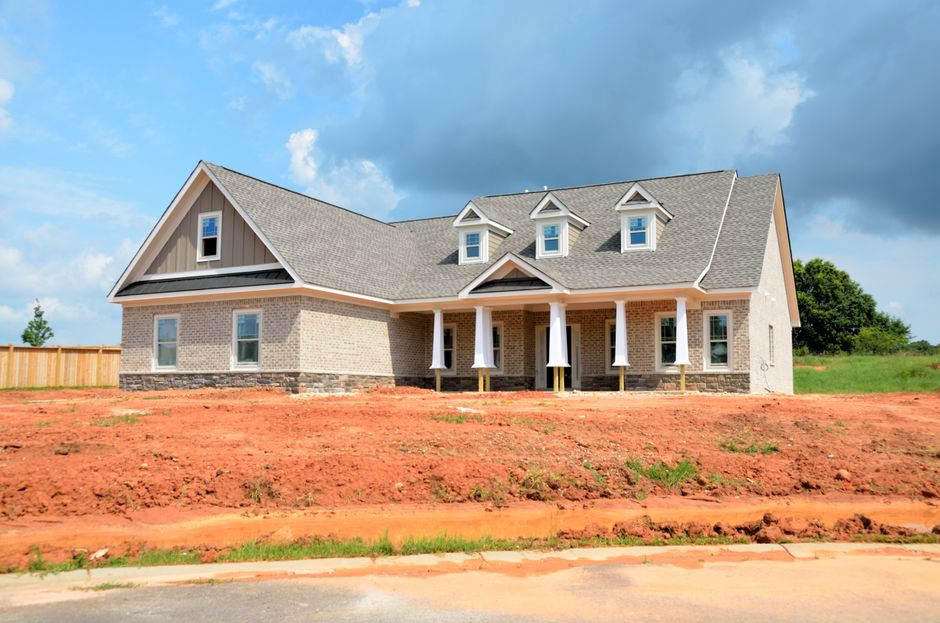
More than 4,200 new residential units received planning approval across greater Paris in the first half of 2026, according to figures published last month by the Métropole du Grand Paris — the highest six-month total since 2019. For first-time buyers who have been priced out of the 6th or the Marais, that number matters.
The timing is deliberate. The Grand Paris Express, the €35 billion metro expansion threading 200 kilometres of new lines beneath the Île-de-France, has reached a critical phase. Line 15 South is now operational between Pont de Sèvres and Noisy-Champs, and developers have front-loaded their pipelines accordingly. Wherever a station opens, a crane tends to follow within eighteen months. First-time buyers who understand that rhythm have a window — but it is narrowing.
Saint-Denis Pleyel, the northern hub where Lines 14, 15, 16 and 17 will converge, is the single most active construction zone in the département of Seine-Saint-Denis right now. Nexity and Bouygues Immobilier both have programmes under way within 600 metres of the future station. Prices in that corridor currently sit around €5,200 per square metre for new stock — roughly half the €10,000-per-square-metre average that characterises the premium arrondissements one through eight inside Paris proper. A 40-square-metre studio in a Nexity programme near the Stade de France came to market in May at €208,000, which is, by Parisian standards, genuinely cheap.
Further east, the 11th arrondissement — already popular and rising — is spilling momentum toward Montreuil. The Porte de Montreuil corridor along the boulevard Périphérique has three programmes from Kaufman & Broad in various stages of commercialisation, with livraisons scheduled between late 2027 and early 2029. The 9th and 10th remain competitive for resale stock but new construction in those arrondissements is almost non-existent; planning constraints on heritage buildings inside the Périphérique are severe.
For buyers working with the Prêt à Taux Zéro — the government's zero-interest loan scheme, which was extended and modestly expanded in the January 2026 budget — new-build programmes in eligible zones B1 and A are the only route to accessing that subsidy. The PTZ can cover up to 40 percent of the purchase price on a primary residence. That is not a small detail. On a €250,000 apartment, it eliminates the interest bill on €100,000 of borrowing, potentially saving a buyer €30,000 or more over a 20-year term at current rates hovering around 3.6 percent.
The VEFA — vente en l'état futur d'achèvement, the off-plan contract structure that governs almost all new-build sales in France — offers strong legal protections but demands patience. Buyers commit to a programme that may not be delivered for two to three years. The notaire's role is not optional here; fees on new builds run lower than on resale property, typically 2 to 3 percent versus 7 to 8 percent, but the contractual complexity is greater. The Agence Nationale de l'Habitat runs free advisory sessions at its Paris office on the rue Lord Byron in the 8th every second Thursday, open without appointment.
Buyers should also verify the energy performance certificate — the DPE — before signing anything. Since January 2025, all new programmes must meet the RE2020 thermal standard, which sets strict limits on carbon emissions per square metre. Programmes still operating under the older RT2012 framework — a small number of grandfathered schemes remain in circulation — carry a measurable resale risk as lenders tighten their green criteria.
The practical advice is this: shortlist two or three Grand Paris Express corridors where you could tolerate living, check the PTZ eligibility map on the ANIL website, secure a mortgage agreement in principle from your bank before the commercial agent calls back, and budget for a gap of at least 24 months between signature and keys. The buyers who moved on Saint-Denis in 2022 are sitting on double-digit paper gains today. The next comparable opportunity is probably Vitry-sur-Seine, where Line 15 South stations are already open and developers are still catching up.
How does this story make you feel?
Spread the word
About this article
Published by The Daily Paris
Daily brief
Free, in your inbox before 7am. Weekdays.
More in Property