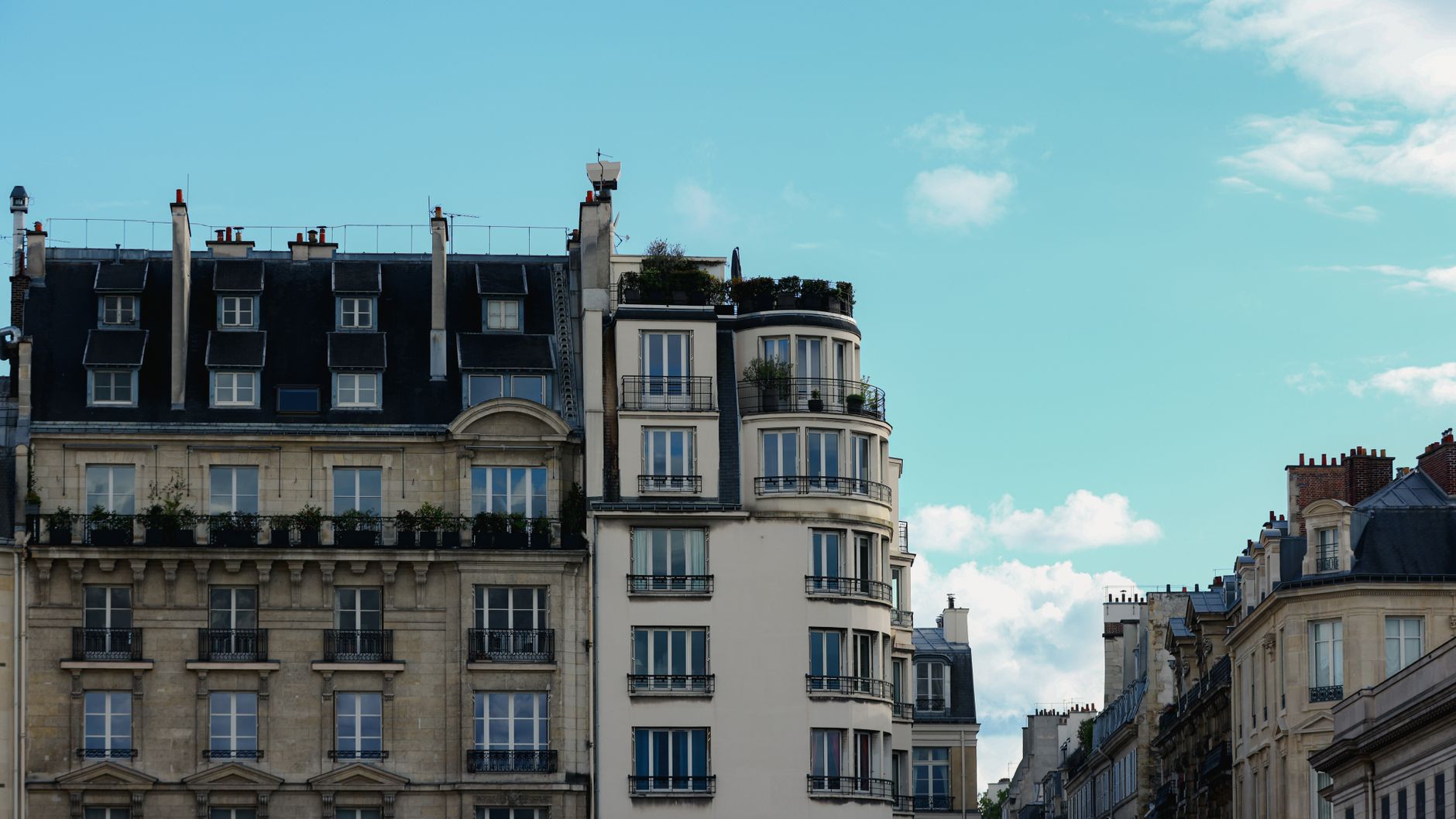
Paris city hall confirmed last month that revised density rules under the updated Plan Local d'Urbanisme Bioclimatique — the PLUb — will restrict new high-rise residential construction across most of the city's established arrondissements, a decision that architects, developers and first-time buyers say will harden an already brutal affordability ceiling. The average price per square metre across Paris proper now sits at €10,200, according to the Chambre des Notaires de Paris's June 2026 data, and planners are effectively choosing environmental targets over housing volume.
The timing matters. France's national housing shortage has not eased. The government's own figures show some 143,000 households on the social housing waiting list in the Île-de-France region alone, a number that has barely shifted since 2023. Meanwhile, interest rates from the Banque de France have edged down to around 3.4 percent on 20-year fixed mortgages — better than 2024's peak, but not enough to offset the capital's price floor. The PLUb, which the city council voted to adopt in full in late May, prioritises green roofs, permeable surfaces and building height caps that planners say will protect the urban climate. Critics argue it also protects the wealth of existing owners at everyone else's expense.
The Arrondissements Where the Pressure Is Sharpest
In the 11th arrondissement, around the rue de la Roquette and the Bastille end of the boulevard Voltaire, agencies are reporting asking prices that crossed €11,500 per square metre on renovated stock in the spring — a figure that would have seemed extraordinary five years ago for a neighbourhood still considered secondary to the Marais. The 9th, anchored by the Opéra Garnier and the grands boulevards south of Pigalle, is tracking just above €11,000. These are areas where the PLUb's restrictions on roof extensions and vertical additions will be felt most directly, because developers had been counting on densification of existing buildings to generate supply.
The Grand Paris Express remains the single most consequential planning decision shaping outer-market pricing. Line 15 South, connecting Pont de Sèvres to Noisy-Champs, is the section most advanced in construction, and the effect on towns like Montreuil and Saint-Denis is already documented. Notarial data from the first quarter of 2026 puts average prices in Montreuil at €5,800 per square metre — up 12 percent since the same period in 2023. The Agence Nationale pour la Rénovation Urbaine has active contracts in both communes, but the renovation money tends to lift values faster than it produces new affordable units.
Who Benefits, Who Gets Pushed Out
The practical effect of the PLUb combined with Grand Paris metro timelines is a two-speed market. Owners of well-located existing stock inside the périphérique are sitting on assets that planning rules now actively protect from competition. Buyers — particularly those looking for a first purchase under €400,000, which in central Paris now buys fewer than 40 square metres in most of arrondissements 3 through 10 — are being funnelled toward the outer communes. Seine-Saint-Denis, long the most affordable department in the region, saw median prices in some of its southern communes cross €4,000 per square metre for the first time in 2025.
The Société du Grand Paris, the public body overseeing the metro expansion, maintains that full network completion by 2030 will unlock land capacity across 68 new or redesigned stations. Housing economists at Sciences Po's urban studies centre have been more cautious, pointing out that infrastructure value tends to capitalise into land prices within three years of a confirmed station date — meaning much of the gain has already happened in the best-placed zones. For buyers watching from the sidelines, waiting for prices to drop because a station opens is a strategy that has not worked anywhere along the existing RER lines, and there is little reason to expect different results on Line 16 or Line 17. The opportunity, such as it is, sits in communes where station dates remain uncertain and prices have not yet moved — a narrowing list as 2030 approaches.