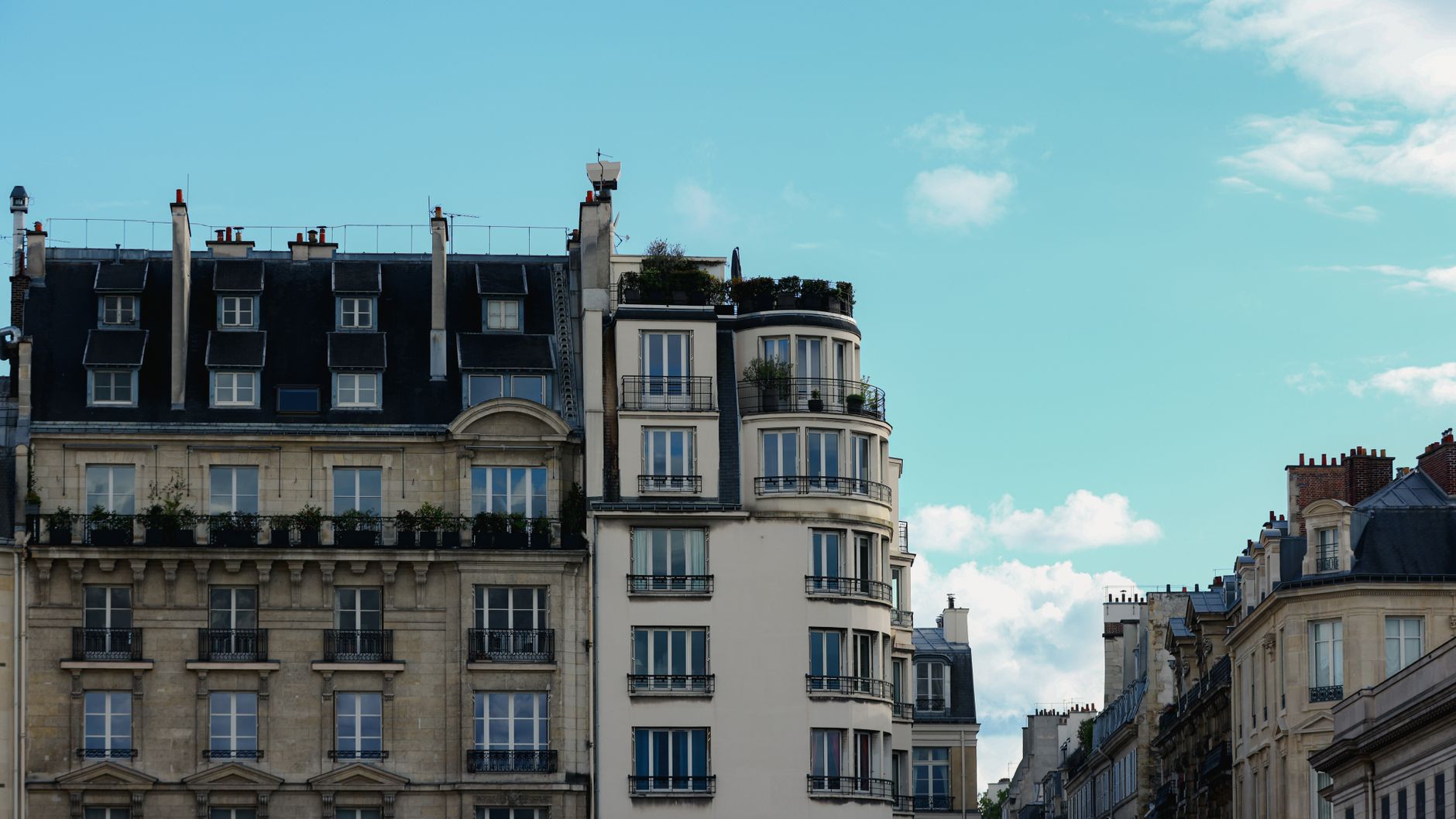
Around 65,000 private rental leases are estimated to expire in Paris each summer quarter, and this July the tenants holding those contracts are walking into the tightest market in years. Average advertised rents in the capital hit €32 per square metre per month in the second quarter of 2026, according to data tracked by the OLAP — the Observatoire des Loyers de l'Agglomération Parisienne — a figure that represents a 9 percent jump over the same period in 2024. Landlords know supply is scarce. Many tenants do not know what protections they still have.
The squeeze matters now for a specific reason: the encadrement des loyers, Paris's rent-control framework, caps renewal increases to the IRL index — the indice de référence des loyers — which the French government set at 2.47 percent for the first quarter of 2026. A landlord cannot simply demand market rate when a lease rolls over on an existing tenant. But the control applies only to sitting tenants. The moment a flat is re-let to someone new, the landlord can — and routinely does — price at whatever the market will bear, subject to a reference rent ceiling that is loosely enforced in practice. That asymmetry is driving the current paralysis: tenants afraid to leave, landlords keen to manufacture a departure.
Arrondissement by Arrondissement, the Maths Gets Harder
The gap between renting and buying has rarely been this uncomfortable. In the 10th arrondissement, around the Canal Saint-Martin and the Rue du Faubourg-Saint-Denis, a 45-square-metre flat lists for roughly €1,350 per month. To buy a comparable property on the same street the purchase price averages €550,000, requiring a monthly mortgage repayment — at current Crédit Agricole variable rates hovering near 3.6 percent over 20 years — of approximately €3,200. That is a €1,850 monthly premium for ownership before charges, taxes foncières, and syndic fees are added. For most young Parisian professionals, ownership in the trendy 9th or 11th arrondissements is arithmetically impossible without significant family capital or a dual income above €7,000 net per month combined.
Further out, the Grand Paris Express is reshaping the calculus. Stations along Line 15 Sud — notably at Villejuif-Louis Aragon and Issy RER — have pulled purchase prices in surrounding communes up toward €6,500 per square metre, eroding the suburban discount that once made buying viable for renters priced out of Paris proper. The APUR, Paris's urban planning agency, flagged in its June 2026 quarterly note that new-build completions in the Métropole du Grand Paris fell 14 percent year-on-year in 2025, which is directly constraining resale supply as developers hold back from launching schemes in uncertain rate conditions.
What Tenants Can Actually Do Before the Keys Are Handed Back
The first and most underused tool is the ADIL 75 — the Agence Départementale d'Information sur le Logement for Paris — which offers free, same-week consultations at its offices on the Boulevard Saint-Germain. Advisers there can check whether a landlord's proposed rent increase on a new lease violates the encadrement ceiling for that specific address, a challenge that succeeds in roughly one in three cases brought to them, according to the agency's own published figures.
Tenants who cannot afford renewal or relocation should also look at Paris Logement, the city's allocations program run through the Direction du Logement et de l'Habitat at the Hôtel de Ville. Waiting lists for social housing in Paris run to an average of eleven years for a single person, which makes it useless as an emergency measure — but registering now matters if a renter's trajectory points toward permanent Paris residency. The program does reserve a small quota of intermediate-rent units, loyers intermédiaires, for workers in sectors designated as essential, including teaching and healthcare, with processing times of six to nine months.
For those with some savings, the short window before a lease ends is the right time to model a purchase in peripheral communes with strong Line 15 connectivity rather than in the city itself. At €4,800 per square metre in Le Kremlin-Bicêtre, a 50-square-metre flat comes in at €240,000 — a loan that, at 3.6 percent over 20 years with a 10 percent deposit, costs around €1,380 monthly. That is still above current rents in the same town, but the gap is closing, and ownership caps the cost permanently. The arithmetic changes again the moment rates drop below 3 percent, which several economists at BNP Paribas Real Estate project could occur by late 2027. Renters who can hold a lease through the next twelve months and buy on the downswing will be better positioned than those forced out now by a landlord engineering a vacancy.