Three billion euros. That is the combined public and private investment committed to redevelopment corridors along Grand Paris Express Lines 15 and 16 in the twelve months ending June 2026, according to Société du Grand Paris figures released last quarter. The money is arriving faster than most residents expected, and it is already moving the market.
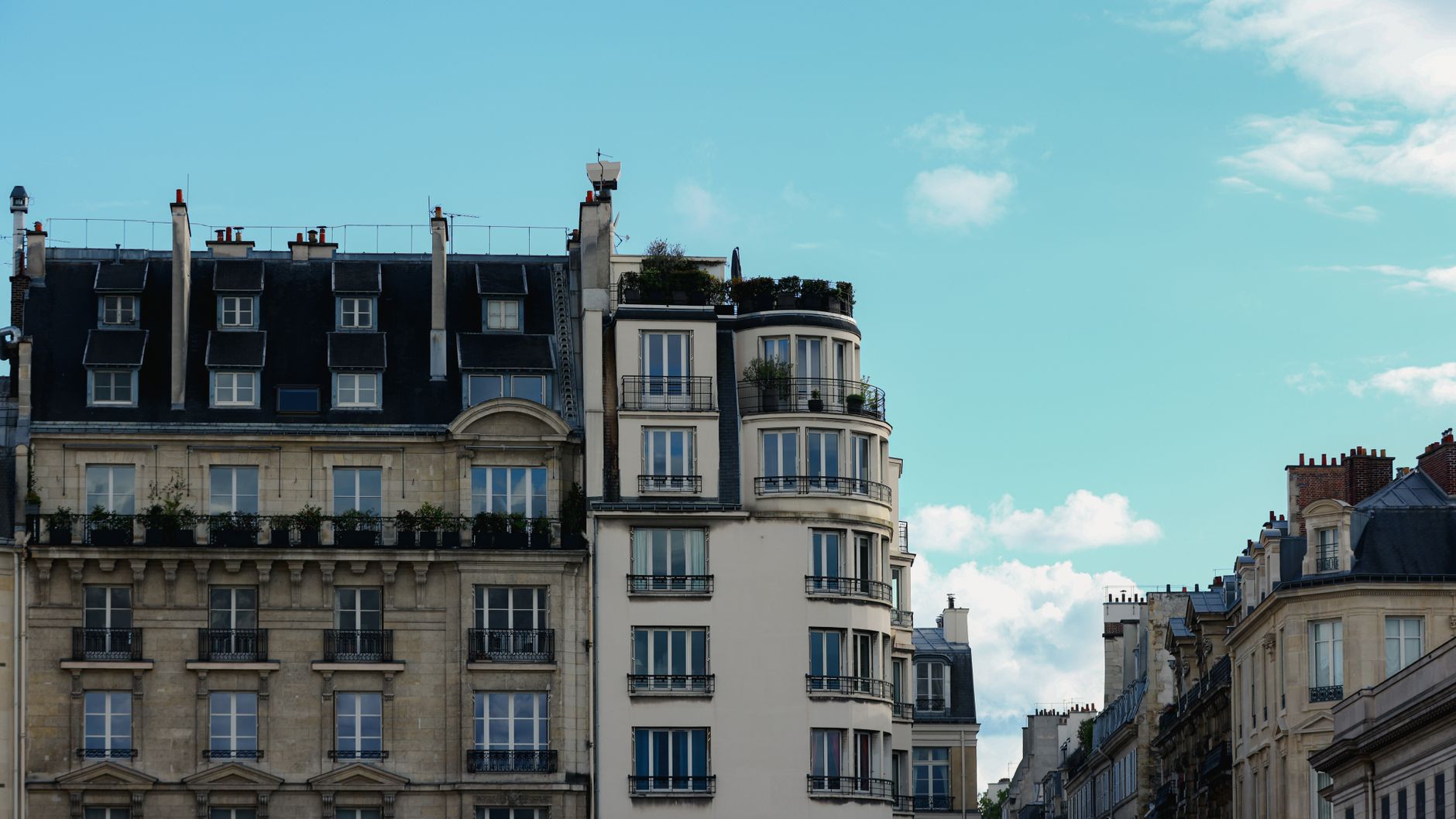
The timing matters because Paris's inner arrondissements have hit a ceiling that many ordinary buyers simply cannot clear. The city-wide average of around €10,000 per square metre — sustained even through two years of elevated European interest rates — has pushed first-time buyers and young professionals toward the 9th and 11th, and then further still, into territory that property agents were describing as speculative as recently as 2023. Now that territory has a timetable attached to it.
Saint-Denis and the Olympic Afterglow
Saint-Denis is the clearest case study. The Plaine Saint-Denis district absorbed roughly €1.4 billion in Olympic infrastructure between 2021 and last summer's Games, transforming a strip of post-industrial wasteland along the Canal de Saint-Denis into a residential and commercial zone that city planners are now marketing under the label Cœur d'Île. Prices in the commune averaged around €4,200 per square metre in early 2026, compared with €3,500 in 2022 — a 20 percent gain in four years. That is still less than half the Marais, but the gap is the point.
Alongside the residential push, the Université Sorbonne Paris Nord has expanded its campus footprint near the Stade de France, and two logistics-to-residential conversion projects on the Rue du Landy are due to deliver 340 units of mixed-tenure housing by the end of 2027. Developers including Vinci Immobilier and local operator Nexity have both filed permis de construire for additional schemes within 800 metres of the future Saint-Denis Pleyel interchange, which will connect Lines 14, 15, 16 and 17 when it opens fully in 2027.
Vitry-sur-Seine: The Quieter Bet
Fewer buyers are looking at Vitry-sur-Seine, which is precisely why some agents regard it as the more interesting position right now. The MAC VAL contemporary art museum on the Place de la Libération has anchored a cultural identity for the commune for two decades, but it is the arrival of Line 15 South — scheduled to reach Vitry Centre station by late 2026 under current Île-de-France Mobilités projections — that has prompted a fresh round of scheme announcements.
The ZAC du Plateau, a 28-hectare mixed-use zone being delivered in phases by the Établissement Public Territorial Grand-Orly Seine Bièvre, will eventually add around 2,100 homes, a primary school and roughly 15,000 square metres of office and retail space to a neighbourhood that today feels like an afterthought from the Périphérique. Average prices in Vitry sit near €4,500 per square metre, but agents working the Val-de-Marne corridor report that properties within a 10-minute walk of the future station have already moved 8 to 12 percent above comparable stock elsewhere in the commune.
For buyers, the practical calculation comes down to a simple question of lead time. Infrastructure projects of this scale compress in value over a predictable arc: prices rise sharply in the 18 months before a new station opens, plateau briefly after opening day, then climb again as retail and services catch up with foot traffic. Saint-Denis Pleyel's 2027 opening means that window is narrowing. Vitry's later timeline offers more runway, but also more risk if construction schedules slip — as Grand Paris Express timetables have done repeatedly since the project was first legislated under the 2010 Loi relative au Grand Paris.
Buyers should also check the Dispositif Denormandie tax incentive, which applies to renovation purchases in several eligible communes within the Grand Paris zone and can reduce income tax liability by up to 21 percent of the purchase price over twelve years. Several Vitry postcodes currently qualify. That status is reviewed annually, and there is no guarantee the 2027 revision will maintain them once Metro-driven price rises make the area less eligible on affordability grounds.