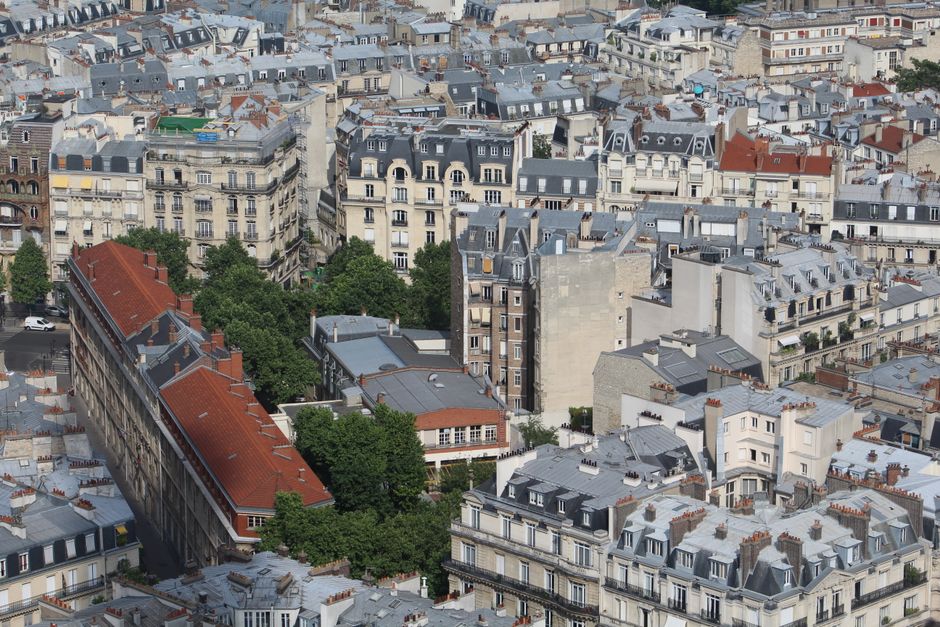
For years, property investors in Paris treated the 14th arrondissement as a stepping stone—a place to compromise before climbing to more prestigious addresses. Not anymore. The quartier around Rue Daguerre and the Parc Montsouris has quietly transformed into one of the capital's most compelling investment narratives, with prices climbing 8.2% year-on-year while remaining roughly 20% below the city average of €10,000 per square metre.
The shift reflects a deeper recalibration in Paris's property hierarchy. While apartments in the Marais (arrondissements 3-4) command €14,000–€16,000 per square metre and central 8th arrondissement penthouses remain above €18,000, the 14th's €7,800–€8,200 entry point is attracting a new demographic: young families, remote workers, and institutional investors betting on Grand Paris expansion.
The catalyst is infrastructure. The 14th's proximity to Denfert-Rochereau metro hub—soon enhanced by the extended line 14 project—has made commuting to La Défense and central business districts seamless. Meanwhile, the neighbourhood itself offers what central Paris increasingly cannot: genuine greenery. Parc Montsouris, with its 15.5 hectares, Japanese garden, and boating lake, has become a drawing card for professionals tired of concrete courtyards and €8 café crèmes.
Rue Daguerre, the quartier's pedestrianised market spine, exemplifies this appeal. Once a modest shopping street, it now hosts independent retailers, artisanal bakeries, and wine bars alongside long-standing institutions like the Pharmacie des Peupliers. Property along this axis—particularly one-bedroom flats and two-bedroom conversions—is moving swiftly, with some units selling within three weeks of listing.
Broader market trends support the 14th's momentum. As central Paris prices plateau and regulatory pressure from tourist rentals tightens, landlords are redirecting capital toward high-turnover residential neighbourhoods. The 14th's lower acquisition costs mean better rental yields—typically 3.2–3.8% gross—compared to 2.1–2.6% in the 8th arrondissement.
Agents report particular interest in Belle Époque buildings along Boulevard Saint-Jacques and post-war apartment blocks near Châtelet des Halles. These aren't trophy assets, but they're increasingly attractive to institutional funds and property syndicates seeking scale without premium pricing.
The 14th's emergence reflects a Paris property market in flux. With inner-ring gentrification (arrondissements 9-11) now established, investment capital is following the next logical wave outward. The neighbourhood isn't exotic or exclusive—it's something rarer in modern Paris: accessible, liveable, and genuinely appreciating.
This article was compiled by AI from the sources linked above and screened before publishing. See our editorial standards.