Paris tackles duplicate images: officials navigate rules, budgets, deadlines.
New rules and enforcement deadlines will determine how Paris eliminates visual clutter from walls, screens and metro platforms in 2026.
New rules and enforcement deadlines will determine how Paris eliminates visual clutter from walls, screens and metro platforms in 2026.
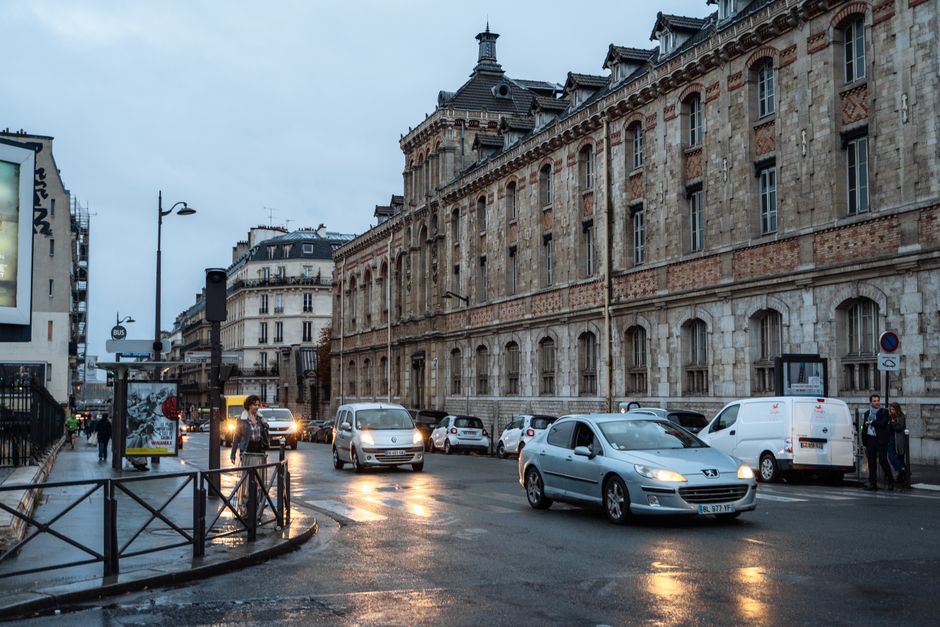
Paris is sitting on a growing backlog of duplicate and unlicensed image use across its public estate, and the decisions taken in the next six months will determine whether the city's ambitious post-Olympics visual identity becomes a coherent whole or an expensive legal patchwork. The problem is not new, but the stakes have sharpened: with Grand Paris Express construction hoardings covering swaths of the Périphérique corridor and Paris 2024 legacy branding still plastered across venues from the Stade de France to the Trocadéro esplanade, the question of who owns what — and who pays when the same image appears twice — has become urgent for municipal planners and cultural institutions alike.
The immediate pressure comes from two directions. First, the Régie Autonome des Transports Parisiens, which manages advertising and information display across the Métro and RER networks, is mid-contract with its outdoor advertising partner and must audit its digital display panels before a framework renewal due in early 2027. Second, the Mairie de Paris has been rolling out the Plan Local d'Urbanisme bioclimatique — formally adopted in 2024 — which imposes new constraints on signage and image reproduction in protected streetscapes, including much of the Marais and the Canal Saint-Martin corridor. Both processes are converging on the same question: what happens when the same photograph, illustration or graphic appears on two or more publicly funded surfaces without a rights clearance for each use?
French intellectual property law under the Code de la propriété intellectuelle treats each display location as a separate act of reproduction. That means an image licensed for a hoarding on the Boulevard de la Chapelle does not automatically carry rights for a duplicate panel 200 metres away on the Rue Marx Dormoy, even if both fall under the same city contract. Rights specialists familiar with the municipal procurement process say the cost of retroactive clearance can run to several thousand euros per image per site, depending on the rights-holder and the duration of display — a figure that multiplies fast across a network of hundreds of panels.
The Grand Paris Express project, overseen by Société du Grand Paris, is particularly exposed. The infrastructure programme has used environmental renderings and neighbourhood photography extensively in its public communication campaigns since 2019, often repurposing the same visuals across station hoardings in Saint-Denis, Bagneux and Champigny-sur-Marne. An internal audit process was reported to be under way as of spring 2026, though no findings have been made public. The project's total communication budget has not been disclosed for the current phase.
Three decisions will matter most in the coming months. The first is whether the Mairie de Paris chooses to centralise image rights management through its Direction des Affaires Culturelles — which already handles reproduction rights for municipal museum collections — or leaves each arrondissement and agency to negotiate independently. Centralisation would reduce duplication risk but requires political will and a dedicated budget line in the 2027 municipal finance plan, which goes to the Conseil de Paris for first reading in October.
The second concerns the RATP's tender process. The authority's current advertising concession with JCDecaux runs through 2026, and any successor contract will need explicit clauses governing digital asset reuse and duplicate display rights. How those clauses are drafted will set a template that other French cities are watching closely, particularly Lyon and Bordeaux, which face similar post-event legacy image questions.
The third decision is quieter but consequential: whether Paris adopts a centrally managed image commons for publicly commissioned photography — a model piloted in a limited way by the Paris Musées network, which made roughly 100,000 digitised works freely available under open licence in 2020. Extending a version of that logic to contemporary civic photography would reduce clearance costs substantially, but it requires rights-holders to agree upfront to broader terms.
For Parisians walking past a hoarding on the Rue de la Roquette or scanning a screen in Châtelet–Les Halles, none of this is visible. The images look the same whether they are properly licensed or not. The legal and financial consequences, however, will not stay hidden much longer.
How does this story make you feel?
Spread the word
About this article
Published by The Daily Paris
Daily brief
Free, in your inbox before 7am. Weekdays.
More in News


