Paris Bets on Neighborhood Hubs to Manage Migration — But Amsterdam and Toronto Are Pulling Ahead
As France's capital doubles down on its integration model, rival cities are outspending and out-innovating it on the ground.
As France's capital doubles down on its integration model, rival cities are outspending and out-innovating it on the ground.
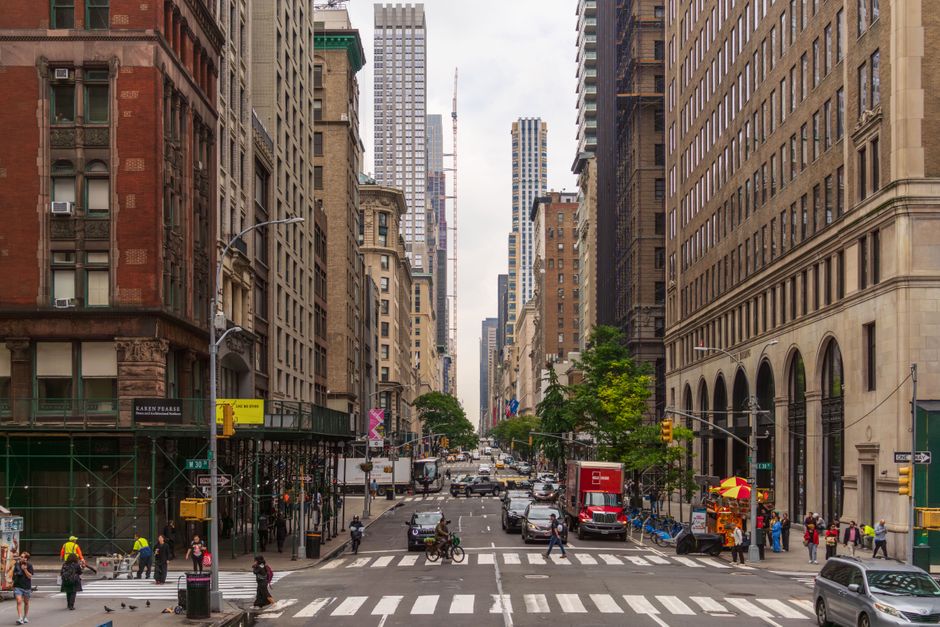
Paris has processed roughly 47,000 new asylum applications through the Île-de-France prefecture in the first six months of 2026 — a 12 percent rise on the same period last year — and the city's patchwork of integration programs is straining to keep pace. The numbers land at a politically delicate moment: the National Assembly is already pressuring Emmanuel Macron's government over migration policy, and every local flashpoint risks becoming a parliamentary weapon.
The timing matters for reasons beyond French domestic politics. Iran's supreme leader Ayatollah Khamenei was buried this week, a death likely to generate new displacement pressure across the Middle East in the months ahead. Peru's new president-elect Keiko Fujimori has signaled tighter border policies in South America, redirecting migration flows northward and, eventually, across the Atlantic. Paris cannot pretend these currents stop at Charles de Gaulle airport.
The city's main structural bet is the Centre de Primo Accueil in the 19th arrondissement, near the Porte de la Villette, which handles first-contact services for newly arrived migrants — language registration, housing referrals, medical screening. Capacity is nominally 450 people per day, but caseworkers there routinely process closer to 600. The backlog feeds directly onto the streets around Stalingrad metro station, where encampments have become a fixture since at least 2021 despite repeated clearances by the prefecture.
The city hall's Office Français de l'Immigration et de l'Intégration, known as OFII, runs a parallel track: French-language classes that migrants must complete to qualify for a multi-year residency permit. Enrollment in the greater Paris region hit 31,200 participants in 2025, up from 26,800 in 2023. Classes run out of municipal centers in Saint-Denis, Aubervilliers, and Montreuil — the dense, underfunded banlieues that have absorbed the bulk of new arrivals for decades. The Grand Paris Express, when line 15 fully opens in 2030, should cut commute times from these suburbs to central Paris employment hubs by up to 40 percent. Until then, the geography still punishes people who land there.
The Seine-Saint-Denis department, home to around 1.7 million people, receives the lowest per-capita state funding of any department in metropolitan France despite having the highest concentration of non-EU migrants. That figure — documented in a 2024 parliamentary report commissioned by the Sénat — sits at the center of every argument about whether Paris's integration model is sincere or performative.
Amsterdam's approach offers a sharper contrast. The Dutch capital formalized its Neighborhood Welcome Teams — buurtteams — in 2019 and has since embedded multilingual caseworkers directly inside housing estates in Bijlmermeer and Nieuw-West, neighborhoods demographically analogous to Seine-Saint-Denis. The city spends roughly €1,850 per newly arrived migrant per year on integration services, according to the Amsterdam municipality's 2025 budget documents. Paris's equivalent figure, calculated across OFII and city programs, runs closer to €1,100.
Toronto's model differs structurally: Canada's points-based immigration system front-loads economic selection before arrival, which transfers a different kind of population to city services. But Toronto's 2025 municipal plan dedicated 23 new "Newcomer Centres" across underserved wards, each co-located with libraries and employment offices. Paris has nothing equivalent in scale, though the Mairie de Paris has piloted two "Maisons des Migrations" — one in the 10th arrondissement near the Canal Saint-Martin, one in Saint-Denis — since late 2024.
For anyone navigating the system now: OFII registration is mandatory within 90 days of an initial asylum decision, and missing that window can delay residency timelines by up to 18 months. The Centre de Primo Accueil at Porte de la Villette opens at 7h30 and lines begin forming by 6h45. Legal aid is available through La Cimade, which operates a telephone hotline — 01 40 08 05 34 — and drop-in sessions every Tuesday afternoon at its office on rue Oberkampf in the 11th arrondissement. The French state's integration model has genuine strengths in language training and civic education. The gap between those strengths and what Amsterdam or Toronto are doing in physical infrastructure and per-capita spending is the honest measure of where Paris actually stands.
How does this story make you feel?
Spread the word
About this article
Published by The Daily Paris
Daily brief
Free, in your inbox before 7am. Weekdays.
More in News