Paris Faces Key Decisions on Duplicate Image Replacement Across Its Public Spaces
From metro corridors to municipal buildings, the city must now choose which images stay, which go, and who decides.
From metro corridors to municipal buildings, the city must now choose which images stay, which go, and who decides.
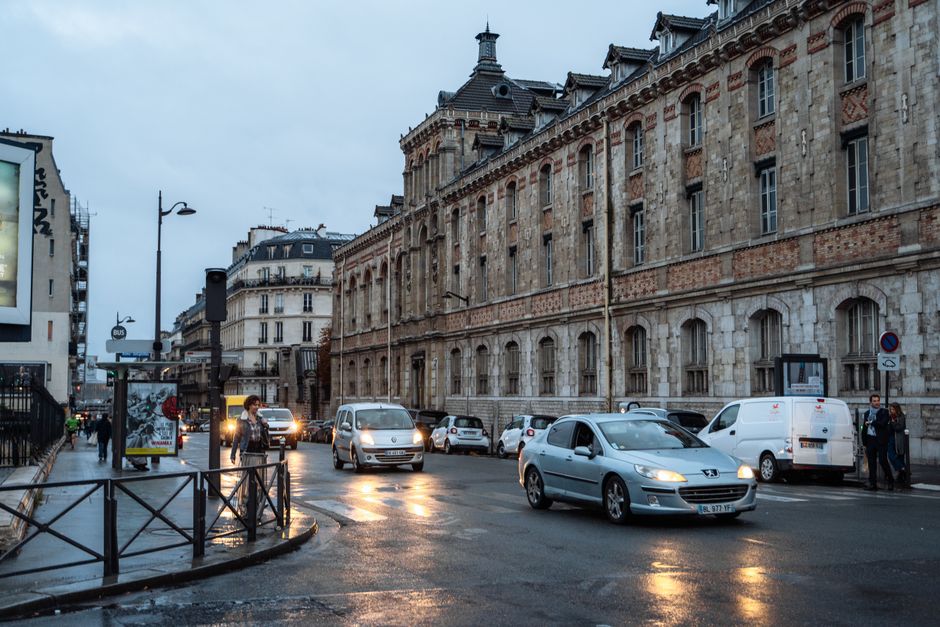
Paris city hall is confronting a bureaucratic and aesthetic reckoning that has quietly accumulated since the 2024 Olympics: thousands of duplicate or outdated images — printed panels, photographic installations, wayfinding graphics — installed across public infrastructure now need systematic review, replacement or removal. The question of what happens next, and who holds the authority to make those calls, is no longer theoretical.
The pressure is immediate. With the Grand Paris Express network continuing to open new stations through 2026 — the extension along Line 16 serving Seine-Saint-Denis is among the most closely watched — transport authority Île-de-France Mobilités must coordinate signage and image standards across dozens of sites at once. Duplication of imagery, whether photographic art installations or functional wayfinding panels, has already created confusion at stations including Saint-Denis Pleyel, where Olympic-era branding overlaps with permanent infrastructure graphics.
Three bodies share jurisdiction over public imagery in Paris, and their overlapping mandates are at the heart of the coming decisions. The Ville de Paris, through its Direction de la Voirie et des Déplacements, controls street-level and municipal building signage. Île-de-France Mobilités oversees the metro, RER and express rail environment. The Régie Autonome des Transports Parisiens — RATP — retains operational authority over what physically gets posted inside station concourses on lines it manages.
That three-body structure means any replacement cycle requires formal coordination agreements, not just internal decisions. The 2024 Olympic legacy framework, known as Paris 2024 Héritage, identified public space visual coherence as a priority area, but the operational follow-through has lagged behind the policy ambition. Municipal budget documents presented to the Conseil de Paris in spring 2026 allocated funds for infrastructure maintenance without specifying image-specific line items — a gap that advocacy groups in the urban design community have flagged.
On the Seine's right bank, the regeneration corridor running from the Bibliothèque nationale de France site in the 13th arrondissement toward the Bercy Arena has seen the sharpest proliferation of overlapping visual installations. Temporary Olympic promotion panels were never fully cleared, and their physical shells — metal frames bolted to riverside embankments — remain in place, some now holding weather-damaged duplicate prints of images already displayed in adjacent locations.
The replacement process, when it does move, involves several sequential steps. First, a catalogue audit — Île-de-France Mobilités confirmed in its 2025 annual report that a network-wide visual audit of Grand Paris Express stations was underway, though completion dates were not specified publicly. Second, a procurement round for new image content, which under EU public tender rules requires a minimum 30-day open competition period. Third, physical installation, which for metro environments requires RATP maintenance windows, typically scheduled between 1am and 5am on non-peak nights.
Cost is not negligible. Industry benchmarks for high-quality transit-grade printed panel replacement in France run between €400 and €1,200 per square metre depending on substrate and lighting integration. A single corridor at a major interchange station like Châtelet–Les Halles can require upward of 200 square metres of panel surface. Multiply that across even a fraction of the affected network and the expenditure becomes a genuine budget argument.
The coming weeks matter most. The Conseil de Paris is scheduled to hold its July budget revision session, at which amendments to the infrastructure maintenance envelope can still be introduced. Campaigners from the urban design collective Atelier Parisien d'Urbanisme — known as APUR — have previously published research on visual coherence in public space, making them a natural voice in any formal consultation process the city chooses to open.
For residents in areas like the Plaine Commune district in Seine-Saint-Denis, where new Grand Paris Express stations are transforming daily commutes, the practical stakes are straightforward: clear, non-duplicated imagery makes stations legible and usable. The policy decisions made in the next 60 days will determine whether the city treats this as a maintenance backlog or as the design opportunity it could still become.
How does this story make you feel?
Spread the word
About this article
Published by The Daily Paris
Daily brief
Free, in your inbox before 7am. Weekdays.
More in News


