Paris Faces Key Decisions Over Its Duplicate Public-Art Problem
A backlog of redundant and duplicated imagery across the capital's public spaces is forcing city planners to choose between costly replacement, creative reuse, and outright removal.
A backlog of redundant and duplicated imagery across the capital's public spaces is forcing city planners to choose between costly replacement, creative reuse, and outright removal.
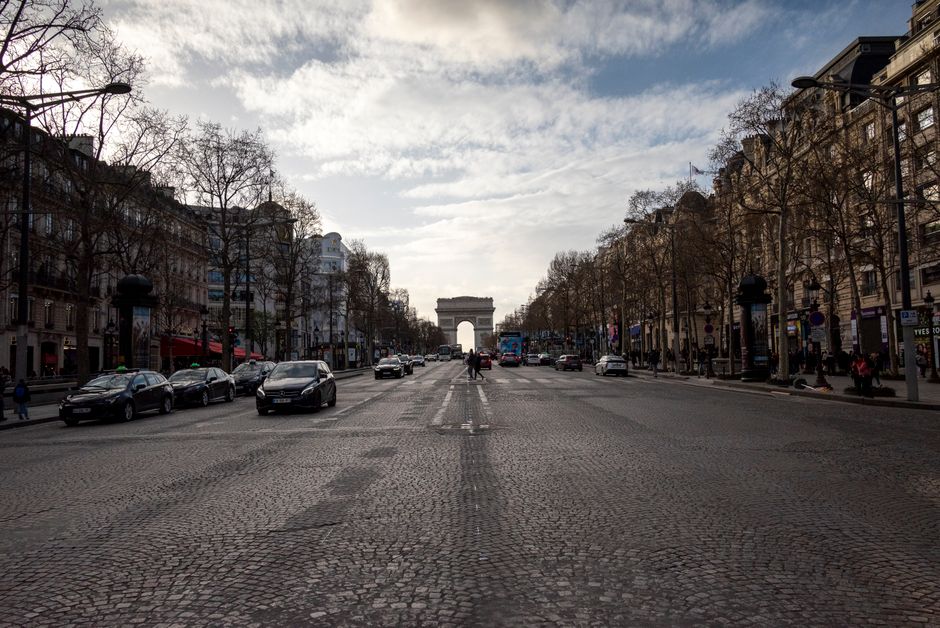
Paris has a duplication problem. Across arrondissements from the 13th to the 19th, municipal display boards, cultural hoardings, and legacy signage installed during the run-up to the 2024 Olympics now carry images that either replicate content already displayed nearby or depict events and sponsors no longer relevant to the city's public-space calendar. The Mairie de Paris confirmed in its spring 2026 urban-display audit that roughly 340 fixed image panels across the capital fall into the category of redundant or duplicated visual content — a figure that carries real cost implications for what gets replaced, what gets repurposed, and who pays.
The timing matters. The city is simultaneously managing the post-Olympic legacy activation programme, the ongoing Grand Paris Express construction corridor disruptions along Lines 15 and 16, and tightening municipal budgets under pressure from the National Assembly. Every euro spent replacing a duplicated hoarding on the Boulevard de la Villette is a euro not going into Seine-Saint-Denis suburban regeneration or social housing maintenance in Aubervilliers. Planners at the Hôtel de Ville cannot quietly defer the question any longer.
The spring audit, conducted by the Direction de l'Urbanisme under the city's broader Plan Lumière review process, identified the densest clusters of duplicated display content in two zones: the area around the Stade de France in Saint-Denis, where post-Games sponsor imagery remains on at least 47 panels, and the Bercy-Nation corridor in the 12th arrondissement, where overlapping cultural-programme posters from three separate municipal campaigns ran simultaneously through the first quarter of 2026. In the latter case, the Pavillon de l'Arsenal — the city's urban planning exhibition centre on the Boulevard Morland — has itself flagged the issue in its current display on post-Olympic public-space legacy, making the irony difficult to miss.
Replacing all 340 panels at standard municipal contract rates would cost an estimated €2.4 million, according to figures presented to the city council's Commission de l'Espace Public in June 2026. That number does not include the cost of commissioning new content. The city's existing framework contract with JCDecaux, which manages a large share of Paris's street-furniture advertising network, includes provisions for content refresh cycles, but the duplicate-image panels in question were largely installed outside that commercial network under direct municipal procurement — meaning the liability, and the bill, sits with the city alone.
Three options are now formally on the table ahead of the autumn budget session. The first is a straight replacement programme, rolling new content across all 340 panels before the end of 2026. The second is a selective decommissioning plan that removes panels in areas where Grand Paris Express works have already reduced footfall — particularly around the Pont de Bondy and Fort d'Aubervilliers stations currently under construction — and accepts a reduced display network as a feature rather than a flaw. The third, pushed by several councillors from the Europe Écologie Les Verts group, is a community-commissioning model that would hand content decisions for specific panels to neighbourhood councils, turning redundant hoardings into rotating local-artist showcases.
The community model has precedent. A pilot on the Rue de Flandre in the 19th arrondissement, run through the Atelier Parisien d'Urbanisme in 2025, rotated work by 12 local artists across six panels over six months at a total cost of €38,000 — roughly a third of the standard replacement cost per panel cluster. Supporters argue the model scales. Critics note it requires administrative overhead that the Direction de la Culture is not currently resourced to absorb.
A decision is expected at the September 2026 session of the Conseil de Paris. Between now and then, the Commission de l'Espace Public will hold two further working sessions — dates not yet public — and the Direction de l'Urbanisme is seeking input from the Agence Parisienne du Climat on whether any of the legacy panels can be adapted to carry climate-action messaging under the Paris en Commun programme. Whatever the council decides, the panels will not replace themselves. And in a city that treats its street-level visual culture as a point of civic pride, leaving 340 blank or redundant frames through the back half of 2026 is not a neutral choice.
How does this story make you feel?
Spread the word
About this article
Published by The Daily Paris
Daily brief
Free, in your inbox before 7am. Weekdays.
More in News


