Paris Faces Key Decisions on Duplicate Image Replacement Across Its Public Estate
From Haussmann-era façades to Grand Paris Express hoardings, city managers must now choose which images stay, which go, and who decides.
From Haussmann-era façades to Grand Paris Express hoardings, city managers must now choose which images stay, which go, and who decides.
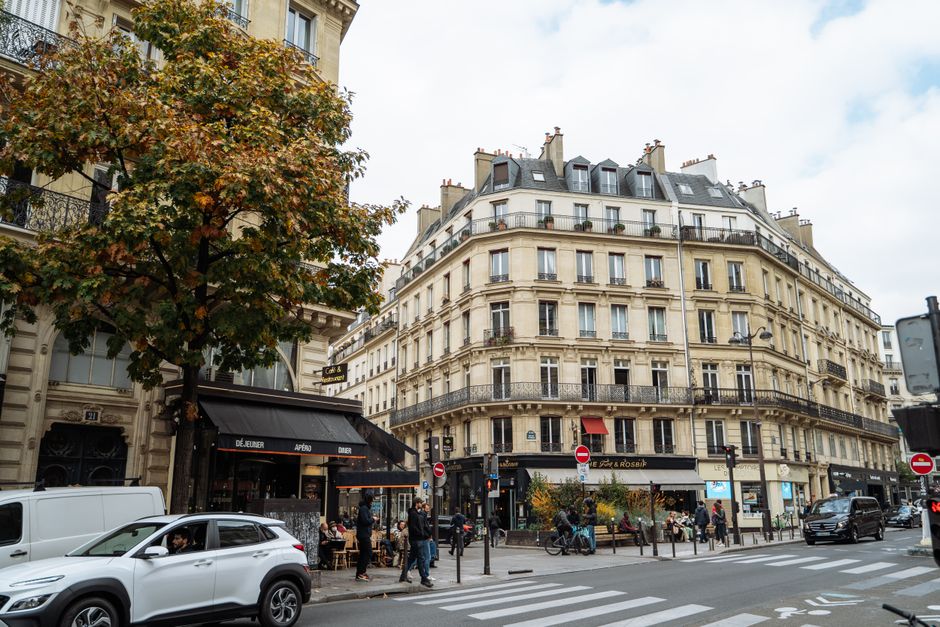
Paris municipal authorities are confronting a growing backlog of duplicate and outdated images embedded across the city's public infrastructure — from digital display panels at Châtelet–Les Halles to the vinyl wraps still clinging to construction hoardings along Line 15 of the Grand Paris Express. The question of what replaces them, and on whose authority, has moved up the agenda after a spring audit by the Direction de l'Urbanisme flagged dozens of sites where identical or near-identical visuals had been approved and installed at multiple locations, creating a visual monotony that critics say undermines the city's post-Olympics identity ambitions.
The timing matters. Paris spent much of the past two years activating the legacy of the 2024 Games, branding public spaces from the Trocadéro to the Stade de France in Seine-Saint-Denis with a coherent visual vocabulary. Now that temporary licensing agreements for many of those image sets are expiring — several batch contracts ran for 18 months from September 2024, meaning they lapse this autumn — the city must decide whether to commission fresh visual content, extend existing agreements, or open competitive tenders to new creative suppliers. Doing nothing is effectively a decision too, and one that leaves contractors in limbo.
At street level the stakes are visible on the Rue de Rivoli corridor and around the Place de la République, two axes where the Mairie de Paris has historically concentrated large-format public imagery. The city's cultural agency, the Pavillon de l'Arsenal, has been consulted on aesthetic standards, while the Régie Autonome des Transports Parisiens — better known as the RATP — manages its own parallel image inventory across 302 metro stations. The duplication problem is partly structural: the RATP, the Mairie, and Île-de-France Mobilités each hold separate image libraries and contract independently with visual content providers, meaning the same archival photograph of the Seine can end up approved three times over by three different procurement teams.
Several choices are now time-sensitive. The Grand Paris Express authority, Société du Grand Paris, is scheduled to open four new stations on Line 16 serving the northern suburbs — Clichy–Montfermeil among them — before the end of 2026. Station branding packages typically require a six-month lead time from final image sign-off to installation. That puts the effective creative deadline somewhere around late August, according to standard procurement timelines for public infrastructure projects of this scale in France. Miss that window and the stations open with placeholder graphics, which is precisely what happened at several Line 15 South stations when image approval cycles ran over in 2023.
There is a financial dimension too. Public display contracts in the Paris metropolitan area routinely carry penalty clauses for delayed content sign-off when the delay is attributable to the commissioning authority rather than the contractor. Industry figures from the French outdoor advertising federation, l'Affichage Extérieur de France, suggest such penalties have cost Île-de-France public bodies a combined total in the low millions of euros over the past three years — though the precise figure across all contracts is not publicly consolidated. With municipal budgets already stretched by Seine riverbank regeneration works between the Pont d'Iéna and the Pont de Bercy, every avoidable cost carries political weight inside the Hôtel de Ville.
Three tracks are now open. The Mairie de Paris could centralise image governance under a single inter-agency committee — a model the city has floated before without committing. It could mandate that any image approved for one public site is automatically flagged before approval at a second site, using the existing GéoParis mapping database that already tracks street furniture and public installations. Or it could do what French public institutions often do when the political cost of a decision is unclear: commission a study, most likely through the Institut Paris Région, and absorb another six to twelve months before acting.
For now, contractors, designers, and suburban municipalities waiting on branding decisions for their new Grand Paris Express stations are watching the Mairie's September budget session closely. That is the most realistic moment at which a policy direction will crystallise — or not. The images on the hoardings will not wait indefinitely for the paperwork to catch up.
How does this story make you feel?
Spread the word
About this article
Published by The Daily Paris
Daily brief
Free, in your inbox before 7am. Weekdays.
More in News


