Paris Confronts Its Duplicate Image Problem: The Key Decisions Ahead
City planners and heritage officials must now choose which version of Paris gets preserved — and which one disappears.
City planners and heritage officials must now choose which version of Paris gets preserved — and which one disappears.
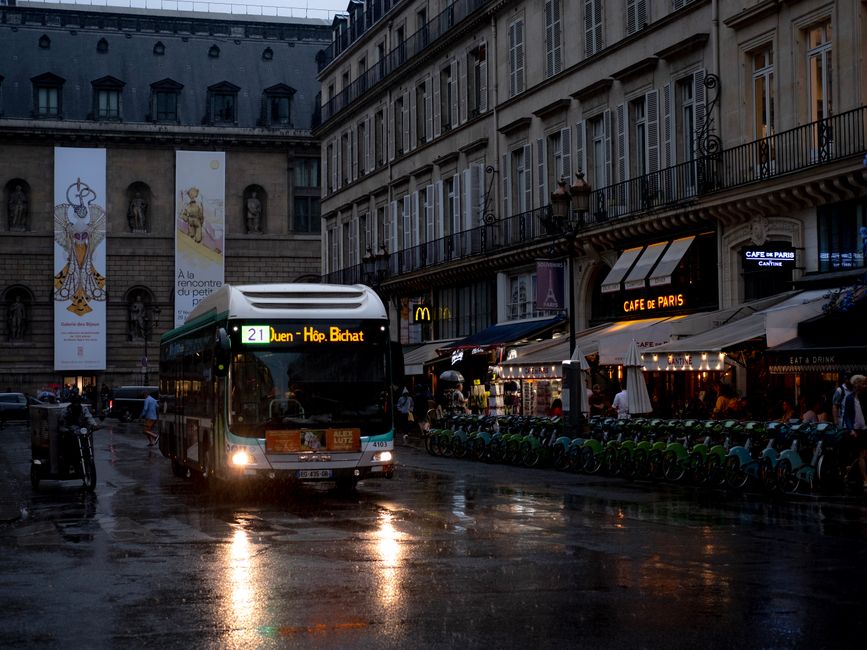
A quiet bureaucratic crisis has been building inside the Direction Régionale des Affaires Culturelles d'Île-de-France for the better part of eighteen months. Thousands of digitised images held across public databases — architectural surveys, urban planning records, Seine-side regeneration photography commissioned since 2019 — exist in duplicate or triplicate, stored simultaneously on the city's open-data platform Paris Data, in the Médiathèque de l'Architecture et du Patrimoine, and in the legacy servers of the Atelier Parisien d'Urbanisme, known as APUR. The redundancy has real costs. It delays access, inflates storage contracts, and — most critically — means that when an image is corrected or reclassified, multiple conflicting versions survive online.
The timing matters. Paris is mid-way through the Grand Paris Express construction cycle, with Line 15 South partial service having launched and dozens of new stations generating fresh documentation weekly. The 2024 Olympics legacy activation has also produced an enormous photographic and cartographic archive, particularly around Saint-Denis, Le Bourget, and the Bercy Arena corridor. Managing that material responsibly is not optional — it is a legal obligation under European public-sector information rules revised in 2021 under the PSI Directive recast.
Three zones have emerged as particular problem areas, according to planning documents reviewed by The Daily Paris. The Seine-Saint-Denis prefecture area, which absorbed the bulk of Olympic infrastructure photography, has the highest volume of conflicting records. The Marais conservation zone — where APUR has been running a continuous architectural survey since 2017 — has the most sensitive duplication risk, because disputed image metadata can affect listed-building status decisions on the Rue de Bretagne and surrounding streets. And the 13th arrondissement's Paris Rive Gauche development zone, still under active transformation along the Boulevard du Général Jean-Simon, has seen planning images misfiled under both old and new street nomenclature.
APUR published a technical note in March 2026 flagging interoperability gaps between Paris Data's CKAN-based infrastructure and the Médiathèque's proprietary cataloguing system. The note did not specify costs, but comparable deduplication projects in comparable European municipal archives — notably in Amsterdam's Stadsarchief in 2023 — ran to roughly €400,000 for a collection of similar scale. Paris's archive is larger.
Officials face at least four concrete choices in the coming weeks. First, the Mairie de Paris must decide by September 2026 whether to extend its current data-hosting contract with its cloud provider or migrate to a unified system — a decision that shapes whether deduplication happens at ingestion or retrospectively. Second, the DRAC Île-de-France needs to settle a classification dispute over roughly 1,200 images taken during the 2022 Seine flood-mapping exercise that currently exist under different rights metadata in two separate databases, creating a liability for public reuse.
Third, and politically the most fraught, is the question of who controls canonical image records when city-planning images overlap with heritage-protection images. APUR and the Médiathèque operate under different ministries — the former answers ultimately to the Mairie, the latter to the national Culture Ministry. With Macron's government already under pressure in the National Assembly, a formal inter-ministerial protocol on shared digital assets has stalled since a February 2026 working group produced its preliminary findings without agreement.
Fourth, there is the question of public access. Paris Data currently allows open download of urban imagery under a Licence Ouverte 2.0. If a deduplication exercise reclassifies images — particularly those touching on security-sensitive Grand Paris Express infrastructure — some material may be retrospectively restricted. Advocacy groups including Regards Citoyens have previously flagged the chilling effect such reclassifications can have on accountability journalism and civic research.
The practical timeline is tight. Budget allocations for the 2027 municipal year must be submitted to the Conseil de Paris by October. Any deduplication programme that misses that window loses a full budget cycle. For the Rue de Bretagne property owners awaiting updated conservation certificates, and for the urban planners mapping the next phase of Seine regeneration between the Pont de Bercy and Ivry-sur-Seine, that delay is not abstract. It is months of stalled decisions built on a foundation of conflicting files.
How does this story make you feel?
Spread the word
About this article
Published by The Daily Paris
Daily brief
Free, in your inbox before 7am. Weekdays.
More in News


