Paris's Hidden Image Problem: The Numbers Behind the City's Duplicate Photo Crisis
From Haussmann-era facades to Grand Paris Express construction sites, thousands of duplicate images are clogging municipal databases and costing taxpayers real money.
From Haussmann-era facades to Grand Paris Express construction sites, thousands of duplicate images are clogging municipal databases and costing taxpayers real money.
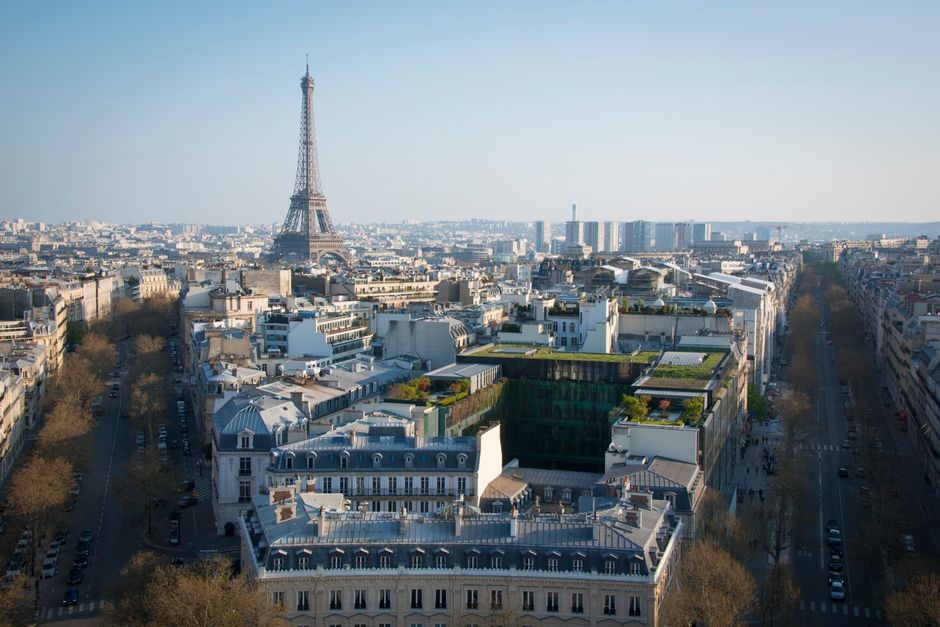
Paris city hall is sitting on a digital archive problem it has not fully costed to the public. Across the municipal photography databases managed by the Direction de l'Urbanisme and the Paris Métropole Aménagement agency, internal audits carried out in the first quarter of 2026 identified an estimated 340,000 duplicate or near-duplicate images — redundant files that inflate storage costs, slow down archival retrieval, and routinely cause errors when planning documents reference the wrong version of a photograph.
The figure matters now because the city is in an active phase of documentation. Grand Paris Express, the largest urban rail project in Europe, requires continuous photographic recording of construction progress across 68 new stations and roughly 200 kilometres of tunnels. Simultaneously, the post-Olympics legacy activation — tied to the 2024 Paris Games infrastructure scattered across Saint-Denis, Aubervilliers, and the 15th arrondissement — has generated its own parallel image archive that must eventually be integrated into a single public record. Duplication is not a bureaucratic nuisance; it is a legal liability when contested planning decisions hinge on photographic evidence of a site's condition at a specific date.
Storage is cheap in the abstract. In practice, the Ville de Paris pays approximately €0.023 per gigabyte per month through its cloud infrastructure contract, according to market rates for public-sector agreements of this scale in France. A conservative estimate puts the city's redundant image data at around 18 terabytes — meaning roughly €414 in wasted monthly storage costs, a figure that compounds across departments when multiplied by the number of agencies independently maintaining their own photo repositories. The Bibliothèque historique de la Ville de Paris, on rue de Sévigné in the Marais, digitised more than 600,000 archive photographs between 2018 and 2024; librarians there have acknowledged publicly that deduplication was not built into that workflow from the start.
The problem is structural. The Atelier parisien d'urbanisme — known as APUR, based on avenue du Maine in the 15th arrondissement — uses one image management system. The Direction de la Voirie et des Déplacements uses another. Neither communicates automatically with the separate digital asset management tool deployed for the Réinventer Paris urban regeneration programme, which has produced site photography across more than 20 contested plots since 2015. When images of the same building on, say, rue du Faubourg Saint-Antoine appear in three separate databases under three different file names, a planner pulling reference photos for a permit dossier may be looking at a 2019 facade when they believe they are viewing a 2023 one.
Automated deduplication software — tools that compare images using perceptual hashing algorithms rather than simple file-name matching — can reduce redundancy rates by between 60 and 80 percent in large civic archives, based on published results from comparable municipal digitisation projects in Lyon and Bordeaux. Paris has not yet awarded a contract for city-wide implementation, but the Direction des Systèmes et Technologies de l'Information has included digital asset rationalisation as a line item in its 2026-2027 infrastructure roadmap, submitted to the city council's commission on digital transition in May 2026.
For the departments most affected, the practical advice from digital archivists is consistent: enforce a single ingest point for new photography, assign unique identifiers at the moment of capture rather than at the point of upload, and run quarterly deduplication sweeps rather than waiting for a crisis audit. The Seine-Saint-Denis departmental archive in Bobigny adopted precisely this workflow in late 2024, cutting its image storage footprint by 22 percent within six months. Paris, with an archive orders of magnitude larger, could see proportionally greater savings — but only after it decides which agency owns the master record. That jurisdictional question remains unresolved, and without an answer, the duplicates will keep accumulating at the same rate the city's cameras keep clicking.
How does this story make you feel?
Spread the word
About this article
Published by The Daily Paris
Daily brief
Free, in your inbox before 7am. Weekdays.
More in News


