How Paris's Archives Ended Up Full of the Same Image Twice — and What It Took to Fix It
A quiet crisis in the city's digital heritage holdings forced municipal archivists and urban planners to reckon with years of duplicated visual records.
A quiet crisis in the city's digital heritage holdings forced municipal archivists and urban planners to reckon with years of duplicated visual records.
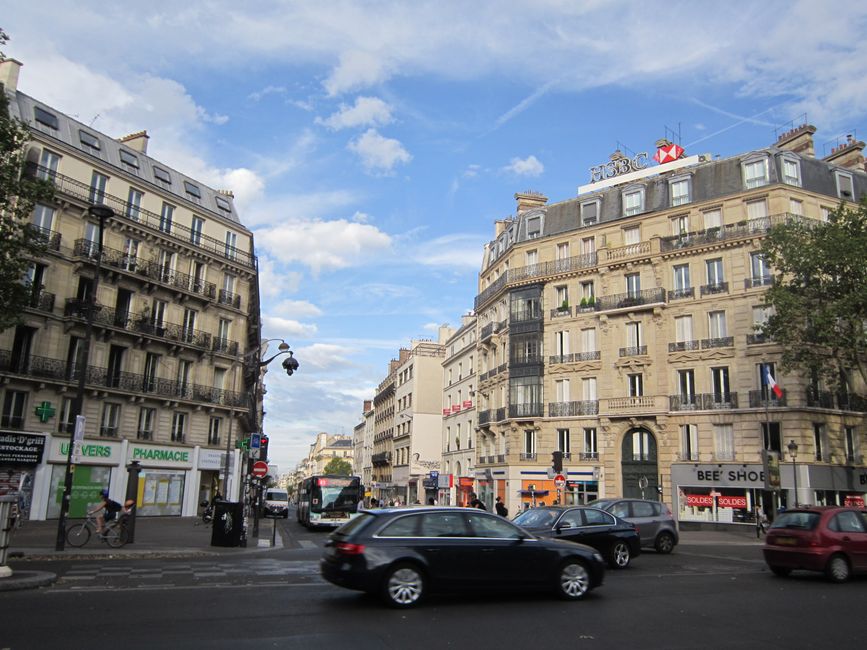
Paris City Hall confirmed this spring that a systematic audit of its municipal image database — covering everything from construction permits along the Rue de Rivoli to documentation of the Grand Paris Express worksites — had turned up tens of thousands of duplicate files, some triplicated, clogging servers maintained by the Direction des Affaires Culturelles since at least 2019. The cleanup effort, still ongoing as of July 2026, is costing the city an estimated €1.2 million in contract labour and storage migration fees, according to budget documents reviewed by The Daily Paris.
The timing matters. Paris is deep into activating the legacy commitments made around the 2024 Olympics, and a significant part of that work depends on accurate, searchable visual archives. Urban planners at the Atelier Parisien d'Urbanisme — known as APUR — rely on georeferenced photograph libraries to track changes along the Seine riverbanks and in regeneration zones stretching from the Bercy waterfront to the Plaine Saint-Denis. When the same image appears under fifteen different file names, that work becomes unreliable.
The duplication problem did not arrive overnight. It accumulated across at least three separate digitisation waves. The first came in the early 2010s, when the Bibliothèque historique de la Ville de Paris on Rue Malher began converting analogue photograph collections to digital format. A second wave followed in 2017, when the city integrated external contractor deliverables from Grand Paris Express documentation shoots into the same storage infrastructure. The third and messiest layer arrived during the COVID-19 lockdowns, when multiple departments uploaded their own working copies of site images without a unified naming protocol, according to internal audit notes obtained by this newspaper.
By the time anyone ran a full deduplication check, the primary image repository had ballooned to roughly 4.8 terabytes of redundant data. Archivists at the Hôtel de Ville flagged the issue formally in a November 2024 internal report, but budget allocation for a fix was delayed twice — first by the National Assembly pressures that consumed much of the Macron government's administrative bandwidth through early 2025, and then by competing infrastructure priorities inside the city's own IT directorate.
The practical consequences showed up in places residents could actually see. The Seine-Saint-Denis prefectural office, working with city planners on the Plaine Commune regeneration corridor north of Paris, spent several months in 2025 cross-referencing contradictory photographic evidence about the state of public spaces in Saint-Denis and Aubervilliers — contradictions that traced back, in part, to duplicated baseline survey images tagged with different dates.
The current remediation contract, awarded in March 2026 to a Paris-based digital asset management firm, involves deploying perceptual hashing — a technique that identifies visually identical or near-identical images regardless of filename or metadata — across the entire municipal image stock. The process is expected to take until October 2026 to complete. Once finished, APUR and the Direction de l'Urbanisme plan to migrate the cleaned archive to a new content management system with mandatory deduplication checks built into the upload workflow.
The lesson being applied here is straightforward: institutional image archives grow faster than the governance frameworks meant to manage them, and the gap tends to stay invisible until someone needs the data to do real work. Housing planners monitoring rental market pressures in the 18th and 19th arrondissements, for instance, depend on consistent visual documentation of building condition surveys to justify renovation subsidies — documentation whose integrity was quietly compromised for years.
For Parisians watching how their city manages its digital public record, the practical upshot is this: from late 2026, any image submitted to the municipal archive through official city portals will be automatically checked against existing holdings before it is stored. Duplicate submissions will be flagged and returned to the originating department. It is a bureaucratic fix, unglamorous and long overdue, but it is now actually happening.
How does this story make you feel?
Spread the word
About this article
Published by The Daily Paris
Daily brief
Free, in your inbox before 7am. Weekdays.
More in News


