Paris Moves to Fix Its Duplicate Image Problem: What Happens Next and the Key Decisions Ahead
City planners and heritage bodies must now choose between digital archiving standards, legal liability, and the future identity of Paris's visual record.
City planners and heritage bodies must now choose between digital archiving standards, legal liability, and the future identity of Paris's visual record.
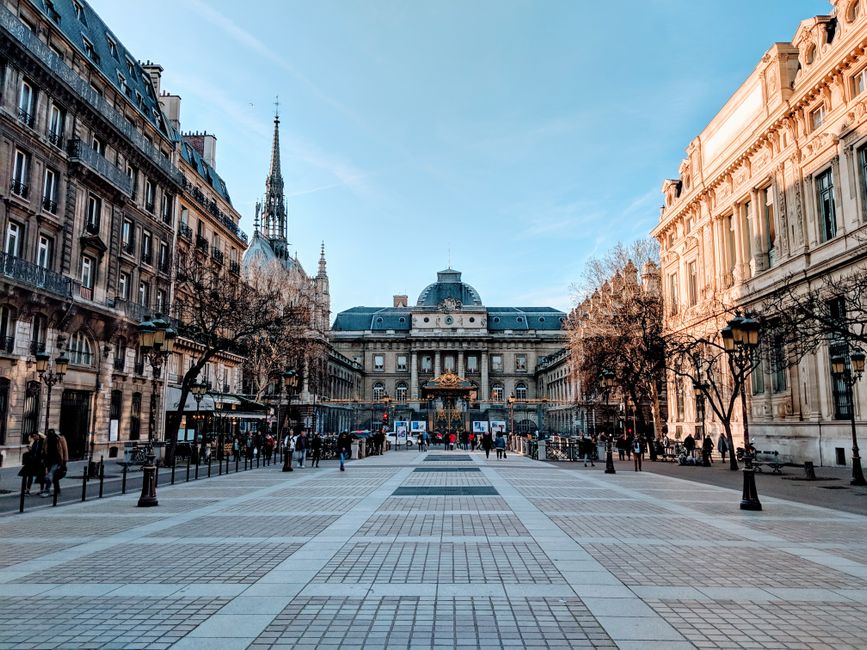
Paris's municipal image archive holds more than 4 million photographs, but a growing share of them are duplicates — identical or near-identical shots filed under separate catalogue numbers, inflating database costs and creating legal headaches over licensing rights. The city's Direction des Affaires Culturelles confirmed earlier this year that a structured audit of the Médiathèque de l'Architecture et du Patrimoine holdings was underway, and the findings are expected to force a series of binding decisions before the end of 2026.
The timing matters because the Paris 2024 Olympics legacy programme accelerated the digitisation push dramatically. Thousands of images documenting the Seine-Saint-Denis venue construction, the temporary athletics track laid along the Trocadéro esplanade, and the transformation of the Stade de France surroundings were uploaded into municipal systems at speed, with limited deduplication protocols in place. That sprint to capture history has left a structural backlog that administrators are only now quantifying.
Duplicate images are not merely a storage nuisance. Under French intellectual property law, a photograph can carry distinct rights depending on who uploaded it and when — meaning two copies of the same shot of, say, the Pont de Bir-Hakeim at dawn could theoretically be licensed to two different clients simultaneously. That risk is live: the city's licensing arm, Paris Musées, which manages image commercialisation across 14 municipal museums, is already working with outside counsel to map exposure. A similar problem surfaced in 2022 at the Bibliothèque nationale de France on the rue de Richelieu, where a deduplication project covering its Gallica platform took 18 months and required renegotiated agreements with more than 60 contributing institutions.
The scale here is comparable. Preliminary internal estimates — drawn from audit documentation circulating within the Direction Générale des Patrimoines — suggest between 8 and 12 percent of the Médiathèque's digitised collection may contain duplicable entries, a range that could represent 320,000 to 480,000 individual files. Each redundant file carries its own storage cost, metadata maintenance burden, and potential licensing conflict.
The Grand Paris Express construction documentation adds a further complication. Société du Grand Paris, the public body overseeing the metro expansion, has been depositing progress photography monthly since 2018 across multiple platforms, including its own archive and the city's shared infrastructure. Cross-referencing those deposits against the central Médiathèque catalogue has not been completed. With the Line 15 South opening date approaching and public interest in the project documentation high, the window for clean resolution is narrowing.
Three choices are now unavoidable. First, city officials must decide whether to run a full automated deduplication sweep using perceptual hashing software — the approach taken by the Musée d'Orsay for its digital renovation project in 2023 — or conduct a slower manual review that preserves contextual metadata more reliably but could stretch into 2028. Second, they must settle a governance question: who holds final authority over deletion? The Direction des Affaires Culturelles and Paris Musées currently operate with overlapping mandates, and neither has formal primacy over archive disposal decisions. A proposed memorandum of understanding between the two bodies stalled in the spring. Third, rights-clearance protocols need updating before any deduplicated catalogue is published publicly; the current framework dates from 2019 and does not account for AI-assisted image retrieval tools now querying these databases commercially.
Residents and researchers who use the public reading rooms at the Médiathèque, located on the avenue du Président-Wilson in the 16th arrondissement, will feel the impact of whichever model the city selects. A botched automated sweep risks deleting variant shots that carry distinct documentary value — a slightly different exposure of a 1970s demolition in Aubervilliers, for instance, could be the only record of a building now gone. Get the governance wrong, and the legal exposure multiplies. The decisions ahead are administrative in appearance but consequential in effect, and the city has until the autumn budget cycle to commit to a path.
How does this story make you feel?
Spread the word
About this article
Published by The Daily Paris
Daily brief
Free, in your inbox before 7am. Weekdays.
More in News


