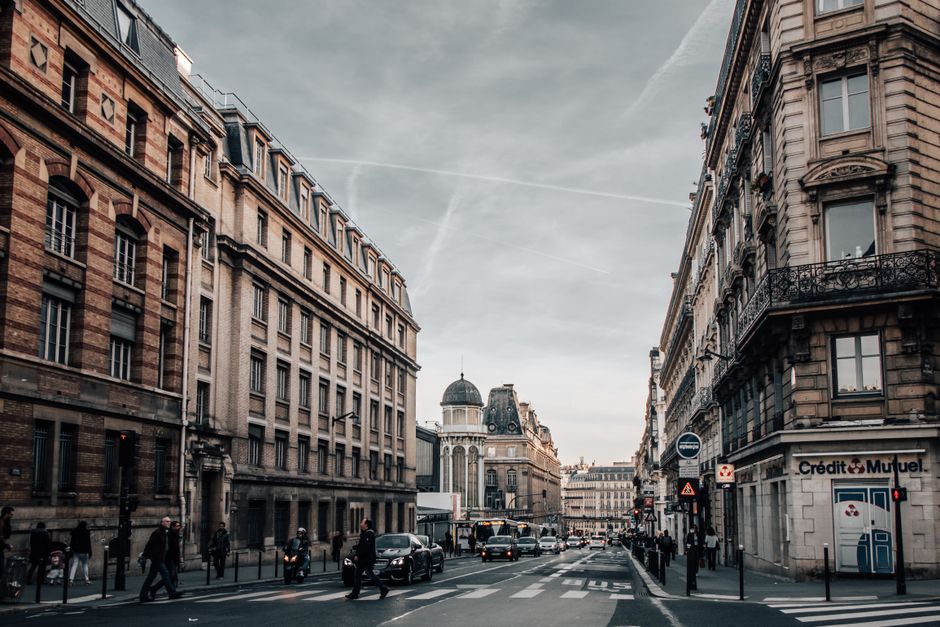
Walking across the Pont de l'Alma on a Tuesday morning, one might miss the construction site reshaping Paris's transport future. Yet beneath the cobblestones of the Left Bank and deep under the business districts of La Défense, Europe's most ambitious metro expansion in decades is quietly reshaping how this city moves.
The Grand Paris Express—a €33 billion project to extend the Metro into underserved suburban zones—reflects a fundamental shift in how modern capitals approach infrastructure. But Paris's approach reveals as much about what the city is learning from rivals as what it risks repeating.
Line 15, which will eventually form a 75-kilometre orbital route around Paris, exemplifies the challenge. Current completion dates stretch to 2030 for its full arc, already two years behind initial targets. Meanwhile, London's Elizabeth Line, which opened in 2022 after 17 years and £18.9 billion in construction, faces ongoing operational hiccups. Tokyo's Fukutoshin Line, by contrast, was delivered on schedule and budget in 2008—a feat many European planners regard as nearly mythical.
The comparison is instructive. Tokyo's success hinged on centralised decision-making and minimal environmental litigation. Paris, operating within EU procurement rules and subject to rigorous heritage protection protocols around areas like Montmartre and the Marais, faces a different calculus entirely. Berlin's U5 line, completed in 2021, cost roughly €2 billion for 12 kilometres—nearly double Paris's per-kilometre cost, largely due to geological complexity and inflation.
Where Paris seems to be gaining ground is public communication. Monthly progress reports via the RATP and IDFM (Île-de-France Mobilités) keep residents informed in real time—a transparency absent in London's early Elizabeth Line years. The agency's interactive maps showing disruptions around Gare Saint-Lazare and near Châtelet-Les Halles have become models for other European cities grappling with congestion.
The financial burden, however, looms large. Average fares on existing lines sit at €2.25 per journey, yet revenues won't offset construction costs for decades. Tokyo subsidised its expansion differently—through property development partnerships. Paris is experimenting with similar public-private models around Châtelet and Boulogne-Billancourt, though with mixed public approval.
By 2030, when Line 15 reaches the suburbs of Orly and Roissy-Charles de Gaulle airports, Paris will have invested more per capita in metro expansion than any peer city since 2015. Whether that translates to superior service—or merely teaches expensive lessons about the limits of underground infrastructure in densely built European cities—remains the question that matters most.
This article was compiled by AI from the sources linked above and screened before publishing. See our editorial standards.