Why Paris's Transport Network Remains Unrivalled Among Global Cities
From the Metro's democratic efficiency to cycling infrastructure that rewired urban mobility, the French capital has perfected something most cities still chase.
From the Metro's democratic efficiency to cycling infrastructure that rewired urban mobility, the French capital has perfected something most cities still chase.

Stand at Châtelet station during rush hour and you'll witness something increasingly rare in major global cities: a transport system that actually works. The Paris Metro carries 5.2 million passengers daily across 16 lines spanning 220 kilometres—a feat that puts it among Europe's busiest networks, yet maintains a frequency most commuters in London, Berlin or New York would envy. A train arrives every 90 seconds on Line 1 during peak hours. That consistency, repeated across the network, defines Paris's transport culture in ways that transcend mere statistics.
What truly distinguishes Paris, however, isn't the Metro alone. It's the integrated philosophy underpinning how the city moves. The RATP's flat-rate fare system—€2.30 for a single journey, €17.25 for a weekly pass—removes the anxiety endemic to distance-based pricing seen in other capitals. A journey from Châtelet to La Défense costs identical to a hop between Saint-Germain-des-Prés and Odette. This democratic approach to mobility reflects a distinctly French prioritisation of equity.
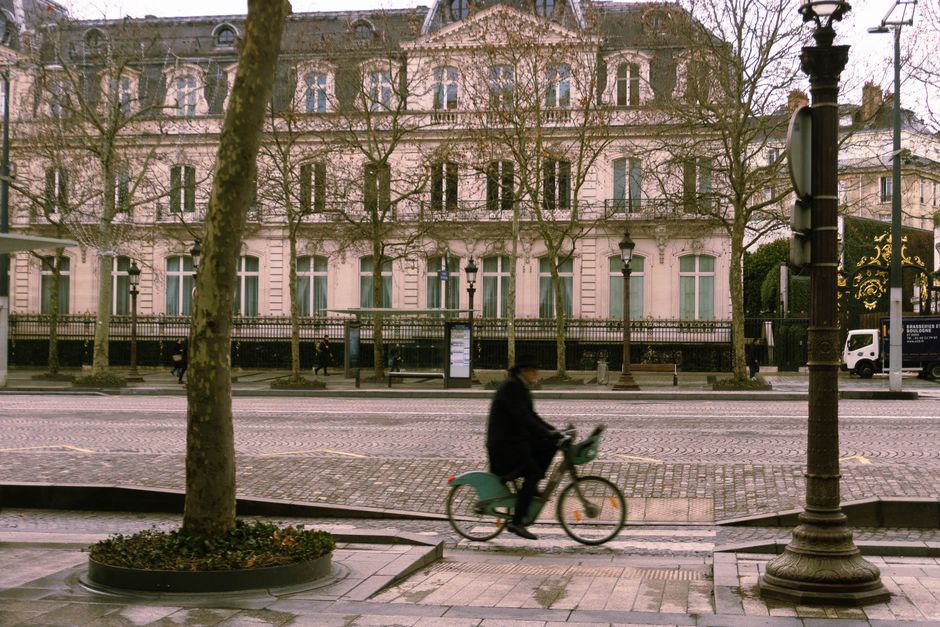
But perhaps Paris's most revolutionary shift has come through cycling infrastructure. The city now boasts over 1,200 kilometres of bike lanes, with ambitious expansion plans reaching toward Vincennes and Boulogne. Vélib', the bike-sharing system operating 14,000 bicycles across 1,400 stations, normalised two-wheeled commuting in ways that cities like San Francisco and Copenhagen have struggled to replicate at scale. On the Rue de Rivoli or Boulevard Saint-Germain, bicycles now outnumber taxis.
The physical walkability remains unmatched too. Unlike sprawling metropolises designed around car culture, Paris's historic 20 arrondissements compress neighbourhoods into human-scale distances. The average Parisian lives within 500 metres of a Metro entrance. Compare this to Los Angeles or even London's outer zones, where transport fragmentation means commutes routinely exceed 90 minutes.
What makes this ecosystem unique isn't any single element—other cities have rebuilt bus networks or expanded cycle paths. Rather, it's the refusal to choose between modes. A commuter might Metro to Bir-Hakeim, cycle to the Musée de Montmartre, and walk home through Montmartre's winding streets, never once requiring a car or planning their journey beyond intuition. The transport network doesn't compete with urban life; it enables it.
For international cities wrestling with congestion and sustainability, Paris offers a blueprint built not on technological innovation but on something older: the prioritisation of human movement over vehicular flow. It's a philosophy that, three centuries after Haussmann, still defines how eight million people navigate their city.
This article was compiled by AI from the sources linked above and screened before publishing. See our editorial standards.
How does this story make you feel?
Spread the word
About this article
Published by The Daily Paris
Daily brief
Free, in your inbox before 7am. Weekdays.
More in lifestyle