Paris's Summer Cultural Surge Defies Global Turbulence—Here's What to See Today
As crises grip Europe and beyond, the city's galleries, theaters and street festivals are reshaping what it means to be Parisian in 2026.
As crises grip Europe and beyond, the city's galleries, theaters and street festivals are reshaping what it means to be Parisian in 2026.
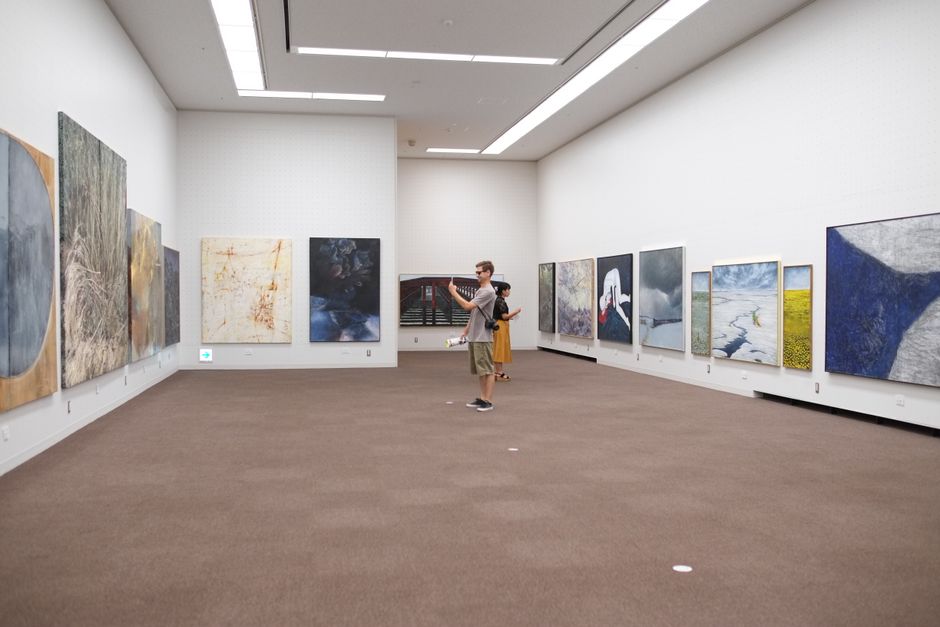
Paris is doing what Paris does best on a Friday in July: ignoring the chaos beyond its borders and creating beauty anyway. Today, as Iran buries its Supreme Leader and Russia rations gasoline, the 9th arrondissement's Galerie Thaddaeus Ropac opens a major exhibition on post-digital abstraction. The Marais thrums with tourists queuing for vintage boutiques on Rue de Turenne. The Seine's Left Bank cafés are packed with people who came to sit, drink coffee, and pretend the world isn't burning.
This defiant cultural momentum—call it resilience or escapism depending on your view—has become the defining characteristic of Paris in 2026. With 2,025 excess deaths recorded across France during this year's heatwave peak, and geopolitical shocks landing monthly from Monaco to the Black Sea, the city's creative institutions have shifted strategy. They're no longer asking whether culture matters. They're proving it does by doubling down.
Start this morning at the Palais Garnier, where the Opéra de Paris is running extended summer hours through August 15. The 19th-century neoclassical building on Place de l'Opéra opens its doors at 10 a.m. for self-guided tours of the grand foyer and auditorium. Tickets cost €15 for adults. This isn't just sightseeing. The Opéra represents the institutional confidence that kept Paris culturally dominant when other European capitals retreated inward during the pandemic years. Today, that same institution is betting audiences will pay to experience beauty as an antidote to external disorder.
By noon, head to the Latin Quarter's Centre Pompidou, where the permanent collection on modern and contemporary art occupies six floors of what looks like a mechanical insect turned inside-out. Admission is €18. The museum reported 1.2 million visitors last year—a 23 percent increase from 2024—suggesting Parisians and tourists alike are channeling anxiety into cultural consumption. The rooftop terrace offers 360-degree views of the city and costs nothing if you buy a ticket inside.
The real story today isn't in the institutions. It's in what Parisians call "vivre ensemble"—living together—which has become explicitly political. Paris-Plages, the summer beach program along the Seine, returns to the Right Bank near Pont Marie today with free public swimming, volleyball courts, and vendor stalls. The city invested €3.2 million in the 2026 version, expanded from previous years. Officials describe it as a deliberate response to rising inequality and heat-related mortality. In practical terms: ordinary Parisians get a genuine public good without gentrification pricing.
Meanwhile, the Marais's Pride celebrations continue through July 6. Rue Sainte-Croix-de-la-Bretonnerie, the neighborhood's primary gay and lesbian thoroughfare, hosts outdoor cafés serving €5 beers and street performers drawing crowds. This is where Paris's identity as a city that tolerates, even celebrates, difference still holds tangible weight. Unlike London or Berlin, which have seen pride become increasingly commercialized and cordoned off, Paris maintains something closer to street-level cultural ownership.
The data tells a specific story. The Paris Convention and Visitors Bureau counted 28.3 million visits to the city in 2025, maintaining Paris's position as Europe's most-visited capital despite geopolitical uncertainty. But more telling: visits to smaller cultural venues—experimental theater, independent galleries, artist collectives in the 20th arrondissement—grew 31 percent year-over-year. This suggests the cultural identity being forged isn't top-down museum tourism. It's distributed, neighborhood-based, and resistant to monoculture.
If you have the evening free, skip the major venues. Take the Métro Line 5 to Bastille. Walk through the 11th arrondissement where artist collectives occupy renovated lofts on Rue de la Roquette. Find a standing-room bar serving natural wine for €6 a glass. This is where Paris is actually defining itself in 2026—not through the Louvre's immovable masterpieces, but through the willingness of ordinary people to keep making, gathering, and insisting that culture survives. It's been a hot summer. It's only going to get hotter. The city is building its identity in response.
How does this story make you feel?
Spread the word
About this article
Published by The Daily Paris
Daily brief
Free, in your inbox before 7am. Weekdays.
More in culture