Paris's Living Past: What Every Visitor Must Know About the City's Cultural Identity
From medieval quarters to revolutionary landmarks, understanding Paris's layered history transforms a visit from sightseeing into genuine cultural immersion.
From medieval quarters to revolutionary landmarks, understanding Paris's layered history transforms a visit from sightseeing into genuine cultural immersion.
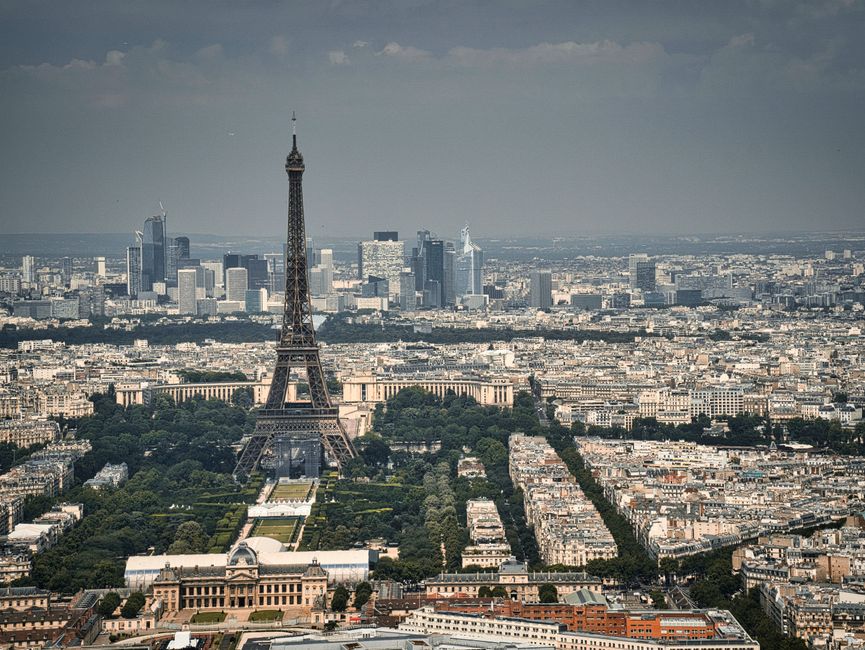
Paris doesn't merely preserve its history—it performs it daily. Walk down rue de la Bûcherie in the Latin Quarter, and you're treading cobblestones unchanged since the 12th century. Yet the neighbourhood thrums with life: students clustering outside Shakespeare and Company bookshop, tourists queuing for Notre-Dame's reconstruction updates, locals grabbing coffee at cafés that have occupied corner spots for generations. This juxtaposition defines the city for visitors seeking authentic cultural understanding.
The essential Paris narrative splits into distinct geographies, each revealing different layers of identity. The Marais district—bounded by rue des Archives and rue de Sévigné—encapsulates centuries of transformation. Medieval Jewish quarters gave way to aristocratic mansions during the 17th century, then became a working-class neighbourhood before gentrification restored its grand hôtels particuliers. Today's visitor can trace this evolution through the Musée Carnavalet (€8 entry), dedicated entirely to Paris's urban history, or simply by observing how centuries-old architecture now hosts contemporary galleries and vintage boutiques.
For revolutionary heritage, Île de la Cité remains non-negotiable. The Conciergerie (€13.50), where Marie-Antoinette was imprisoned before execution, sits metres from Sainte-Chapelle's transcendent 13th-century stained glass. This spatial proximity—where revolution, monarchy, and spirituality collide—encapsulates how Parisians have grappled with power and identity for eight centuries.
Montmartre's hilltop village aesthetic masks its own complexity. Beyond the Sacré-Cœur basilica lies place du Tertre, where Belle Époque Paris—the turn-of-century creative ferment—still echoes in studio windows and café culture. The neighbourhood's identity shifted from bohemian haven to tourist hub, yet independent galleries and small museums (like the Musée de Montmartre, €12) preserve authentic artistic legacy.
What distinguishes Paris from merely old European cities is how locals inhabit these spaces. The UNESCO-protected Seine banks aren't museum exhibits; they're where Parisians jog, read, and argue politics. The Île Saint-Louis remains overwhelmingly residential despite its fame. This refusal to become purely heritage theatre is fundamental to understanding Parisian cultural identity.
Visitors should allocate time for lesser-known markers: the plaque at 13 rue Monsieur-le-Prince where Benjamin Franklin lived, the hidden courtyard gardens of the Latin Quarter, the 18th-century passages couverts near the Opéra. These intimate discoveries—requiring no admission fee, demanding only curious wandering—reveal how Paris functions as lived culture rather than performed nostalgia. That distinction transforms a visit into genuine comprehension.
This article was compiled by AI from the sources linked above and screened before publishing. See our editorial standards.
How does this story make you feel?
Spread the word
About this article
Published by The Daily Paris
Daily brief
Free, in your inbox before 7am. Weekdays.
More in culture


