The Marais Maker Turning Paris's Post-Pandemic Workshops Into a Jobs Engine
How one entrepreneur's bet on craft manufacturing in the 3rd arrondissement is reshaping what employment looks like in central Paris.
How one entrepreneur's bet on craft manufacturing in the 3rd arrondissement is reshaping what employment looks like in central Paris.
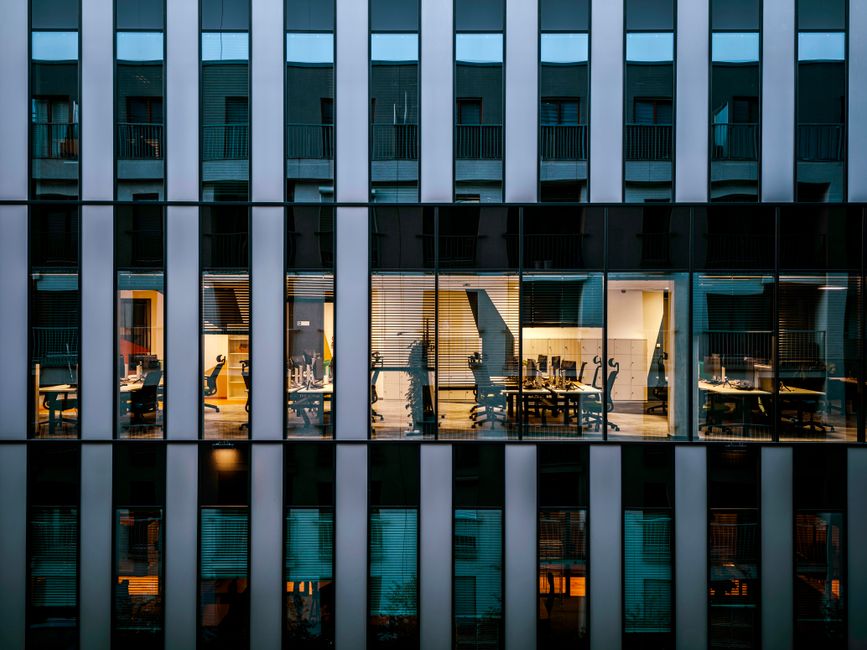
Céline Marchand opened her atelier on Rue de Bretagne three years ago with four employees, a secondhand laser cutter, and a lease that most landlords would have laughed at. Today, Atelier Commun employs 34 people full-time and has a waiting list of 60 independent craftspeople seeking bench space. The numbers matter because Paris's broader job market is sending mixed signals — and Marchand's model points toward something the city's economic planners have been slow to formalise.
France's national unemployment rate held at 7.3 percent in the first quarter of 2026, according to INSEE figures published in May. But inside Paris's périphérique, the picture is sharper and more uneven. The capital's services sector — restaurants, tourism, retail — recovered fast after 2022, yet wages in those fields have lagged inflation by roughly 4 percentage points since 2023. Meanwhile, the extreme heat that killed more than 2,000 people across France during last month's June heatwave disrupted outdoor construction schedules and pushed a fresh wave of young workers to look for climate-controlled, skills-based alternatives. Atelier Commun, which sits in a converted 19th-century printing house just off the Marché des Enfants Rouges, is one of the places they are finding.
Marchand's operation runs on a hybrid model. Half the floor space is occupied by Atelier Commun's own production lines — bespoke furniture, leather goods, and ceramic objects sold through a boutique on Place de la République and through wholesale contracts with three Haussmann Boulevard department stores. The other half is rented by the hour or the month to independent artisans and small design studios, 23 of whom have converted their freelance status into registered micro-entreprises since January 2025, partly because the atelier's accountant runs a free onboarding clinic every second Tuesday.
That clinic matters. Roughly 180,000 people in the Île-de-France region are classified as auto-entrepreneurs in the crafts and design sectors, but fewer than 40 percent carry professional liability insurance or access formal training subsidies, according to the Chambre de Métiers et de l'Artisanat d'Île-de-France. Marchand's model, by contrast, bundles workspace with administrative support, which is exactly the kind of infrastructure the Paris City Hall's own Plan de Relance Artisanat — a €12 million initiative launched in September 2024 — was designed to encourage but has struggled to deliver at neighbourhood scale.
The 3rd arrondissement is not an accident of location. Rents on Rue de Bretagne and the surrounding streets, while far from cheap, are still approximately 35 percent lower per square metre than comparable addresses in the 8th or the 16th. That differential is what made the original lease viable and what has kept three competitor co-working ateliers from replicating the model south of the Seine, where ground-floor commercial space regularly lists above €600 per square metre annually.
Sixty names on a waiting list is a data point worth pausing on. Most of those applicants are between 25 and 38 years old, hold vocational certificates from institutions including the École Boulle in the 12th arrondissement and the Institut Supérieur des Métiers, and are not unemployed — they are underemployed, moonlighting in service jobs while trying to establish craft businesses that have no affordable physical base. Atelier Commun is absorbing some of that pressure, but it cannot absorb all of it.
Paris City Hall is expected to announce an extension of the Plan de Relance Artisanat before the end of the third quarter, with new funding reportedly targeting the 10th, 11th, and 19th arrondissements where former industrial buildings are being converted at pace. For entrepreneurs watching Marchand's experiment, the practical lesson is already clear: the model works when workspace costs are subsidised by a productive tenant, not carried by fragile freelancers alone. Anyone looking for bench space in the near term should contact the Chambre de Métiers directly — the organisation maintains a live registry of subsidised ateliers across the capital, updated monthly, and the next cohort of applications opens on September 1st.
How does this story make you feel?
Spread the word
About this article
Published by The Daily Paris
Daily brief
Free, in your inbox before 7am. Weekdays.
More in Business


