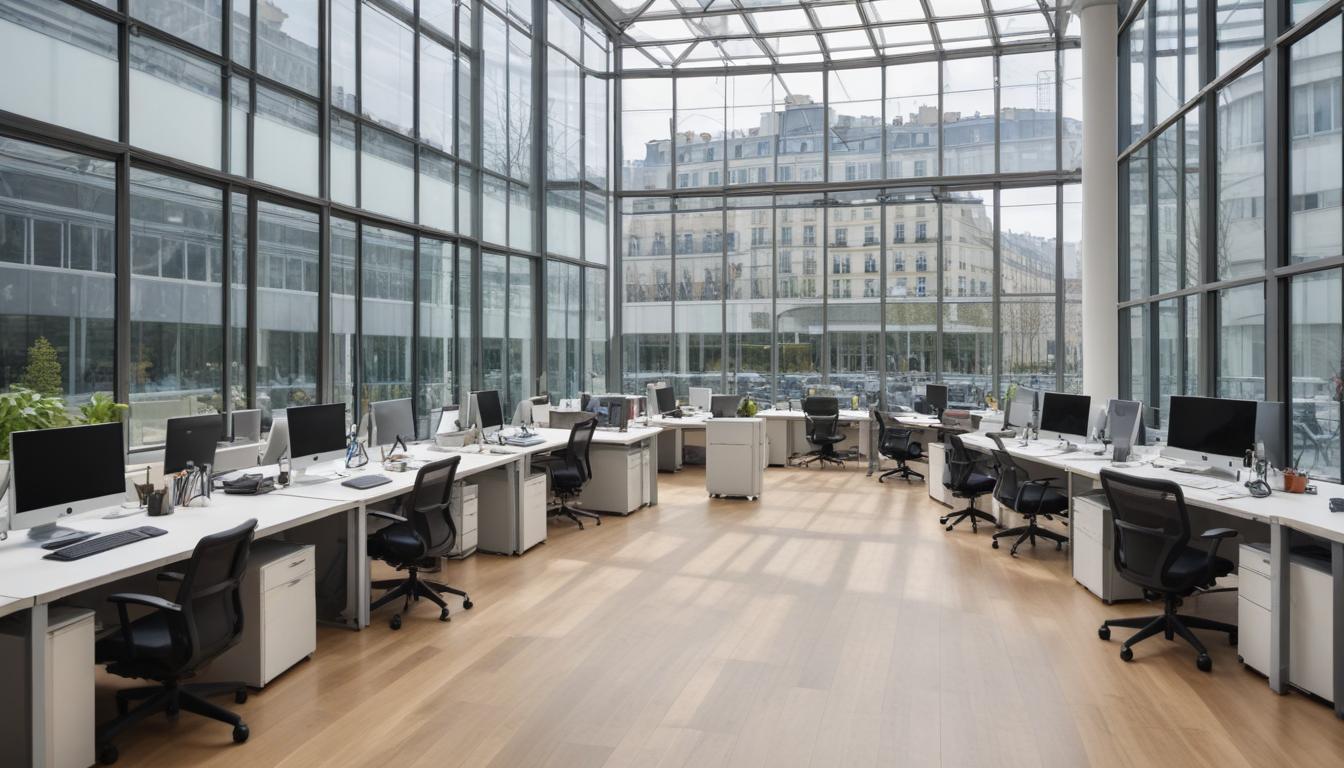
In a converted textile warehouse on Rue de Turenne in the Marais, Sandrine Moreau has built something the global shipping industry never expected: a platform that's making international trade accessible to businesses with fewer than fifty employees.
Her company, TradeLink Europe, launched in 2023 and has grown to serve over 2,400 small and medium-sized enterprises across France, Germany, and Spain. By simplifying customs documentation, consolidating shipments, and negotiating real-time rates with carriers, Moreau's team has reduced export costs by an average of 18 percent for clients—a significant margin in industries operating on thin profits.
"When I started researching the sector in 2021, I discovered that 40 percent of European SMEs never export, not because they lack quality products, but because the logistics bureaucracy feels insurmountable," Moreau explained in recent remarks to the Paris Chamber of Commerce. "We built the bridge they needed."
The business model has attracted serious institutional backing. In March, TradeLink raised €8.2 million in Series A funding from venture firms including Partech and Raise Ventures, valuing the company at €35 million. The capital is fueling expansion into Italy and Belgium, with plans to add AI-powered demand forecasting to the platform by early 2027.
What's particularly notable is how Moreau's success reflects Paris's evolving role in global commerce. While the city has long been synonymous with luxury and culture, its tech ecosystem—anchored in neighborhoods like the 11th arrondissement and La Défense—has quietly become a powerhouse for B2B innovation. According to the Paris Economic Development Agency, fintech and logistics technology companies received €2.1 billion in funding across the region last year, rivaling Berlin and Amsterdam.
For TradeLink's clients, the impact is tangible. A ceramics manufacturer in Lyon recently used the platform to enter the Turkish market within six weeks—a process that previously would have taken six months. A furniture workshop near Bordeaux now ships to seventeen countries.
Moreau, who previously worked at an international freight forwarder, says the real victory isn't measured in valuations. "We're democratizing access to global markets," she noted. "Every small business should have the same logistics capabilities as a multinational. That's when real competition happens, and innovation accelerates."
As geopolitical tensions reshape international supply chains, companies like TradeLink are helping European businesses build resilience and autonomy—a quiet but powerful shift in how Paris-based entrepreneurs are shaping global commerce.
This article was compiled by AI from the sources linked above and screened before publishing. See our editorial standards.