Why Paris Renters and Shoppers Need to Understand the Office Market Shift
As commercial real estate transforms across the city, everyday Parisians face ripple effects from rising street-level rents to neighbourhood redevelopment.
As commercial real estate transforms across the city, everyday Parisians face ripple effects from rising street-level rents to neighbourhood redevelopment.
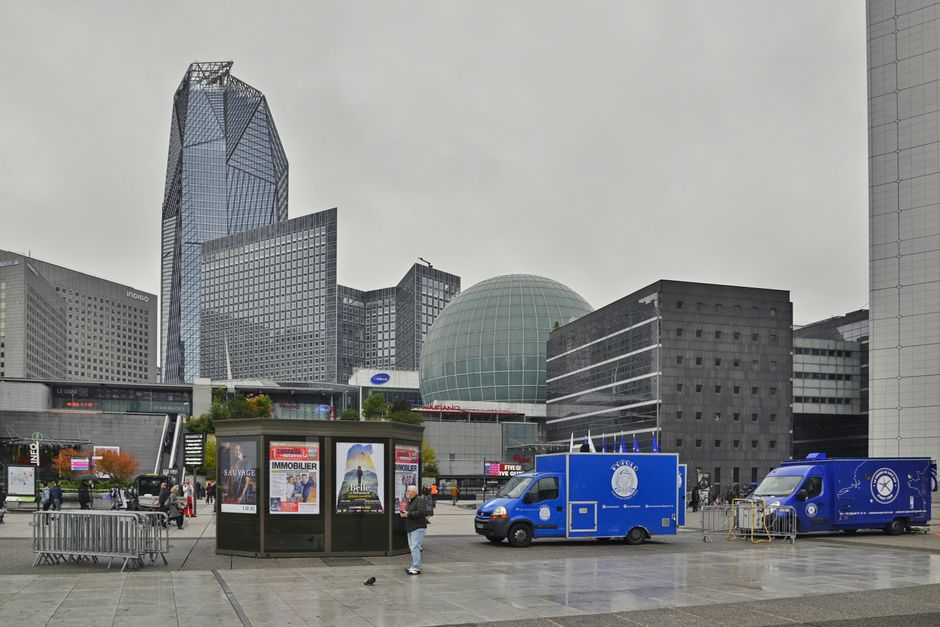
For most Parisians, the phrase "office market" conjures images of distant financial districts and corporate spreadsheets. But the commercial property boom reshaping neighbourhoods from the Marais to La Défense is already affecting your rent, your favourite café, and the future character of your street.
The numbers tell a striking story. Prime office space in central Paris—particularly along the Seine's left bank near the École Nationale d'Administration and in the 8th arrondissement—has climbed to €800 per square metre annually, double the rate of a decade ago. This surge isn't abstract. As corporations consolidate and upgrade their headquarters, they're claiming ground-floor retail spaces that once hosted independent bookshops, bakeries, and neighbourhood anchors.
The Marais exemplifies this tension. Boutique office conversions have multiplied in recent years, pushing ground-floor commercial rents beyond €500 per square metre—pricing out small retailers but attracting luxury brands and tech startups. Meanwhile, residential rents in adjacent blocks have followed suit, rising roughly 12% over three years as the neighbourhood's cachet climbs.
But there's a counterintuitive silver lining. The post-pandemic shift toward hybrid and remote work has created unexpected pockets of opportunity. Mid-tier neighbourhoods like Belleville and the 11th arrondissement have attracted younger companies seeking affordable office space, injecting new energy without the displacement pressure of previous booms. These areas have become genuine mixed-use zones—something urban planners have long sought.
The real impact hits hardest in transition areas. Around Châtelet-Les Halles and extending toward the Rue de Rivoli, landlords are increasingly converting aging office buildings into residential apartments and serviced apartments for tourists, fundamentally reshaping street-level commerce. Small businesses report lease renewals at double the previous rate when landlords eye redevelopment.
For everyday Parisians, the lesson is this: the office market drives neighbourhood evolution faster than municipal planning. If your favourite neighbourhood feels in flux—cranes appearing, familiar shops vanishing—commercial real estate economics are usually the hidden engine.
The city has tried incentives to preserve retail diversity, including modified tax rates for businesses serving local communities. Yet without understanding how commercial property values influence your street's future, residents have limited power to shape change. Attend your arrondissement's public meetings on urban development, ask questions about retail preservation zoning, and recognise that office market trends aren't distant—they're reshaping Paris block by block.
This article was compiled by AI from the sources linked above and screened before publishing. See our editorial standards.
How does this story make you feel?
Spread the word
About this article
Published by The Daily Paris
Daily brief
Free, in your inbox before 7am. Weekdays.
More in Business
