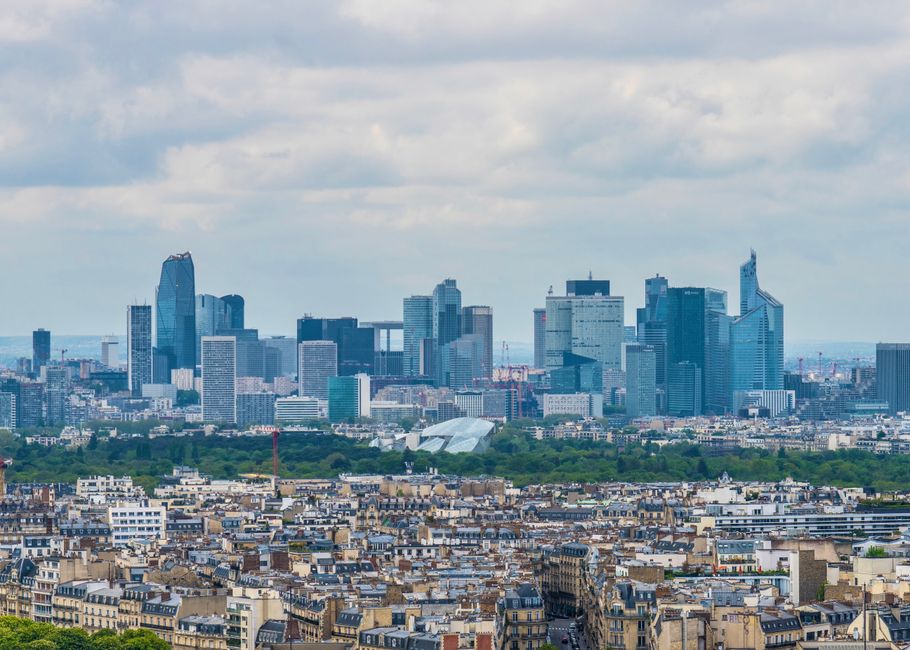
The gleaming co-working spaces dotting the Marais and République neighbourhoods once symbolized Paris's emergence as a serious contender in Europe's startup ecosystem. Yet walk through Station F or browse recent listings in the 11th arrondissement, and a different story emerges: one of strain, retrenchment, and mounting scepticism about whether the City of Light can sustain its innovation ambitions.
Commercial rents in the traditionally startup-friendly districts have become punishing. Prime office space in République now commands €450-550 per square metre annually—a 35% increase since 2023. Meanwhile, residential costs have climbed even more steeply, with one-bedroom apartments in the 10th and 11th arrondissements averaging €1,200-1,400 monthly. For early-stage founders already strapped for capital, the arithmetic no longer works.
"We're losing people to Amsterdam and Berlin every quarter," admits one venture partner who preferred anonymity. The brain drain is measurable: nearly 18% of French tech professionals left the country last year, according to recruitment firm Knabu's latest survey, seeking lower living costs and—some allege—less bureaucratic friction.
The bureaucratic headwinds are real. Foreign founders cite a labyrinthine visa process, despite the supposed fast-track tech visa scheme introduced in 2023. Meanwhile, French labour law remains notoriously rigid, making scaling from team-of-five to team-of-fifty a minefield of legal complexity that London or Dublin navigates more smoothly.
Funding, too, shows worrying signals. Venture capital deployed in French startups totalled €4.8 billion last year—down 22% from 2024. Global investors, spooked by economic slowdowns and regulatory uncertainty, are retreating to proven ecosystems. The mid-market funding gap—that crucial €5-20 million Series A/B range—has become particularly acute.
Yet the challenges extend beyond mere economics. Paris's startup ecosystem still lags in deep-tech and climate innovation, sectors where it should theoretically excel given the city's research institutions and government commitment to decarbonization. Most funded ventures cluster in fintech and SaaS, where competition is ferocious and margins thin.
The municipal government and organizations like Paris&Co have launched fresh initiatives aimed at retention and growth. Tax incentives for early-stage investors and subsidized workspace programs offer hope. But these feel modest against the structural headwinds.
What remains unclear is whether Paris can recalibrate expectations. The city may never rival Silicon Valley or even London as a pure tech megacentre. But repositioning as a quality-over-quantity hub—attracting fewer but more ambitious founders—might ultimately prove more sustainable than chasing growth metrics that global economic realities may not support.
This article was compiled by AI from the sources linked above and screened before publishing. See our editorial standards.