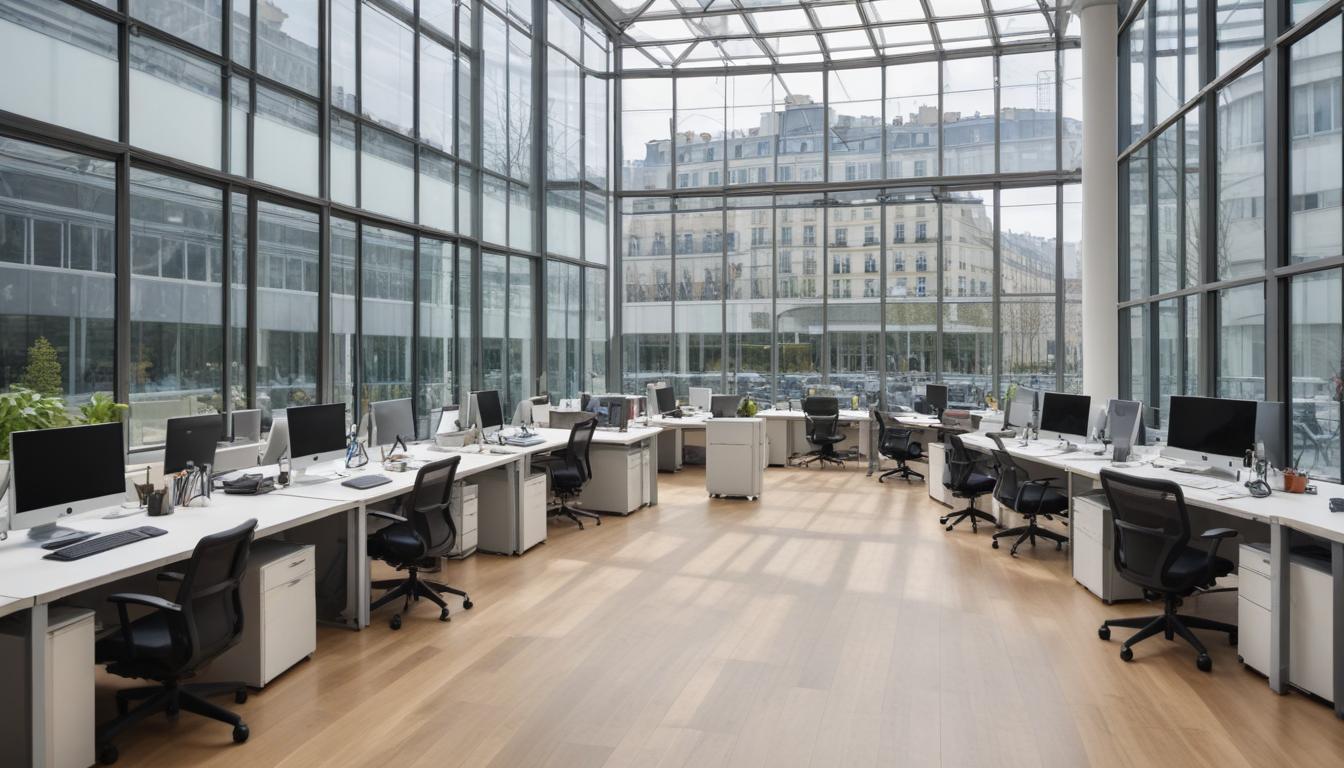
Paris's Remote Work Revolution Is Reshaping the City's Talent Market
As companies embrace flexible arrangements, competition for office-based roles intensifies while suburban neighbourhoods see unexpected economic revival.
As companies embrace flexible arrangements, competition for office-based roles intensifies while suburban neighbourhoods see unexpected economic revival.

The Paris job market is experiencing a profound structural shift as remote work arrangements—once pandemic-era exceptions—have become permanent fixtures across the capital's professional landscape. For recruitment agencies clustered around the Champs-Élysées and La Défense, the implications are reshaping how they approach talent acquisition and where they source candidates.
Data from the Paris Chamber of Commerce indicates that approximately 43 per cent of office-based positions across the Île-de-France region now include hybrid or flexible working arrangements, compared to just 12 per cent in 2019. This flexibility has created an unexpected consequence: traditional office districts are seeing decreased demand for commercial real estate, while suburban communities like Versailles, Boulogne-Billancourt, and areas along the RER B line are experiencing renewed interest from professionals who previously felt tethered to central locations.
"We're witnessing a geographical democratization of opportunity," explains recruitment consultant activity in the 8th arrondissement, where agencies report a 28 per cent decline in candidates seeking purely office-based roles in the capital's business districts. Instead, professionals are willing to accept positions with companies based in secondary business hubs if remote flexibility is guaranteed.
The competitive pressure extends to compensation. Entry-level positions in marketing and finance on Rue de Rivoli now require salaries approximately 12 per cent higher than comparable 2023 roles, reflecting intense competition for candidates who have proven they can work effectively beyond traditional office environments. Meanwhile, positions offering genuinely flexible arrangements attract applications at twice the historical rate.
This reshaping has profound implications for Paris's real estate market and neighbourhood vibrancy. Commercial vacancy rates in the Défense business district have climbed to 14 per cent, the highest in a decade, while demand for small commercial spaces in Marais and the 11th arrondissement—zones attractive to remote workers seeking occasional collaboration spaces—has surged by 31 per cent.
Local businesses are adapting. Cafés in République and Bastille have repositioned themselves as informal office spaces, offering reliable WiFi and extended seating. Co-working spaces in the 10th arrondissement report 89 per cent occupancy rates, up from 61 per cent in 2023.
For Paris's economic future, the trend presents both challenge and opportunity. While traditional office districts face vacancy pressures, the broader talent pool has expanded dramatically. Employers no longer restrict themselves to candidates within Metro commuting distance, fundamentally changing Paris's labour market from regional to increasingly national and international in scope.
This article was compiled by AI from the sources linked above and screened before publishing. See our editorial standards.
How does this story make you feel?
Spread the word
About this article
Published by The Daily Paris
Daily brief
Free, in your inbox before 7am. Weekdays.
More in Business