Paris Job Market Faces Perfect Storm of Talent Flight, Rising Costs, and Sector Stagnation
As unemployment ticks upward and major employers signal caution, the French capital's once-resilient employment landscape shows deepening cracks.
As unemployment ticks upward and major employers signal caution, the French capital's once-resilient employment landscape shows deepening cracks.
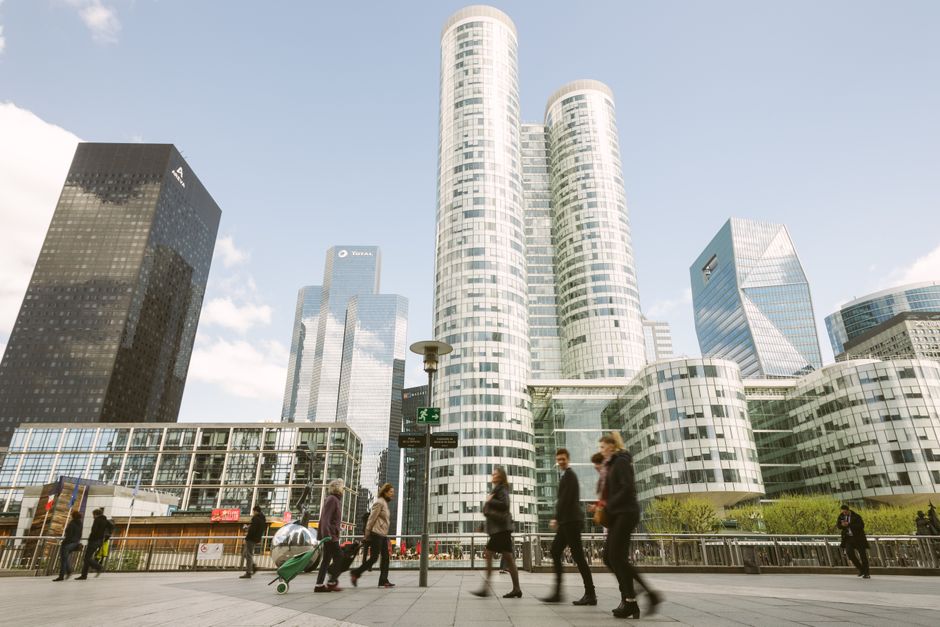
Paris's employment picture has darkened considerably in the first half of 2026, with recruiters and business leaders across the city warning of a convergence of pressures that threaten to undermine decades of relative stability in the French capital's labour market.
The latest figures from Pôle Emploi paint a sobering picture. Registered unemployment in the Île-de-France region has climbed to 8.2 percent, up from 7.4 percent last year—a shift that recruiters say reflects both structural challenges and cyclical weakness. In the Marais and République districts, where tech startups have proliferated over the past decade, hiring managers report freezing recruitment pipelines as venture capital dries up. "We're seeing a fundamental pullback," says one venture recruiter based near the Canal Saint-Martin, requesting anonymity. "Companies that were hiring aggressively eighteen months ago are now in survival mode."
The exodus of talent compounds the problem. Young professionals increasingly pursue opportunities in London, Amsterdam, and Berlin, where salaries and quality-of-life calculations favour the competition. A junior data scientist in Paris commands roughly €38,000 to €45,000 annually—significantly below London's £50,000-plus baseline. Office space in central Paris, meanwhile, continues to command €600 to €800 per square metre annually, pricing out smaller firms that might otherwise anchor employment.
Large corporates based in La Défense are themselves retreating. Several multinational firms have announced modest workforce reductions or remote-work policies that inadvertently shift hiring to lower-cost EU hubs. The banking and insurance sectors, historically Paris's employment backbone, are particularly exposed to automation and regulatory uncertainty around digital finance.
Tourism and hospitality—sectors that employ tens of thousands across arrondissements like the 1st and 8th—face their own squeeze. Labour shortages persist despite unemployment ticking upward, a paradox rooted partly in wage stagnation; many venues on the Champs-Élysées and around Montmartre struggle to fill positions at current rates.
The bright spots remain narrow. Healthcare, green energy retrofitting, and certain public-sector roles continue hiring. But these gains barely offset losses elsewhere. Business schools and research institutions around the Latin Quarter and Paris-Saclay continue attracting investment, yet spinoff employment creation has disappointed expectations.
As we head toward autumn, Paris's business leadership faces an uncomfortable reckoning: the city's employment resilience can no longer be taken for granted. Without intervention—whether through tax incentives for hiring, skills retraining initiatives, or strategic support for knowledge sectors—Paris risks ceding further ground to competitors who have moved faster to adapt.
This article was compiled by AI from the sources linked above and screened before publishing. See our editorial standards.
How does this story make you feel?
Spread the word
About this article
Published by The Daily Paris
Daily brief
Free, in your inbox before 7am. Weekdays.
More in Business


